



10 Types of Hippie Dreadlocks: Meaning, Styles, Care, and Expert Tips
-
- January 21, 2026

Hippie dreadlocks are more than a hairstyle. They reflect a natural, free-spirited way of living. When people talk about hippie dreadlocks, dreadlocks hippie, or a hippie with dreadlocks, they are usually referring to locs that are grown with minimal control and maximum authenticity.
From a dread expert’s perspective, what makes hippie dreadlocks different is the mindset behind them. These dreads are not meant to look perfect, uniform, or salon-styled. Instead, they are allowed to form naturally, often through freeform or semi-freeform methods, respecting the hair’s own texture and pattern.
The hippie philosophy values simplicity, patience, and harmony with nature. That same thinking applies to the hair. Hippie dreadlocks are grown slowly, washed normally, and maintained lightly — without heavy products or constant manipulation. Each set of locs becomes unique, shaped by time and lifestyle rather than strict rules.
This natural approach is why hippie dreadlocks continue to stand apart from other dread styles. They represent freedom, individuality, and a connection to self rather than trends.
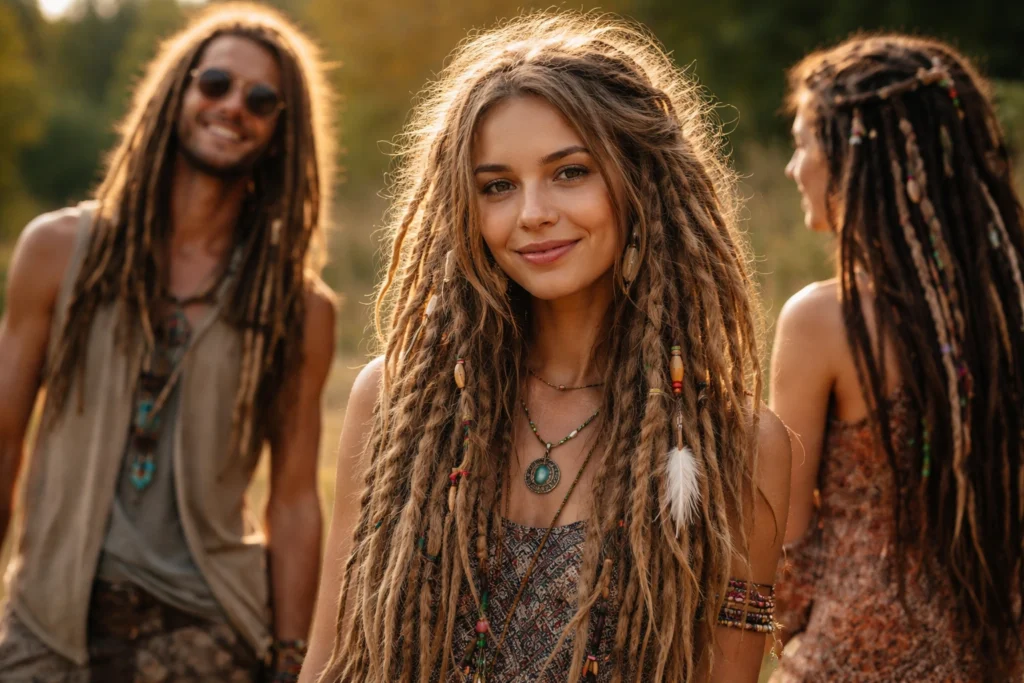
Type 1: Freeform Hippie Dreadlocks
Freeform hippie dreadlocks mean letting the hair lock naturally without forcing it. There is no twisting, crocheting, or sectioning. The hair is washed, left alone, and allowed to form dreads on its own over time.
This type is best for people who truly follow the hippie mindset — those who value freedom, patience, and natural growth. It suits people who are comfortable with uneven locs and understand that no two dreads will look the same.
A common beginner mistake is confusing freeform with neglect. Clean hair is important; dirty or product-heavy hair slows locking. Another mistake is interfering too often, switching methods, or trying to “fix” the dreads too early.
This natural approach explains why do hippies have dreadlocks. Freeform dreads represent non-conformity, simplicity, and living in harmony with nature — values that sit at the core of hippie culture.
Type 2: Semi-Freeform Hippie Dreadlocks
Semi-freeform hippie dreadlocks sit between full freedom and light guidance. The hair is mostly left alone, but minimal help is used in the early stage, such as gentle separation or occasional palm rolling, to prevent large mats from forming.
This type is ideal for people who want a natural hippie dreadlocks look but still prefer some control. It works well for those who like organic dreads without extreme unevenness and want a cleaner base while keeping a relaxed, free-spirited style.
A common mistake beginners make is over-controlling the hair. Too much twisting or frequent maintenance turns semi-freeform dreads into fully styled locs, which goes against the hippie look. Another mistake is using products that cause buildup, making the dreads heavy and slow to mature.
Semi-freeform dreads reflect the same philosophy as dreadlocks hippie culture — freedom with awareness. The hair is guided, not forced, allowing it to lock naturally while still staying manageable.
Type 3: Gypsy Hippie Dreadlocks
Gypsy hippie dreadlocks are known for their loose, uneven, and layered appearance. These dreads are not meant to be uniform in size or length. Some sections lock tightly, while others stay softer or thinner, creating a flowing and slightly messy look.
Although they may appear wild, gypsy hippie dreadlocks are not accidental. The style is intentional. The unevenness comes from allowing the hair to lock naturally while still separating sections when needed to maintain movement and shape. This balance keeps the dreads expressive without becoming unmanageable.
Lifestyle plays a big role in this style. People who travel often, live outdoors, or prefer artistic and bohemian fashion naturally gravitate toward this look. Scarves, wraps, beads, and layered clothing often complement gypsy hippie dreadlocks, reinforcing their free-spirited identity.
This style suits individuals who want their hair to reflect creativity and independence rather than structure. It is a visual expression of freedom, not neglect, and that is what defines true gypsy hippie dreadlocks.
Type 4: 60s-Inspired Hippie Dreadlocks
60s-inspired hippie dreadlocks are deeply connected to the counterculture and spiritual movements of that era. During the 1960s, many people rejected social norms and embraced natural living, meditation, Eastern philosophy, and self-expression. Hair was left to grow freely, which led to the early forms of what we now call 60s hippie dreadlocks.
Back then, these dreadlocks were raw and unstructured. There was little knowledge about techniques or maintenance, so the hair locked naturally over time. Compared to today, 60s hippie dreadlocks were often thicker, more uneven, and less polished, reflecting a strong anti-fashion attitude.
Modern versions keep the same spirit but with better understanding of hair care. Today, people adapt the style by maintaining clean hair, lightly separating sections, and avoiding heavy products while still keeping the natural look. This approach allows wearers to honor the original movement while making the style practical for modern life.
60s-inspired hippie dreadlocks remain a symbol of freedom, spirituality, and conscious living — just expressed with a little more awareness than in the past.
Type 5: Partial Hippie Dreadlocks
Partial hippie dreadlocks combine locked sections with loose, natural hair. Instead of dreading the entire head, only certain areas are allowed to lock, creating contrast and movement. This approach fits naturally within relaxed hippie dreadlock styles.
This type is ideal for first-timers or people with conservative lifestyles who want to explore hippie dreadlocks without full commitment. It allows personal expression while keeping a familiar appearance, making it easier to transition socially or professionally.
Styling flexibility is the biggest advantage. The loose hair can be tied, braided, or left open, while the dreads add texture and individuality. Over time, partial hippie dreadlocks can stay as they are or be expanded into a full set, depending on comfort and preference.
Partial styles offer freedom without pressure, making them a practical entry point into the world of hippie dreadlocks.
Type 6: Thick Organic Hippie Dreadlocks
Thick organic hippie dreadlocks form naturally when the hair is allowed to lock without strict sectioning. This is why hippie dreads are often uneven in size. Some sections merge over time, creating fuller and heavier dreads that reflect natural hair movement rather than planned design.
Congo formation happens when two or more dreadlocks grow together and combine into one thicker loc. This process is natural in freeform and semi-freeform styles and does not damage the hair when left alone. Many people choose to keep congos because they add character and strength to the overall look.
Thickness changes how maintenance works. Thicker dreadlocks need less frequent attention but require proper drying after washing to avoid moisture buildup. They are generally stronger at the root, but they can feel heavier if not balanced properly.
These natural characteristics are often misunderstood, leading to the label dreadful hippie dreadlocks. In reality, thick and uneven dreads are not a sign of neglect. They are a natural result of organic growth and are part of what makes hippie dreadlocks authentic and unique.
Type 7: Hippie Dreadlocks for Men
Hippie dreadlocks men often focus on balance rather than sharp styling. One of the most common combinations is dreadlocks with a natural beard. When both are kept clean and lightly maintained, the beard and dreads grow together naturally and create a strong, grounded look without needing heavy grooming.
Men usually choose between high-top and full-head styles. High-top dreadlocks keep the sides loose or trimmed while allowing dreads to grow on top, offering a lighter and more manageable option. Full-head hippie dreadlocks give a more traditional, free-spirited appearance and suit men who want a complete natural look.
Masculine styling in hippie dreadlocks is about simplicity. Minimal shaping, natural growth, and basic cleanliness are enough. Over-grooming or sharp detailing takes away from the relaxed identity of the style. Hippie dreadlocks for men work best when they look lived-in, natural, and effortless rather than controlled.
Type 8: Hippie Dreadlocks with Extensions
Hippie dreadlock extensions are useful when natural hair is very short, thin, or uneven, or when someone wants added length or volume without waiting years. Extensions can support the early stage of dreads while still keeping a natural hippie look if done correctly.
Human hair extensions blend more naturally, feel lighter, and age better over time. They lock and soften like real hair but cost more and require careful matching. Synthetic extensions are more affordable and low-maintenance, but they can feel stiff and may not blend as smoothly as the dreads mature.
Blending is the most important part. Extensions should be lightly crocheted or wrapped into natural hair without tight tension. The goal is to make hippie dreadlock extensions look organic, not obvious or overly styled. When blended properly, extensions enhance the look without taking away from the natural spirit of hippie dreadlocks.
Type 9: Minimal-Maintenance Hippie Dreadlocks
Minimal-maintenance hippie dreadlocks focus on cleanliness without over-styling. A common myth is that dreadlocks should not be washed often. In reality, clean hair locks better and stays healthier. Regular washing with the right products does not ruin dreads — it supports them.
Staying clean does not mean constant manipulation. Washing, air drying, and light separation are usually enough. Over-twisting, frequent tightening, or heavy styling products weaken the roots and go against the natural hippie approach.
Residue-free shampoo is essential. Products without waxes, heavy oils, or conditioners prevent buildup and odor. Simple, lightweight formulas work best. From an expert standpoint, fewer products and consistent hygiene create stronger, longer-lasting hippie dreadlocks while keeping the look natural and authentic.
Type 10: Modern Spiritual Hippie Dreadlocks
Modern spiritual hippie dreadlocks are closely tied to personal identity and mindful living. For many people, this style represents inner growth, self-acceptance, and a slower, more intentional lifestyle. Hair is treated as part of the spiritual journey, not just appearance.
Cultural respect is important. Modern wearers are more aware of the history behind dreadlocks and aim to appreciate the meaning rather than copy the look without understanding it. Respect comes from learning, maintaining the hair properly, and acknowledging the roots of dreadlocks hippie culture.
People still choose this style today because it offers freedom from constant styling and social pressure. Modern spiritual hippie dreadlocks allow individuals to express values like simplicity, balance, and authenticity in a world that often demands conformity.
How to Care for Hippie Dreadlocks Without Ruining Their Natural Look
Caring for hippie dreadlocks is about balance, not control. Washing should be regular, usually once or twice a week, depending on lifestyle and sweat level. Clean hair locks better and smells fresh, which supports healthy dread formation without forcing the process.
Moisture should be light and intentional. Water-based sprays or light natural oils used sparingly help prevent dryness without causing buildup. Over-moisturizing makes dreads heavy and slows locking, especially in freeform styles.
Certain habits should be avoided. Wax blocks moisture and traps dirt, over-crocheting damages the hair and removes its natural texture, and heavy oils lead to residue and odor. From real experience, the best care is simple: clean hair, patience, and minimal interference. This approach keeps hippie dreadlocks healthy while preserving their natural, free-spirited look.
Who Should (and Shouldn’t) Choose Hippie Dreadlocks
Hippie dreadlocks are best for people who have patience and a relaxed personality. This style takes time, often months or years, to fully mature. If you are comfortable with slow progress, uneven stages, and natural change, hippie dreadlocks can be a good fit.
Lifestyle matters just as much. Active, outdoor, creative, or travel-focused lifestyles usually work well with hippie dreadlocks. On the other hand, people who need a highly polished or frequently changing hairstyle may find this style frustrating.
Honest guidance is important. If you prefer quick results, strict control, or perfect symmetry, hippie dreadlocks may lead to regret. This style rewards acceptance and consistency, not constant adjustment. Choosing it should be a personal decision, not a trend-based one.
Conclusion: Hippie Dreadlocks as a Lifestyle, Not Just a Hairstyle
Hippie dreadlocks are not just about how the hair looks, but about how a person chooses to live. Throughout this guide, it’s clear that hippie dreadlocks reflect freedom, patience, and authenticity rather than trends or perfection. Each type grows differently, shaped by lifestyle, mindset, and time.
When approached with understanding and respect, hippie dreadlocks become a form of self-expression that feels personal and meaningful. They allow individuals to step away from constant styling and embrace a more natural way of being.
By knowing what to expect and how to care for them properly, readers can make confident decisions. Hippie dreadlocks work best when they align with who you are, not just how you want to look.
Disclaimer
This article is for informational and educational purposes only. Dreadlock results vary based on hair type, lifestyle, and personal care. Always consider your individual needs and seek professional advice if unsure about starting or maintaining dreadlocks.
