




9 Skinny Dreads Styles & Pro Tips: How to Get, Fix, and Style Thin Dreadlocks the Right Way
-
- March 4, 2026

In the salon, skinny dreads are one of the most requested dreadlock styles. Many clients ask for them because they want locs that look clean, detailed, and easy to style. Compared with thick dreadlocks, skinny dreads create a more defined appearance where each loc stands out clearly. The result is a lighter, more flexible style that can move naturally and work well with many modern dread hairstyles.
Another reason people choose thin dreadlocks is their versatility. Skinny dreads work well for both men and women, and they can be created on different hair textures—from tight curls to wavy hair. Some people prefer a maintained look with regular retwists or crochet work, while others like skinny freeform dreads that form more naturally over time. With the right sectioning and care routine, thin dreadlocks can look neat while still keeping a natural dreadlock character.
In this guide, you’ll learn practical tips based on real stylist experience. We will cover how to get skinny dreads, how to make dreads skinnier if they started thick, and how to fix skinny dreads that become weak or uneven. You’ll also discover common mistakes people make with thin locs, along with popular skinny dreads styles and simple maintenance tips that help keep them healthy and strong.
1. What Are Skinny Dreads? (Also Called Thin or Micro Dreadlocks)
Skinny dreads are dreadlocks created with small hair sections, which results in thinner individual locs. Instead of thick, rope-like dreadlocks, skinny dreads appear more detailed, lighter, and flexible. Many people choose them because they give a fuller look with more locs across the scalp, which makes styling easier.
In professional salons, skinny dreadlocks may also be referred to as thin locs, micro dreadlocks, or small-section locs. However, these terms are not always identical. Micro locs are usually very tiny and uniform, while sisterlocks follow a patented locking technique with specific tools and training. Skinny dreads fall somewhere in between—they are thin but not always as small or structured as sisterlocks.
The difference mainly comes down to method and size. Skinny dreads are often created using techniques like twist and rip, comb coils, or crochet, while micro locs and sisterlocks use more precise systems and smaller sections. Because of this, skinny dreads usually have a natural dreadlock appearance while still staying relatively neat.
Many clients prefer dreads skinny instead of thick because thin locs offer more movement and styling options. With more individual locs, you can easily create braids, ponytails, layered styles, or creative dread hairstyles without the hair feeling heavy. Thick dreadlocks, on the other hand, often look bold and traditional but can be harder to style in multiple ways.
In most cases, skinny dreadlocks are about 0.5 to 1 centimeter wide, though the exact size depends on the initial sectioning. Some people start with slightly larger sections and allow them to tighten over time, while others begin with very small sections for a finer look.
Hair type also plays a role in how well thin dreadlocks hold their shape. Curly and coily hair textures usually lock faster and hold skinny dreads more easily. Wavy or straight hair can also form thin locs, but they may require methods like crochet or backcombing to help the hair knot and stay secure during the early stages.
When it comes to styling flexibility, skinny dreadlocks often have an advantage. Because there are more locs, they allow for more hairstyles, easier layering, and better volume control. For people who like to experiment with different dread styles, skinny locs can provide much more freedom than thicker dreadlocks.
2. Thick vs Skinny Dreadlocks: Which One Is Better?
When choosing dreadlocks, one of the first decisions is thickness. Both thick and skinny dreadlocks have their own advantages, and the right choice usually depends on hair type, lifestyle, and the kind of look someone wants.
The main difference between thick vs skinny dreadlocks is the size of each loc and the number of sections on the scalp. Thick dreadlocks are made from larger hair sections, which means fewer but heavier locs. Skinny dreads are created with smaller sections, so the head ends up with more individual locs that look lighter and more detailed.
One reason many people choose skinny dreads is their versatility. Thin locs allow more styling options because there are more strands to work with. They can be braided together, tied into ponytails, styled into layered looks, or shaped into different dread hairstyles. Skinny dreads also tend to feel lighter, which can make them more comfortable for everyday wear.
On the other hand, thick dreadlocks male styles have their own appeal. Thick locs often create a bold, traditional dreadlock look that many people associate with classic loc culture. They are also usually stronger because each loc holds more hair. This can reduce the chance of breakage and may require slightly less detailed maintenance.
When it comes to styling flexibility, skinny dreadlocks usually offer more variety. With more locs across the scalp, it becomes easier to experiment with different hairstyles. Thick dreadlocks can still be styled, but the options are more limited because each loc is larger and heavier.
Maintenance also differs between the two. Skinny dreads often require more attention, especially during the early stages. Because the sections are smaller, they may need regular palm rolling, retwisting, or crochet maintenance to keep them neat and strong. Thick dreadlocks typically need less frequent adjustments, although they still require proper washing and scalp care.
Weight and scalp tension are another factor to consider. Thick dreadlocks can become heavy as they grow longer, which sometimes puts pressure on the scalp. Skinny dreads are usually lighter, but if the roots become too thin, they can weaken over time. That’s why balanced sectioning at the start is important.
From a stylist’s perspective, the best choice comes down to hair density and personal style goals. People with thick, dense hair can often support skinny dreads without issues, while those with finer hair may find medium or thicker locs more stable. A good rule many stylists follow is to create loc sizes that match the natural thickness of the client’s hair, so the dreadlocks stay strong as they grow.
3. How to Get Skinny Dreads (Methods Professional Stylists Use)
Creating skinny dreads starts with the right technique and careful sectioning. In the salon, the goal is to control the size of each loc from the beginning so the dreadlocks stay thin, balanced, and strong as they mature. Different hair types may respond better to different methods, so stylists usually choose a technique based on the client’s hair texture and desired look.
Crochet Method
The crochet method is one of the most precise ways to create skinny dreads. A small crochet hook is used to pull loose hairs into the dread, helping the loc tighten and hold its shape. Because the stylist controls the section size and the tightening process, this method makes it easier to keep dreadlocks thin and uniform.
Many professionals prefer crochet work when clients want neat, controlled skinny dreads from the start. It also works well for different hair types, including curly, wavy, and even straighter textures that may need extra help locking.
Comb Coil Method
The comb coil method is a popular starting technique for beginners, especially for skinny dreads for men and women with curly or coily hair. Small sections of hair are twisted into coils using a comb, which encourages the hair to knot and form locs over time.
This method is gentle and simple, making it a common choice for people starting their first set of dreadlocks. With proper sectioning and regular maintenance, comb coils can gradually mature into clean, thin dreadlocks.
Twist and Rip Method
The twist and rip method works well for straight or wavy hair types. In this technique, the hair is divided into sections, twisted slightly, and then gently pulled apart so the strands knot together.
Although the process can look messy at first, it helps the hair form natural tangles that develop into dreadlocks. When done with small sections, twist and rip can create skinny, textured locs that mature over time with palm rolling or crochet maintenance.
Skinny Freeform Dreads
Some people prefer a more natural approach called freeform dreadlocks. To get skinny freeform dreads, the hair is usually separated into smaller sections early on, but it is then allowed to lock naturally without constant retwisting or styling.
Over time, the hair begins to knot and form locs on its own. Freeform methods often create a more organic look, and the final thickness of the dreads depends on how the hair naturally groups together.
Sectioning Secrets From Stylists
No matter which method is used, sectioning is the most important step when creating skinny dreads. Smaller, even sections ensure the dreadlocks stay thin and balanced as they grow.
Stylists often use grid patterns across the scalp to keep spacing consistent. The most common section shapes are square and triangle sections. Square sections are easier to maintain and create a uniform appearance, while triangle sections can make the dreadlocks fall more naturally and help hide visible scalp lines.
Good sectioning at the beginning helps prevent uneven dread sizes later, which is one of the most common problems clients face when trying to maintain skinny dreads.
4. Popular Skinny Dreads Styles for Men and Women
One of the biggest advantages of skinny dreads is the number of styles you can create. Because thin locs are lighter and more flexible than thick dreadlocks, they allow more movement and creative styling. Many clients choose skinny dreadlocks specifically because they want different hairstyle options without cutting or restarting their locs.
Short Skinny Dreads
Short skinny dreads are one of the most common starter styles. They are easier to manage during the early locking stage and usually feel lighter on the scalp. Many people prefer this length because it creates a clean, tidy look while the locs are still forming.
This style is also considered professional-friendly since short locs can look neat and controlled with regular maintenance. As the dreadlocks mature, they naturally become stronger and can later grow into longer styles.
Skinny Dreads for Men
Many skinny dreads for men are combined with modern haircut techniques to create a sharp look. One popular option is the taper fade with dreads, where the sides and back are faded while the locs remain on top. This style highlights the texture of thin dreadlocks while keeping the overall appearance clean.
Another simple style is tied-back locs, where the dreads are gathered into a small ponytail or bun. This keeps the hair out of the face and works well for everyday wear. Some men also like braided dread styles, where several thin locs are braided together to create a unique pattern or protective style.
Skinny Dreads Female Styles
For women, skinny dreads often allow more creative and layered looks. Layered locs are popular because they add natural shape and volume, helping the dreadlocks frame the face.
Another trendy option is the boho loc look, where the dreadlocks are styled with a slightly loose, natural texture that feels relaxed and effortless. Some people also add curly dread ends, which give the locs a softer appearance and extra movement.
Modern Skinny Dreads Hairstyles
Thin dreadlocks make it easy to experiment with modern hairstyles. A common choice is half-up locs, where the top section of the dreads is tied back while the rest hang freely. This style creates a balanced look that works for both casual and formal settings.
The dread ponytail is another practical option, especially for long skinny dreads. It keeps the locs organized and comfortable during daily activities. For special occasions, some people choose braided dread crowns, where several locs are braided around the head to create a detailed and elegant hairstyle.
Because skinny dreads create more individual locs across the scalp, they naturally provide more flexibility for trying different dreadlock styles and hairstyles.
5. Skinny Wicks Dreads: A Trend Growing in Modern Loc Culture
In recent years, skinny wicks dreads have started gaining attention in modern loc culture. This style blends elements from traditional dreadlocks and wick-style locs to create a unique look. Instead of having extremely thick wick dreads, the locs are kept slimmer, which gives them a more balanced and wearable appearance.
What Skinny Wicks Dreads Are
Skinny wicks dreads are a variation of wick dreadlocks where the locs are thinner than classic wicks but still thicker than regular skinny dreads. Wicks originally became popular in certain loc communities because of their bold, chunky shape. The skinny version keeps that strong structure but reduces the size so the dreadlocks are easier to style and manage.
Difference Between Wicks and Traditional Skinny Dreads
The main difference comes from how the locs are formed and their overall thickness. Traditional skinny dreads are usually created with small sections of hair and maintained through twisting, palm rolling, or crochet work.
Wick dreadlocks, on the other hand, are often formed by combining hair into thicker sections and encouraging the locs to grow together. They can sometimes be created using tools like crochet hooks or natural locking methods. Skinny wicks sit in the middle—they keep the bold dread structure but remain slimmer than classic wick locs.
Why Some Stylists Combine Both Techniques
Some stylists combine dreadlocking techniques to create hybrid styles that offer the best of both looks. By starting with controlled sectioning like skinny dreads and then allowing certain locs to merge slightly over time, stylists can create a style that looks structured but still natural.
This approach can also make the dreadlocks appear fuller while keeping enough individual locs for styling flexibility.
Who Should Try This Hybrid Look
Skinny wicks dreads can work well for people who want a style that stands out but still remains manageable. Clients who like the bold appearance of wick locs but prefer something lighter and more flexible often enjoy this hybrid look.
People with thicker hair density usually achieve the best results, since the hair can support slightly larger locs without weakening the roots. For anyone looking for a dread style that blends modern creativity with traditional loc culture, skinny wicks dreads can be an interesting option to explore.
6. How to Make Dreads Skinnier (Without Damaging Them)
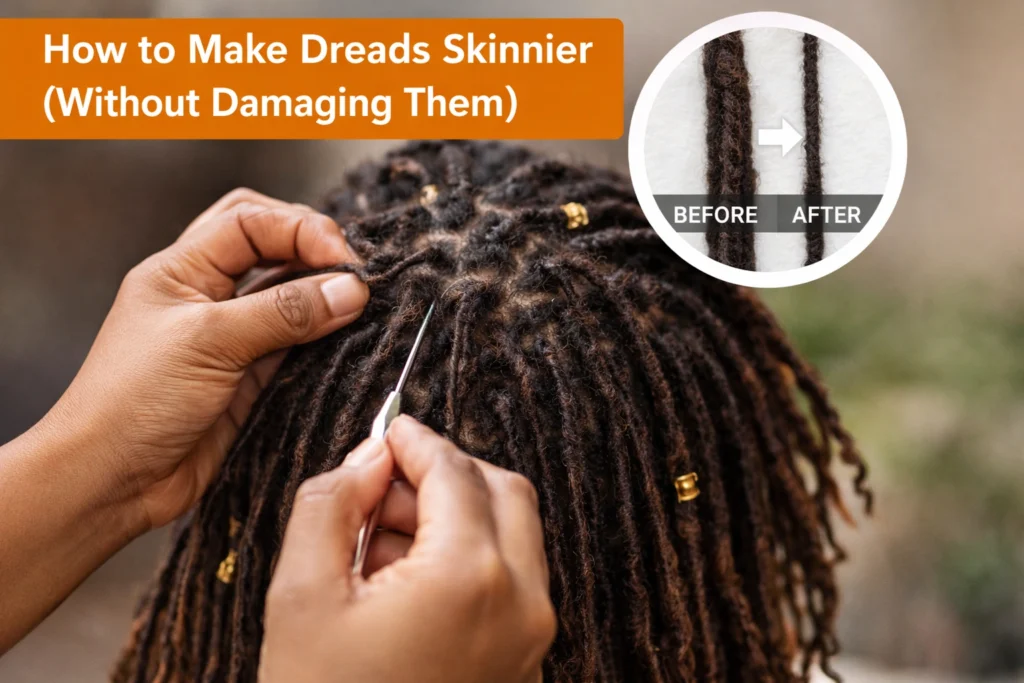
Sometimes people start with thicker locs and later decide they want skinnier dreadlocks for more styling options. In the salon, making dreads thinner is possible, but it must be done carefully. If the process is rushed or done incorrectly, it can weaken the locs or damage the roots. Professional stylists usually rely on a few safe techniques to make dreads skinnier while keeping them strong.
Splitting Thick Dreadlocks Safely
One common method is splitting thick dreadlocks into two smaller locs. This works best when the dreadlocks are still in the early or middle stages of maturity. The stylist carefully separates the loc down the center and then retwists or crochets the new sections so they lock properly.
However, splitting should only be done if the original dreadlock has enough hair to support two healthy locs. If the hair density is too low, the new skinny dreads may become weak at the roots.
Crochet Refinement
The crochet method is another professional technique used to refine dreadlocks. A small crochet hook is used to tighten the loc by pulling loose hairs inside the dread. This helps control the shape and keeps the dread compact.
Crochet refinement can make dreadlocks appear neater and slightly slimmer, especially when the loc has become loose or uneven over time.
Palm Rolling to Tighten Thin Locs
Palm rolling is a simple but effective maintenance method. The dreadlock is rolled between the palms to help tighten the hair and maintain its cylindrical shape.
While palm rolling will not drastically change the size of a loc, it helps tighten and smooth thin dreadlocks, making them look more defined and controlled.
Re-Sectioning Thick Dreadlocks
In some cases, stylists may recommend re-sectioning dreadlocks. This involves reopening the root area and dividing the hair into smaller sections before forming new locs. It is more time-consuming than other methods but can create cleaner, evenly sized skinny dreads.
This technique works best when the dreadlocks are still relatively young and have not fully matured.
When It’s Too Late to Thin Them Safely
There are situations where making dreadlocks thinner is not recommended. If dreadlocks are fully matured, very long, or already weak at the roots, splitting them can cause breakage or thinning.
In these cases, stylists often suggest focusing on maintenance and styling instead of resizing. Keeping the locs healthy with proper washing, scalp care, and protective styling can improve their overall appearance without risking damage.
7. How to Fix Skinny Dreads That Are Too Thin or Weak
While skinny dreads can look clean and stylish, they sometimes develop problems if the sections are too small or if the locs are not maintained properly. In the salon, clients often come in with concerns like weak dreadlocks, thin roots, or uneven loc sizes. The good news is that many of these issues can be corrected with the right techniques.
Weak or Fragile Dreadlocks
Thin dreadlocks can sometimes become fragile, especially if the hair has been over-manipulated or not maintained regularly. When a loc feels soft or loose, it may not have fully locked yet. Stylists usually strengthen weak locs by tightening the hair using maintenance techniques and ensuring the dread forms a solid structure from root to tip.
Thin Roots
One common issue with skinny dreads is thin roots. This happens when the hair near the scalp separates too much or when the original sections were too small. If not addressed early, thin roots can cause the dreadlock to weaken as it grows longer.
Stylists often fix this by reinforcing the root area and making sure the hair around the base of the dreadlock is evenly distributed.
Uneven Dread Sizes
Sometimes dreadlocks start out with uneven sectioning, which leads to some locs being much thicker than others. This can make the hairstyle look unbalanced. In many cases, stylists adjust the locs over time so they appear more consistent and blend better with the rest of the hair.
Broken Dread Sections
If a dreadlock becomes too thin in one area, it may eventually break or split. This is usually caused by tension, dryness, or weak roots. When this happens, it’s important to repair the dread quickly to prevent further damage.
Professional Fixes
Combining Locs
If a dreadlock is too thin to stay strong, stylists sometimes combine it with a nearby loc. This creates a thicker, more stable dread that can support future growth.
Root Reinforcement
For thin roots, the hair around the base of the dreadlock can be carefully tightened and reorganized. This helps distribute the hair evenly so the loc becomes stronger at the scalp.
Crochet Repair Techniques
A crochet hook is often used to repair weak or damaged dreadlocks. By pulling loose hairs back into the loc, the stylist can strengthen the structure and help the dreadlock hold together again.
With proper repair and maintenance, many skinny dreads that appear weak at first can become healthy, balanced locs over time.
8. Maintenance Secrets: Keeping Skinny Dreads Healthy and Strong
Proper skinny dreadlocks maintenance is important because thin locs can become weak if they are neglected or over-styled. From a stylist’s experience, healthy skinny dreads usually come down to a simple routine that focuses on cleanliness, scalp health, and gentle handling.
Washing Routine for Thin Dreadlocks
Keeping dreadlocks clean is essential for healthy hair and scalp. Skinny dreads should be washed regularly, usually every one to two weeks depending on lifestyle and scalp condition. Using a lightweight, residue-free shampoo helps remove oil and buildup without leaving product inside the locs.
When washing thin dreadlocks, it’s best to massage the scalp gently rather than scrubbing the locs aggressively. This keeps the roots clean while preventing unnecessary loosening.
Scalp Care
Healthy dreadlocks always start with a healthy scalp. Dry or irritated scalp can lead to itching, flakes, or weak roots. A simple routine like light scalp oiling and gentle massage can help improve circulation and keep the scalp balanced.
Stylists usually recommend using light oils in small amounts so the locs do not become greasy or attract buildup.
Avoiding Breakage
Because skinny dreads contain less hair per loc, they can be more sensitive to tension and rough handling. Avoid constantly pulling the hair into tight styles or over-manipulating the locs. Gentle styling and regular maintenance help keep the dreadlocks strong as they grow.
Keeping the hair moisturized and avoiding heavy product buildup are also key parts of skinny dreads care.
Sleeping Protection Methods
Nighttime protection makes a big difference in maintaining thin dreadlocks. Friction from pillows can cause frizz and weaken the locs over time. Many stylists suggest sleeping with a satin or silk bonnet, scarf, or pillowcase. These materials reduce friction and help the dreadlocks stay smooth.
Retwisting Frequency
Regular maintenance at the roots helps keep skinny dreads neat and balanced. However, retwisting too often can weaken the hair. Most professionals suggest retwisting every four to six weeks, depending on hair growth and styling preference.
This timing allows the hair to grow naturally while keeping the locs structured.
Products Professionals Recommend
When it comes to dreadlocks, simpler products usually work best. A residue-free shampoo, a light natural oil for the scalp, and sometimes a mild locking gel for maintenance are usually enough.
Heavy creams, waxes, or thick gels should generally be avoided because they can build up inside the locs and make them harder to keep clean. With the right routine and products, skinny dreadlocks can stay healthy, strong, and easy to manage for years.
9. Common Questions Clients Ask About Skinny Dreads
People who are new to dreadlocks often have questions about how skinny dreads behave over time. In the salon, these are some of the most common concerns clients ask before starting or maintaining thin locs.
Are Skinny Dreadlocks Better?
Skinny dreadlocks are not necessarily better than thick locs—they are simply a different style choice. Many people prefer skinny dreads because they allow more styling options and create a fuller look with more individual locs. Others prefer thicker dreadlocks because they are stronger and require less detailed maintenance. The best option usually depends on hair density, personal style, and lifestyle preferences.
Is It Normal for Dreadlocks to Be Skinny?
Yes, it is completely normal for dreadlocks to be skinny, especially in the early stages. When locs first form, they often look thinner before they tighten and mature. The final thickness usually depends on the original section size and the person’s hair texture. As long as the roots remain healthy and balanced, skinny dreadlocks can grow strong and stable.
Can Thin Dreadlocks Become Thicker Over Time?
In some cases, thin dreadlocks may become slightly thicker as they mature. This happens when loose hair gradually locks into the dread. However, the overall size of a loc is mostly determined by the initial sectioning. If larger locs are desired later, stylists sometimes combine two smaller dreadlocks to create a thicker one.
Do Skinny Dreads Break Easier?
Skinny dreads can be a little more sensitive than thick dreadlocks because each loc contains less hair. If they are over-styled, pulled too tightly, or not maintained properly, they may weaken over time. However, with good maintenance, gentle styling, and proper scalp care, skinny dreadlocks can remain healthy and strong for many years.
How Long Does It Take for Skinny Dreads to Mature?
The time it takes for skinny dreads to mature depends on hair type, maintenance routine, and locking method. For many people, the locking process can take several months to a year before the dreadlocks become fully mature. Curly or coily hair textures often lock faster, while straighter hair types may take longer. Regular maintenance and patience usually lead to the best results as the locs tighten and develop their final shape.
Conclusion
Skinny dreads remain one of the most versatile dreadlock styles because they offer a balance between a clean appearance and flexible styling. Their thinner size allows more individual locs across the scalp, which makes it easier to create different hairstyles, from simple ponytails to more detailed braided looks. This flexibility is one of the main reasons many people choose skinny dreadlocks over thicker loc styles.
When deciding between thick and thin dreadlocks, it’s important to consider hair type, lifestyle, and personal styling goals. People with dense hair often support skinny dreads well, while others may prefer medium or thicker locs for added strength. The right dread thickness should always match the natural characteristics of the hair so the locs stay healthy as they grow.
With proper maintenance and the right techniques, thin dreadlocks can look sharp and last for years. Regular washing, gentle styling, and balanced root care help keep skinny dreads strong and well-shaped over time.
If you’re thinking about starting dreadlocks or refreshing your current locs, don’t be afraid to explore different skinny dread styles, hairstyles, and care routines. With the right approach, skinny dreads can be both stylish and practical, giving you plenty of room to express your personal look.
