




Dreads vs Braids: Expert Guide to Choosing the Right Style for You
-
- December 2, 2025

A lot of people look at dreads and braids and think they’re basically the same thing. And honestly, I don’t blame them. When you see someone with long rope-like hair or clean, sectioned patterns, it’s easy to mix the two up. But as someone who has spent years behind the chair, twisting hair, shaping locs, fixing mistakes, and watching people light up when they see themselves in the mirror, I can tell you these two styles are very different in how they’re made and how they’re lived with.
I’ve had clients walk into my salon saying they want dreads, when really they wanted box braids because they liked that clean, organized look. And I’ve had others ask for braids because they thought dreads were “too much work,” even though their lifestyle would actually fit locs better. Trends like braids men or dread braids male also add confusion, because people copy styles without knowing what goes into them.
And that’s why this topic matters. When you’re choosing between dreads vs braids, you’re not just choosing a hairstyle—you’re choosing:
- how much time you’re ready to invest
- how much maintenance you can handle
- how you want to express yourself
- how much you’re willing to spend
- and how comfortable you are with commitment
Some people want a style that lasts and grows with them. Some want flexibility. Some want something that makes them feel bold. Some just want something that keeps their hair healthy.
On dreadlockswig.com, I share what I’ve learned from working on hundreds of heads—new methods, styling tricks, maintenance routines, color experiments, and all the small details only a seasoned dread stylist knows. People come here to learn, try new things, and enjoy the kind of knowledge you don’t get from a generic YouTube tutorial.
So if you’re deciding between dreads or braids, here’s what actually matters—from someone who’s been doing this for years, seen every hair type walk through the door, and helped countless people find a style that feels like them.
What Are Braids? (From a Stylist’s Point of View)
Braids are created by sectioning hair into parts and weaving strands together in a repeated pattern, usually three pieces at a time. They sit on top of the scalp or hang freely, depending on the style. They’re not meant to lock or mat permanently like dreads; they’re a temporary, protective style that you can remove when you feel like switching things up.
In my chair, I recommend braids to people who want something that looks clean, structured, and versatile without committing to a long-term journey. Braids work well for a wide range of hair types, especially thick, curly, or coily textures that benefit from being tucked away to prevent constant breakage. They’re great for people with busy routines who want a style that stays neat for weeks, for kids who get tired of daily detangling, and for anyone who likes changing their look every month or two.
Some of the most common styles I work on include:
- Box braids — easy to style, long-lasting, and perfect for adding length or color
- Cornrows — clean, scalp-hugging patterns that can be simple or artistic
- Micro braids — thin, detailed, and very time-consuming, but incredibly flexible
- Braided ponytails — bold, sleek, and perfect for a sporty or high-fashion vibe
Braids are not just a hairstyle; they carry deep cultural history. For centuries, different African communities used braid patterns to show identity, age, status, tribe, and creativity. Today, they still hold cultural value, but they’ve also become a global symbol of style, versatility, and self-expression.
Expert Tips
- When braids are safer than dreads:
If your hair is fragile, breaking at the ends, or you’re recovering from heat damage, braids can be safer than dreads because they give your hair a break without forcing it to lock. They’re also a good short-term option for people who aren’t ready for the long commitment of locs. - Mistakes clients make with tight braids:
A lot of people think tighter braids last longer, but tight installs can pull the hairline, cause bumps, tension, and even permanent thinning around the edges. I’ve seen people lose hair because they ignored the discomfort in the first few days. If your braids feel painfully tight, don’t “wait it out”—go back and ask your stylist to loosen them. Your scalp shouldn’t suffer for a style.
What Are Dreads? (Loc Journey Explained by a Professional)
Dreads—also called locs—are formed when hair mats and bonds together into rope-like strands over time. Unlike braids, which are woven and temporary, dreads are meant to lock, evolve, and stay. They’re not just a hairstyle you take down after a few weeks; they become a long-term part of your identity, routine, and sometimes even lifestyle.
There are different ways to start locs depending on hair type and personal preference. In the salon, some common methods I use are:
- Twisting: great for curly or coily hair, using two-strand twists that eventually lock
- Matting: letting hair naturally tangle and tighten over time
- Palm rolling: rolling the hair between palms to smooth, shape, and tighten locs
- Interlocking: pulling the end of the loc through the root to secure it, often used for tighter textures or active lifestyles
Each technique has its own pace and personality. Some clients want a neat, uniform look. Others want locs to develop naturally, wild, and organic.
There’s also a big difference between starter locs and mature locs. Starter locs look neat but can unravel easily, especially in the early weeks. They’re soft and still finding direction. Mature locs, on the other hand, are solid, shaped, thickened, and fully bonded. They move differently, hold color differently, and don’t unravel when you wash them. That transformation can take a year or more, depending on hair, technique, and maintenance.
Locs carry a strong cultural and music influence, especially in reggae, hip-hop, and spiritual communities. For many people, locs represent freedom, patience, and reclaiming identity—not just a fashion trend. I’ve had clients start locs because they wanted a fresh start, a deeper connection to themselves, or simply a low-maintenance style that reflects who they are without needing constant styling.
Expert Tips
- Who dreads are ideal for:
Locs work best for people who want a long-term, low-effort routine, and don’t mind a slow transformation. They suit natural curls, coils, and anyone who’s tired of constantly manipulating their hair. They’re also great for people who want a style that feels authentic and grows with them, instead of changing every few weeks. - The emotional commitment nobody talks about:
Locs ask you to be patient. They don’t look “perfect” overnight. You go through a messy phase, a fuzzy phase, a “why did I do this?” phase. And that’s normal. I’ve seen people build confidence as their locs matured, because they stopped chasing perfection and started embracing growth—literally and emotionally. Dreads aren’t just hair; they’re a journey, and you’ve got to be ready for it.
Dreads vs Braids: Key Differences That Actually Matter
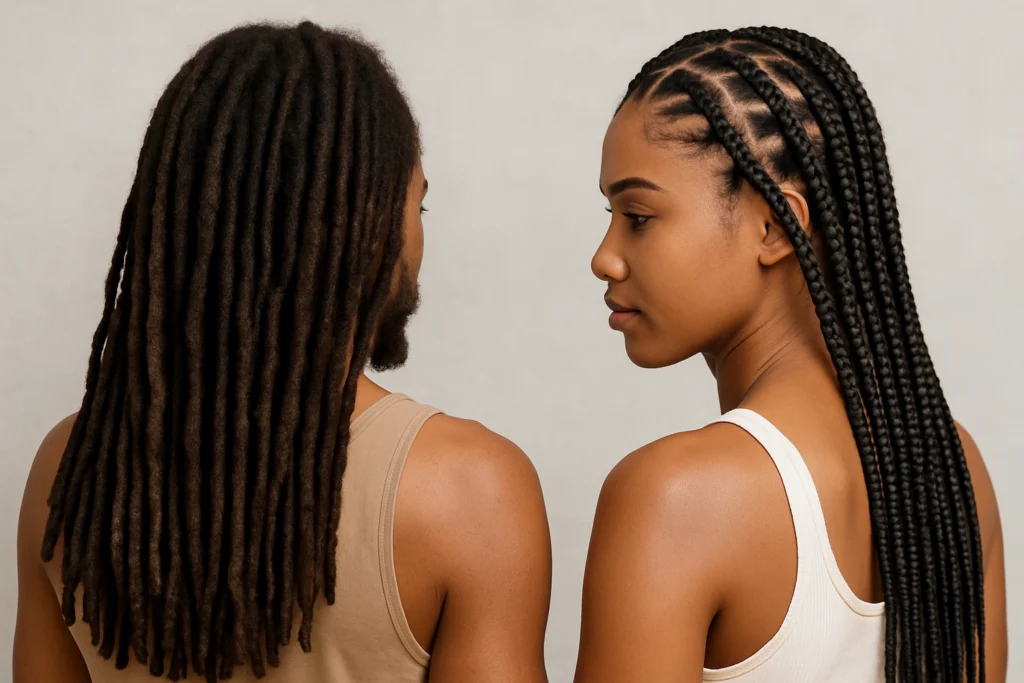
I always tell clients: don’t choose a style because it looks good on someone else. Choose the one that fits your lifestyle, patience level, hair condition, and budget. Let’s break down the differences based on what I see every day in the salon—not textbook definitions, but real-life experience.
Installation & Time Commitment
Braids are usually faster. A basic set of box braids might take 4–8 hours, depending on size and length. Dreads can take longer because you’re not just styling—you’re building a foundation. Creating a full head of starter locs can take anywhere from 6–12 hours, and in some cases, multiple sessions.
When it comes to pain or tension, braids can feel tight, especially around the hairline. Tight installs often leave people going home with headaches. Dreads usually don’t hurt during installation unless someone over-tightens during re-twists.
DIY vs salon is another big difference. You’ll find a lot of tutorials for braids men and even dread braids male, but most people who try DIY braids end up frustrated or uneven. Locs can be started at home, but professional techniques like palm rolling or interlocking give cleaner, healthier results in the long run.
Maintenance & Upkeep
Braids are low-maintenance short-term. You might wash gently every 1–2 weeks, moisturize, and you’re good. Dreads need consistent care to avoid buildup, dryness, and odor. A good wash routine, residue-free products, and occasional deep cleans are necessary.
Braids rarely need tightening unless new growth gets messy. Locs need re-twisting or interlocking every 4–8 weeks, depending on hair type and lifestyle. It’s not hard work, but it requires commitment.
Comfort, Lifestyle & Daily Wear
If you sweat a lot—gym, outdoor work, sports—braids are easier. They dry faster and feel lighter. Locs can stay damp longer, which requires smart drying so you don’t get buildup.
Heat and humidity affect both, but in different ways:
- Braids get frizzy faster
- Locs get fuzzy but settle as they mature
Sleeping is easier with dreads once they’re mature, but new locs need protection. Braids can feel heavy, especially with extensions.
For daily comfort, braids work well for short-term wear, while locs become comfortable long-term once they settle.
Hair Health & Growth
Both styles protect hair if done correctly, but each has different risks.
Braids protect ends, but tight installs can cause:
- breakage
- thinning edges
- tension bumps
I’ve seen too many clients lose hair because they ignored the warning signs. Locs can be gentle on hair because the strands work together instead of stretching, but improper care leads to:
- dryness
- breakage
- buildup
If you already have weak edges, braids are safer if installed loosely. Locs can work too, but avoid heavy extensions and tight re-twists.
Versatility & Styling Options
Braids win when it comes to variety. You can change:
- length
- thickness
- color
- patterns
- accessories
Locs can also be styled, especially mature ones, but they need more patience. Coloring locs is possible, but the hair is more vulnerable because it’s already locked. Extensions work for both, but loc extensions are more expensive and time-consuming.
Professional appearance depends on your workplace. Braids are often seen as temporary and trendy, while locs represent personal identity and culture. That perception is changing, but it still plays a role.
Longevity & Durability
Braids are temporary. They look best for 4–8 weeks, then need removal. Locs are long-term. They evolve over months and mature over years.
So if you’re the kind of person who likes switching styles often, braids are better. If you want something that grows with you, locs make sense.
Cost & Time Investment
Braids cost less upfront but more over time if you redo them every month or two. Locs can be expensive at the start—especially if you choose extensions or advanced techniques—but after that, maintenance is spaced out.
Hidden costs people often forget:
- products
- satin wraps
- drying tools
- deep cleans
- color treatments
Braids are cheaper short-term, but long-term, the expenses can add up. Locs require fewer salon visits but longer appointments.
Most of the time, people choosing between dreads vs braids male or braids men focus only on the look. But it’s the time, lifestyle, and budget that make one option better than the other.
If you want a style that is flexible, expressive, and temporary — choose braids.
If you want something that becomes a part of you — locs are worth the journey.
Pros and Cons of Braids (Real Salon Experience)
Braids are one of the most requested styles in my salon because they look clean, last long, and don’t demand daily styling. But like every hairstyle, they come with benefits and challenges that people don’t always think about. Let’s break it down honestly, based on what I see in the chair every week.
Benefits of Braids
1. Low maintenance
Braids let you wake up, moisturize quickly, and go about your day. No daily combing, twisting, or styling. If you travel a lot, work long hours, or simply don’t want to deal with hair every morning, braids make life easier.
2. Versatile styles
You can go big, small, long, short, colorful, subtle—whatever fits your personality. Styles like box braids, cornrows, and braided ponytails work for everything from school to photoshoots. You can accessorize or switch styles without committing long-term.
3. Temporary + flexible
Braids aren’t a lifetime commitment. Wear them for a few weeks, take them down, and try something new. They’re perfect for people who like experimenting with different looks throughout the year.
4. Good for hair growth
Because your hair is tucked away and not being brushed or manipulated daily, braids can help retain length. They keep ends protected, which reduces breakage and gives the hair a chance to grow without stress.
Drawbacks of Braids
1. Can damage edges
The biggest issue I see with braids is tension around the hairline. When installed too tight, they can cause:
- breakage
- thinning edges
- tension bumps
- long-term hair loss
People often ignore discomfort because they think it’s normal, but pain is a sign of damage.
2. Heavy extensions
Adding extensions gives volume and length, but they can feel heavy, especially for thin hair. Weight can pull on roots, make sleeping uncomfortable, and cause neck soreness.
3. Scalp pain from tension
Tight braids might look neat, but they shouldn’t hurt. Long-lasting pain isn’t beauty—it’s damage waiting to happen. I’ve seen clients keep braids in while dealing with redness, swelling, and flakes.
4. Can be expensive
Depending on length, size, and stylist, braids can cost a lot. And if you redo them often, that expense adds up. They’re temporary, so you’re paying for a style you’ll remove after a few weeks.
Expert Advice
How to avoid traction alopecia
Traction alopecia is hair loss caused by pulling. To protect your edges:
- Ask for looser braids around the hairline
- Avoid heavy extensions if your hair is fine
- Don’t keep braids in longer than recommended
- Give your hair a break between installs
If you feel pain or see bumps, don’t push through it. Your scalp is telling you something.
Best oils/products
For healthy braided hair, I recommend light products that hydrate without clogging pores, such as:
- jojoba oil
- argan oil
- tea tree-based scalp sprays
- aloe vera gel
Skip thick creams or heavy butters. They can create buildup and make your scalp itchy.
Braids are a beautiful, flexible style when done right, but they still need smart care. Pay attention to tension, moisture, and rest periods, and your hair will reward you.
Pros and Cons of Dreads (What Clients Wish They Knew Sooner)
Dreads are one of those styles people fall in love with because they look natural, bold, and effortless. But what many clients don’t realize is that locs go through stages, and each stage comes with its own lessons. I’ve watched people go from self-doubt to confidence, and I’ve also seen frustration when expectations didn’t match reality. Here’s what you should know before starting your loc journey.
Benefits of Dreads
1. Low day-to-day maintenance
Once locs mature, daily styling becomes simple. You don’t have to detangle, twist, or constantly fix frizz. A quick moisture routine, a tie-back, and you’re out the door. For people with busy lives, this is a relief.
2. Long-lasting
Dreads can last for years, even decades, when cared for properly. They don’t need to be redone every month like braids, which makes them a good long-term style for anyone who dislikes frequent salon visits.
3. Great for self-expression
Locs carry personality. You can keep them natural, color them, style them, or wear them wild. I’ve seen people grow into themselves because locs gave them a look that felt authentic instead of forced.
4. Less breakage after maturing
Once locs are fully developed, the strands work together, which reduces single-strand breakage. Mature locs tend to be strong, and many clients notice healthier, fuller hair after the awkward starter phase.
Drawbacks of Dreads
1. Build-up risk
Locs attract product and sweat more easily than loose hair. If you use heavy creams or skip proper washing, buildup can create stiffness, dullness, or flaking over time.
2. Smell concerns
Because locs are dense, they take longer to dry. If you go to bed with damp hair or don’t dry thoroughly, moisture can get trapped, which may cause an unpleasant smell. It’s not common when cared for correctly, but it’s possible.
3. Harder to undo
Taking down dreads is time-consuming and sometimes impossible without cutting. I’ve spent hours carefully combing out locs, and I’ve also had clients decide it was easier to start over with a fresh cut.
4. Not accepted in all workplaces
Things are changing, but some environments still carry bias against locs. I’ve seen clients grow frustrated because coworkers or employers didn’t view locs as “professional.” It’s getting better, but it’s still a factor.
Expert Advice
How to avoid buildup + smell
- Use light, water-based products, not thick creams or waxes
- Wash regularly with a residue-free shampoo
- Rinse thoroughly so no product stays trapped
- Dry completely after washing—air-drying alone isn’t enough
- If you sweat a lot, cleanse your scalp more often
Simple rule: if you wouldn’t leave a sponge wet overnight, don’t do it to your locs.
Mistakes beginners make
A lot of new clients panic during the messy phase and start obsessively manipulating their hair. Constant twisting, over-styling, and heavy products slow down locking and cause breakage.
Other common mistakes I see:
- Using wax to “speed up the process”
- Washing too rarely because they’re afraid of unraveling
- Sleeping without a scarf or satin pillowcase
- Expecting perfect locs in the first few months
Locs teach patience. Your hair won’t look polished immediately, and that’s okay.
Dreads can be freeing, empowering, and low-effort once they settle, but they demand patience and smart care in the beginning. If you embrace the process and avoid shortcuts, you’ll end up with a style that reflects your personality and lasts for years.
Which One Is Better — Dreads or Braids?
People love asking me, “Which is better, dreads or braids?” But the truth is, there isn’t a universal winner. Both styles can look beautiful and healthy, but they fit different personalities, routines, and lifestyles. Let me break it down the same way I do in the salon, so you can make a decision that makes sense for you, not for Instagram.
Best for a Low-Maintenance Lifestyle?
Once mature, dreads win long-term. They don’t need daily styling, and you can go weeks without re-twisting. Braids stay neat without effort too, but only for a few weeks. After that, you’re taking them out and doing it all over again.
If you want a style that you set and forget for months or years, locs are better.
Best for a Sensitive Scalp?
Braids are safer if installed loosely, especially for people who are prone to tension headaches or have weak edges. Tight braids, though, can cause pain and hair loss.
Locs don’t usually hurt during installation, but the locking period can be frustrating if you have a sensitive scalp and you’re tempted to manipulate your hair too much.
Best for Professional Settings?
Both can look professional, but workplaces can be biased.
Braids are often seen as temporary and fashion-forward, which some offices find easier to accept.
Locs carry more cultural and personal identity, and while acceptance is growing, discrimination still exists. If your workplace is conservative, braids might feel safer.
Best for Style Flexibility?
Braids take this one easily.
You can change color, length, thickness, and style every month if you want. Want blue box braids this month and a braided ponytail next month? Easy.
Locs can be styled too, especially when mature, but the options are slower and more permanent. If you need constant change, braids are better.
Best for Hair Growth?
Both can help retain length and reduce breakage. Braids protect ends, but tight installs can damage edges. Locs protect strands long-term and reduce manipulation.
For someone struggling with consistent breakage, mature locs often win because hair is secured, not constantly stretched or brushed.
Best for a Budget-Friendly Approach?
Braids cost less upfront, but you pay again every 4–8 weeks. If you do that all year, it adds up fast.
Locs can be expensive to start, especially if you choose extensions or salon techniques, but maintenance is spaced out.
If you want lower cost over time, locs usually come out cheaper.
Quick Conclusion
At the end of the day, here’s a simple way to think about it:
- Braids = flexible, temporary, beginner-friendly
You can change your style often, try new looks, and take them down when you’re bored. - Dreads = expressive, long-term, lifestyle shift
They grow with you, become part of your identity, and require patience during the journey.
Both can boost confidence and look amazing. The real question isn’t which style is better—it’s which style is better for your life right now.
Dreads vs Braids for Men
Men often come into my salon with a picture of a style they’ve seen on social media or a rapper they admire, and they want that exact look. But what they don’t always realize is that men’s hair routines, workplace expectations, and lifestyle habits can drastically change how well a style works for them. So let’s break down what I usually tell guys when they’re choosing between dreads or braids.
Style Expectations
Men often want hair that looks sharp without needing a lot of work in the morning. If you want something that looks neat and structured right away, braids are usually the better option. You walk out of the salon with a finished, polished look.
Dreads, especially in the beginning, are messier and more unpredictable. They take time to mature and look uniform. If you’re patient and okay with a “transition phase,” locs eventually develop a strong, natural presence that feels effortless.
Work/Career Perception
Workplace perception still matters, even if we wish it didn’t. Braids are often seen as temporary and versatile, so they can feel less confrontational in professional environments.
Locs can sometimes attract more attention—positive or negative—because they’re associated with culture, identity, and personal expression. I’ve had guys tell me they love their locs but worry about interviews or corporate dress codes. Change is happening, but not everywhere.
If your job is conservative or image-focused, braids might feel safer, at least at the start.
Grooming Routines
If you’re not a fan of routines, dreads might be more comfortable once they mature. Brushing, combing, and styling daily becomes a thing of the past.
Braids require less daily work, too, but they need periodic removal and reinstallation. So while it feels easy weekly, it’s more work over the long run.
Men with dry scalps may find locs easier because you can maintain moisture slowly over time, whereas braids sometimes trap sweat and dirt if not cleaned properly.
Beard + Hair Combos
A lot of men want a style that works with their beard. Braids create a clean, defined look that pairs well with trimmed beards.
Locs create a balanced, natural vibe, especially with full or rugged beards. I’ve seen guys look like kings when their locs and beard grow together—it gives a strong, grounded presence that braids don’t always capture.
Expert Insight
Why “dread braids male” is trending
The mixed style—braids feeding into dread-like ropes—is popular because it gives the best of both worlds:
- Braids on the scalp for structure
- Loc-like lengths for movement
- Easy styling options
It looks modern, artistic, and masculine without needing a long commitment like full locs.
Why men struggle more with buildup
Men sweat more around the scalp, especially during sports, gym sessions, or work. Sweat mixed with heavy products can lead to:
- buildup
- odor
- itching
- dandruff
Locs trap residue more easily because the hair is compact. If a guy’s hygiene routine isn’t consistent, locs can suffer.
Braids aren’t immune either, but they dry faster and allow easier access to the scalp, which makes cleaning simpler.
For men, the decision between dreads or braids often comes down to lifestyle, work environment, and how much effort they’re willing to put in. Both styles can look powerful, confident, and masculine—just choose one you can maintain, not just admire.
How to Choose: Quick Decision-Making Guide
Sometimes you don’t need a long explanation—you just need clarity. When clients sit in my chair unsure about what to do, I ask a few simple questions to help them choose the style that actually fits their life, not just their Pinterest board.
Here’s a quick checklist to help you decide between braids or dreads, based on real scenarios I see every day.
Choose braids if you:
- Want versatility
You like switching up your style, trying different lengths, colors, and designs throughout the year. - Hate long-term commitments
You want something you can take out after a few weeks without affecting the long-term look of your hair. - Have weak edges
When installed loosely, braids are safer for fragile hairlines than heavy locs or tight re-twists. - Want a protective style
You’re trying to protect your natural hair from heat, breakage, or daily manipulation.
Choose dreads if you:
- Want a low-effort routine
Once mature, locs don’t need daily styling, brushing, or detangling. - Love natural + expressive looks
You want a style that feels authentic, personal, and full of character. - Don’t mind a long-term journey
You’re comfortable with the messy phases and understand that locs take time to grow, settle, and mature.
Neither style is “better”—the right one is simply the one you can live with and enjoy, not just wear in photos.
Spiritual, Cultural & Social Questions People Ask
People often come into the salon with honest questions—not just about hair care, but about the meanings, history, and social perceptions tied to these styles. Hair carries culture, spirit, identity, and personal expression, so it’s natural to be curious. Let’s address some of the common questions I hear, in a simple and respectful way.
Are dreadlocks just braids?
No. They might look similar from a distance, but they’re very different in structure, formation, and purpose.
- Braids are created by weaving strands together.
- Dreads form when hair mats and bonds over time.
Braids can be undone easily. Dreads become long-term, evolving strands that don’t unravel without effort or cutting. They’re different styles with different journeys.
Are cornrows braids or dreadlocks?
Cornrows are braids. They’re created by weaving hair close to the scalp in a pattern.
However, in some cases, cornrows can be used to start dreadlocks. When left in for long periods or if the hair is allowed to mat from the base, cornrows can transition into locs. But by definition, cornrows themselves are still braids.
What does God say about braids?
Different cultures and religions have different interpretations, and hair often carries symbolic meaning. In many traditions, braids represent:
- identity
- beauty
- modesty
- strength
- community
Some religious texts mention braided hair, but interpretations vary widely. What’s more important is that hair has always been a personal expression, not just a fashion statement. In most communities today, braids are viewed as a form of creativity, heritage, and self-care, rather than something to judge.
Are dreads unprofessional?
This question comes up often, especially from clients working in corporate spaces. The truth is, perceptions are changing, but change is uneven.
In the past, locs have been labeled as “unprofessional” in certain workplaces because of misunderstanding or bias. I’ve seen clients feel judged or pressured to change their hair to fit in.
But things are improving:
- More companies value individuality
- Diversity policies are stronger
- Groomed locs are widely accepted
What you can control is your presentation:
- clean scalp
- neat sections
- tidy re-twists
- appropriate styling for your environment
Neat, healthy locs look just as professional as any other hairstyle. Sometimes the issue isn’t the hair—it’s the perception, and that’s slowly shifting as more people wear locs with confidence in professional settings.
Hair is never just hair. Whether you wear braids, dreads, curls, or a fade, you’re expressing something about who you are, where you come from, and how you see yourself. The key is respecting the history, caring for your hair properly, and wearing what makes you feel like you.
Expert Tips to Prevent Damage (Regardless of Style)
Whether you choose braids or dreads, the way you care for your hair will determine how healthy it looks and feels. I’ve seen beautiful installs ruined by bad habits, and I’ve also seen average installs thrive because the person took care of their scalp the right way. Here are the tips I give clients to keep their hair strong, regardless of the style they wear.
Avoid tight installs
Tight styling does not equal long-lasting styling.
If you feel:
- throbbing pain
- scalp bumps
- redness
- burning
that’s a sign of tension damage, not good work. Long-term tightness can lead to breakage and permanent thinning, especially around the edges. Ask for a looser grip, especially in the front, where hair is naturally weaker.
Moisturize correctly
Hair needs moisture, but the goal is hydration, not greasing. A simple routine works best:
- water or aloe-based spray
- lightweight oil to seal moisture
- occasional deep conditioning (braids only)
Avoid heavy products like wax, thick creams, and butters, especially with dreads. They sit inside the hair, attract dirt, and cause buildup.
Wash schedule
Clean hair grows better than suffocated hair.
With braids, you can wash every 1–2 weeks using diluted shampoo to avoid frizz.
With dreads, wash regularly using residue-free products, and rinse thoroughly. Don’t avoid washing just because you’re scared of unraveling—clean hair locks better than dirty hair.
Best oils
Light, breathable oils are ideal because they hydrate without clogging pores:
- jojoba oil
- argan oil
- grapeseed oil
- tea tree-infused blends
If you’re prone to flakes, tea tree oil helps calm the scalp. Avoid petroleum-based products; they create buildup and suffocate roots.
Sleep protection
Nighttime is when most friction happens. Protecting your hair can prevent:
- dryness
- frizz
- breakage
- lint buildup
Use:
- a satin bonnet, scarf, or pillowcase
- a loose pineapple or wrap (don’t tie tightly)
It keeps moisture in and helps both braids and dreads stay neat longer.
Healthy hair isn’t just about the style you choose; it’s about supporting your scalp, respecting tension, and maintaining simple, consistent habits. Small changes make a big difference, no matter what you wear.
How Much Do Dreads and Braids Cost?
People often walk into the salon with a screenshot and a budget in mind, but they don’t always realize that the price you pay is not just for the style—it’s for time, technique, and long-term care. Both dreads and braids can be expensive upfront or over time, depending on how you maintain them. Here’s a realistic breakdown based on what I see in my chair.
Salon Pricing Ranges
Prices vary by location, stylist experience, hair length, and technique, but here’s a general idea:
Braids:
- Small to medium box braids: $120–$350
- Large braids/cornrows: $60–$200
- Knotless or long braids: $200–$500+
Dreads:
- Starter locs: $150–$400
- Loc extensions: $400–$1,200+
- Maintenance (re-twists/interlocking): $60–$150 per session
So braids are usually cheaper to start, but cost more when redone often.
Locs can be expensive in the beginning, but cheaper long-term.
Hidden Costs People Forget
Regardless of style, there are extra expenses that sneak up over time:
- Products (oils, sprays, shampoos)
- Salon visits for touch-ups
- Protective gear (scarves, bonnets)
- Drying tools for locs
- Color services
- Detangling or removal sessions
Braids also have removal costs if you don’t do it yourself, especially with smaller sizes.
Locs may require deep cleaning treatments a few times a year to remove buildup, which adds cost.
Maintenance Frequency
Braids:
- Last 4–8 weeks
- You need a fresh install each time
- More expensive over a full year
Locs:
- Re-twist every 4–8 weeks
- Color and deep cleans occasionally
- Cheaper month-to-month, depending on maintenance
If you’re someone who hates paying frequently, locs often win over time.
Budget Tips
When DIY is worth it
DIY can work if:
- You’re doing simple, large braids
- You have patience and some basic skill
- You’re maintaining mature locs, not starting them
Simple at-home maintenance can save you money and still look clean.
When DIY will ruin your hair
Please don’t DIY if:
- You’re starting locs from scratch
- You’re installing small box braids
- You’re using heavy products on locs to “speed up locking”
- You’re dealing with thinning or damaged hair
- You don’t understand tension control
Bad installs can cause:
- Breakage
- Bald spots
- Uneven locs
- Weak roots
- Permanent thinning
And trust me, fixing damage costs way more than doing it right in the first place.
If you’re deciding between dreads and braids with a budget in mind, think long-term. Braids give you flexibility but cost more over a year because they’re temporary. Locs may cost more upfront but often become the cheaper style to maintain, especially once they mature.
Final Thoughts: Choosing Dreads vs Braids with Confidence
From my years in the salon, I’ve learned that there’s no single “best” style—there’s only what fits your life, comfort level, and personality. Some people feel confident with neat, structured braids they can change every month, while others find freedom in letting their hair lock, grow, and evolve naturally over time. Both choices are valid, as long as they support your hair health and lifestyle instead of working against it.
The most important thing is choosing a style you can live with confidently, not just look good in for photos. Think about how much time you’re willing to invest, how sensitive your scalp is, and how expressive or low-maintenance you want to be. Whether you want versatility, or a long-term journey, your comfort and confidence matter more than trends or outside opinions.
If you’re still unsure or you have specific concerns about your hair type, workplace, or routine, feel free to ask questions or seek professional advice before committing. I’ve guided a lot of people through this decision at dreadlockswig.com, and I’m always open to helping you find a style that feels right for you.
Disclaimer
This article is for informational purposes only and reflects professional experience and general hair care knowledge. Individual results vary based on hair type, health, and maintenance practices. Consult a qualified stylist for personalized advice before starting or changing your hairstyle.
