




Fluffy Dreads: How to Get Soft, Full, Healthy Locs the Right Way
-
- December 18, 2025

Introduction: What People Really Mean by “Fluffy Dreads”
If you’ve been scrolling through TikTok lately, you’ve probably noticed a certain look taking over your For You Page — fluffy dreads. And here’s the thing: when people say “fluffy,” they don’t always mean the same thing. Some are talking about that soft, airy volume that gives dreads a fuller, thicker look. Others are simply describing the natural puffiness that happens in the early stages of locking. Both are normal, and both can look amazing when cared for the right way.
A big reason this style has blown up is social media. You’ll see it everywhere — from the fluffy dreads guy on TikTok, to VexBolts-inspired edits, to memes featuring guys and girls rocking that loose, cloud-like texture. The trend cuts across everyone: male, female, white hair, kinky hair, starter locs, mature locs — fluffy dreads have simply become a vibe. They look soft, they move naturally, and they bring a little extra personality to the whole dread journey.
Now, how does this fluffiness even happen? It’s usually a mix of a few things: your hair texture, the locking method, how much you manipulate your locs, and even the stage your dreads are in. During the beginning phase, hair tends to expand and lift away from the loc, which creates puffiness. As your locs mature, that fluffiness can turn into a more controlled, soft-volume look — the kind you often see in those viral TikTok videos.
So when people talk about fluffy dreads, they’re usually pointing to a look that’s full, natural, soft, and slightly undone — a style that celebrates texture instead of hiding it.
What Makes Dreads Look Fluffy? (Texture, Technique, and Timing)
When someone sits in my chair and asks, “Why are my dreads so fluffy?” the first thing I explain is that fluffiness doesn’t come from one single thing. It’s a mix of your hair’s natural behavior, the technique used to start your locs, and the stage you’re currently in.
Hair porosity, curl pattern, and natural volume
Every head of hair reacts differently. If your hair has a high porosity — meaning it absorbs water fast and dries fast — it tends to lift away from the strand and create a soft, airy look. Add in a tight curl pattern, and you get even more volume. This is why people with 4A–4C hair often see that beautiful cloud-like fluff early on. On the other hand, softer, looser curl patterns (like 3A–3B) can look fluffy too, but in a lighter, more feathered way. Volume is just part of the hair’s personality.
Early “bushy” stage vs mature fluffy locs
Almost everyone goes through a “bushy” stage. I see this all the time with new clients. When your locs are still forming, the strands don’t know where to settle yet. They push outward, creating that puffy halo around the loc. It’s completely normal and is actually a sign that your hair is starting to mat and swell — the early foundation of a healthy loc.
As your dreads mature, the fluff can change form. Some people get a soft, intentional-looking fluff around the locs, almost like the volume sits on purpose. Mature fluffy locs look cleaner and more controlled because the inside of the loc is firm, while the outside stays slightly lifted. Think of it like structured softness.
Why some people’s dreads stay fluffy longer
This usually comes down to hair type. Kinky and coily textures tend to hold fluff longer because the curls naturally expand before they settle. Softer hair types — including many 3A–3B textures or “white guy fluffy dreads” that you see trending on TikTok — often keep a more airy, loose fluff because the hair doesn’t compact as tightly.
Some people actually want their dreads to stay this way because it gives their locs more personality and movement.
Why are my dreads fluffy?
This is the question I hear the most. And honestly, nine times out of ten, the answer is simple:
Your hair is doing what it needs to do.
Fluffy dreads usually mean:
- your locs are forming
- your hair texture has natural volume
- your technique encourages softness
- or you’re in a normal stage of the locking process
Fluffiness isn’t a mistake — it’s part of the journey. And with the right care, it becomes one of the most beautiful parts of your locs.
How to Get Fluffy Dreads: Proven Techniques That Actually Work
People ask me all the time in the salon, “How do you get fluffy dreads?” or “How do I make my dreads fluffy like the ones on TikTok?” The good news is that fluffiness isn’t hard to achieve — you just need the right approach and a little patience. Here are the techniques I use with clients when they want that soft, cloud-like volume.
The Sponge Method (Soft Twist Sponge vs Curl Sponge)
One of the easiest ways to add natural fluff is with a soft twist sponge. This sponge has gentler holes, so instead of creating tight coils, it encourages the roots and loose hair to lift and expand. A curl sponge, on the other hand, gives a more defined look with less softness — still fluffy, but not as airy.
When I’m working with clients who want that big, soft volume, I usually reach for the twist sponge. Light circular motions around the head help the hair puff up without unraveling the locs.
Brushing Technique for Controlled Fluff
Yes — you can brush your locs, but only in a controlled way. Using a soft-bristle brush along the surface of the locs helps lift stray hairs and gives that natural halo effect. I use this technique on clients who want fluffiness without looking messy. A few gentle strokes can make the locs look fuller, softer and more lived-in.
This method works especially well for people with straighter or softer hair textures that struggle to build volume naturally.
Backcombing and Palm-Rolling Combos
If you want long-lasting fluff, backcombing is one of the most reliable techniques. By pushing the hair toward the root, you create internal volume that carries through the entire loc. After that, a quick palm roll helps shape everything without flattening the fluff.
This combo is great for:
- thin hair
- soft hair
- people whose locs shrink tightly
- anyone wanting a fuller appearance from day one
I’ve used this method on countless clients who wanted instant volume, and it never fails to deliver a soft, chunky look.
Air-Drying vs Blow-Drying for Volume
Here’s something most people don’t realize:
How you dry your locs affects how fluffy they become.
- Air-drying makes the hair expand naturally, creating more lift and softness.
- Blow-drying (on low heat) gives a fuller, airy look because the warm air opens the strands and increases volume.
I personally love combining both. Let your locs air-dry halfway, then finish with a quick blow-dry session to “set” the fluff. It’s one of my secret salon tricks for clients who want TikTok-style fluffiness.
Using Lightweight Mousse for Softness (Avoid Heavy Products)
If you want your dreads to stay fluffy, avoid heavy creams, thick gels or products that cause buildup. These weigh the hair down and kill the volume fast.
A lightweight mousse is perfect because it:
- softens the hair
- helps lift the roots
- adds shine without stiffness
- maintains the fluffy look longer
I use mousse sparingly on clients right before styling, especially when doing fluffy dreads for photo shoots or special events where we want that extra “cloud” effect.
When you combine these techniques, you get fluffy dreads that look natural, effortless and full of personality — not frizzy or chaotic.
Fluffy Dreads for Every Hair Type (Male, Female, Straight, Kinky, White Hair)
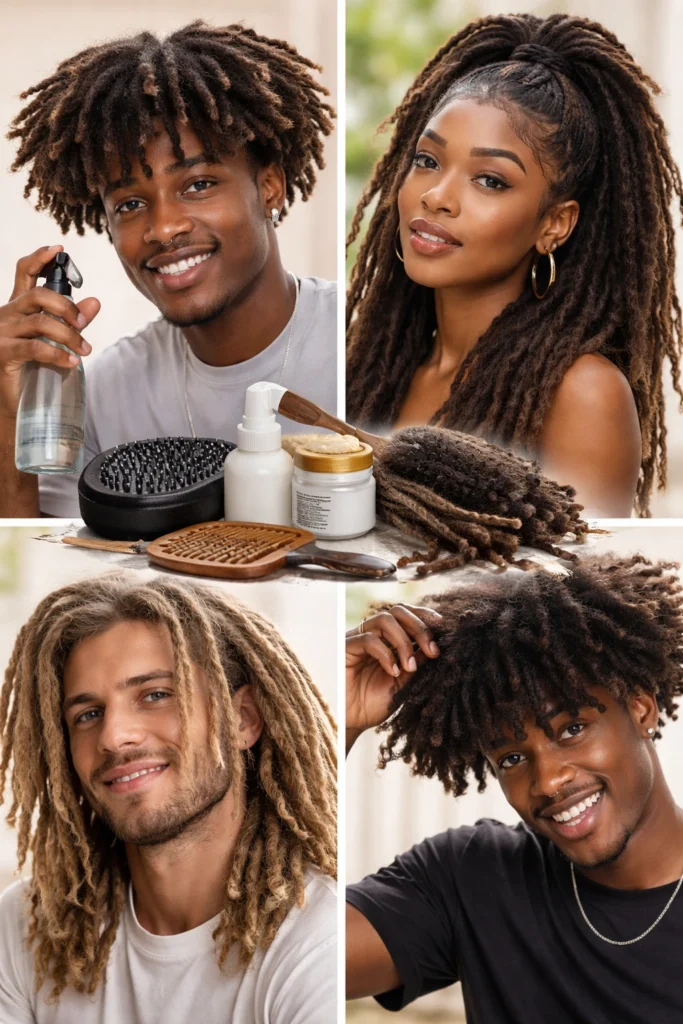
One of the things I love most about fluffy dreads is how differently they show up on every hair type. In my salon chair, I’ve seen fluffy dreads male, fluffy dreads female, fluffy kinky dreads, and even the super-viral fluffy dreads white guy look — and each one has its own character. The texture, thickness and curl pattern of your hair all change the way fluffiness develops, so your approach should match your hair’s natural behavior.
Tips for Kinky / Afro-Textured Hair (Type 4 Fluff Is Different)
If you have 4A–4C hair, you already know your hair loves to expand. Type 4 textures naturally produce big, soft, cloud-like fluff, especially in the early stages of locking. This is why fluffy locs on natural hair often look fuller and more rounded — the curls push outward before tightening.
For my clients with kinky hair, here’s what works best:
- Don’t over-retwist — it flattens the fluff.
- Let your roots breathe; it keeps the volume alive.
- Use a soft sponge or gentle brushing to shape the fluff.
- Keep product light — Type 4 hair gets weighed down fast.
This hair type gives some of the best fluffy dreads you’ll ever see, especially when the goal is thick, structured volume.
Tips for Straighter or Softer Textures (Keeping Fluff Without Unraveling)
Straighter hair (2B–3B textures) creates a different style of fluff. Instead of big volume, the fluff sits more like soft feathers around the loc. It looks airy and delicate but can unravel if not handled carefully.
For my straighter-hair clients, I usually suggest:
- Backcombing to build internal volume
- Light palm-rolling to keep the structure firm
- Blow-drying instead of air-drying
- Using a small amount of mousse for soft hold
This keeps the fluffy look without letting the dreads slip apart.
Why Fluffy Dreads Look Extra Voluminous on White Hair
This is something TikTok made very popular — the fluffy dreads white guy aesthetic. Straighter or softer hair doesn’t compact as tightly in the beginning, so it creates looser, lighter fluff that sits on top of the loc and makes the hair look bigger than it actually is.
Think of it like this: each strand “floats” before it settles.
A few things I notice with my clients who have straighter hair:
- Their fluff lasts longer
- The locs look softer and rounder
- They get that signature airy TikTok look naturally
It’s a unique kind of fluff, and honestly, it photographs beautifully.
Gender-Specific Styling Differences + TikTok Influences
Fluffy dreads look good on everyone, but I do see certain patterns in the salon:
Male clients:
- Usually prefer bigger, messier, more natural volume
- Inspired a lot by TikTok aesthetics and VexBolts edits
- Often skip retwists to keep the soft look
Female clients:
- Prefer controlled fluff with cleaner lines
- Like mixing fluff with curls or half-up looks
- Usually want a balance between softness and polish
TikTok has pushed both styles into the spotlight — from the “fluffy dreads male” look with wild volume to the softer, more refined “fluffy dreads female” styles.
No matter your texture or gender identity, fluffiness adapts to who you are. Your hair simply brings its own personality to the style.
Maintenance Tips to Keep Dreads Fluffy Without Frizz or Damage
A lot of people think fluffy dreads are effortless, but the truth is: the right maintenance makes all the difference. Over the years, I’ve seen perfectly fluffy locs lose their shape because of heavy products, over-washing or even drying mistakes. If you want soft, cloud-like volume without frizz or damage, these are the exact tips I give my clients.
Best Washing Routine for Volume
Your wash routine directly affects how fluffy your locs become. When you wash too often, the hair gets stripped and collapses. When you wash too rarely, buildup weighs everything down.
Here’s what works best for most of my clients:
- Wash every 2–3 weeks for balanced fluff.
- Use a gentle, lightweight shampoo that cleans without flattening the hair.
- Focus on the scalp — that’s where volume starts.
When your scalp is clean and your locs aren’t overloaded with products, the hair naturally expands and gives that soft, full look.
Light Oils vs Heavy Creams (Avoid Weight)
If you want your dreads fluffy, stay far away from heavy creams, thick gels and waxy products. They coat the loc and make it stiff, sticky or weighed down — the opposite of what you want.
What I recommend in the salon:
- Light oils: jojoba oil, grapeseed oil, avocado oil
- Avoid: shea butter, wax, thick curl creams, heavy gels
Light oils keep the locs moisturized without changing their natural volume. You get softness and shine, not heaviness.
Retwist Frequency for Fluffy Styles
Here’s a secret most people don’t know:
If you retwist too often, you destroy the fluff.
Frequent retwisting tightens the roots and pulls the hair flat, making the locs look thin and overly controlled. If your goal is fluff:
- Retwist every 6–8 weeks, not every 2–3
- Let your roots breathe between sessions
- Separate locs gently to prevent matting
Your natural volume needs room to grow. Looser routines help the fluff stay soft and intentional instead of frizzy.
How to Maintain Fluffy Dreads Without Product Buildup
Fluffy dreads only look good when they’re clean. If buildup settles inside the loc, you’ll notice the fluff disappear and the hair feel heavy.
To avoid that:
- Use products sparingly
- Rinse thoroughly every time you wash
- Clarify every 1–2 months
- Avoid anything creamy, sticky or wax-based
A clean loc always lifts more — buildup is the biggest enemy of volume.
Drying Mistakes That Kill Fluffiness
Believe it or not, drying is where most people ruin their fluff.
Here are the mistakes I see all the time:
- Sleeping on wet locs → makes them flat and musty
- Using high heat → shrinks volume
- Wrapping locs tightly in a towel → presses down fluff
- Not fully drying them → encourages mold and kills softness
If you want that soft, airy look:
- Air-dry first
- Then use a blow-dryer on low heat, high air
- Don’t squeeze or flatten the locs while drying
This drying method protects your volume and keeps the fluff structured, not frizzy.
With the right products, the right wash routine and a gentle approach, your fluffy dreads stay soft, healthy and full of personality — without the damage most beginners accidentally cause.
Fluffy Dreads Hairstyles You Can Try Right Now
One thing I always tell my clients is that fluffy dreads aren’t just a “look,” they’re a whole aesthetic. The soft volume, the texture, the movement — it all opens the door to some really beautiful hairstyles. Whether you’re following the fluffy hair aesthetic from TikTok or just experimenting on your own, here are styles that work on almost every hair type.
Half-Up Fluffy Locs
This is one of the easiest fluffy dreads hairstyles to put together, and it looks good on everyone. When you pull the top half of your locs up and leave the bottom free, the natural fluff sits right at the crown, giving you height and softness without trying too hard.
I love this style for:
- medium to long locs
- both male and female clients
- days when you want volume but also want hair out of your face
A loose tie or scrunchie helps keep the fluffy shape instead of squeezing the locs flat.
Curly Ends With Fluffy Roots
This is a client favorite in my salon. When the roots have that soft, lifted look and the ends carry a gentle curl, you get the perfect blend of controlled and carefree. The curls add weight, while the root fluff gives natural volume.
To achieve this look:
- Curl the ends with perm rods or braids
- Let the roots stay slightly loose
- Avoid heavy products so the curls bounce freely
It’s a clean, stylish option if you want fluff without looking messy.
Messy Volume Look (Popular on TikTok)
You’ve definitely seen this one — that wild, full, effortless look that almost feels like a fluffy halo around the head. TikTok loves this style because it has personality and shape without needing perfect retwists.
To get it:
- Skip retwisting for a few extra weeks
- Brush gently to lift hairs without creating frizz
- Use a little mousse for soft hold
The goal isn’t chaos — it’s intentional messiness that still feels natural and expressive.
High Pony / Bun With Soft Edges
A high pony or bun paired with fluffy edges gives your dreads a polished but relaxed vibe. This style is great for long locs and works beautifully for people who want a neat appearance without losing that soft, airy feel.
My tips:
- Use a loose band so the hair isn’t pulled tight
- Allow the edges and short locs to stay fluffy
- Don’t over-gel the hairline
It’s elegant without being stiff, and it keeps the locs breathing.
Fluffy Starter Loc Transitions
Starter locs naturally go through a fluffy phase, and instead of hiding it, you can style it. This is where you see people wearing headbands, loose ponytails, or gentle side parts that show off the natural puffiness.
To make it look intentional:
- Don’t force the frizz to stay down
- Shape the fluff with a soft sponge
- Let your hair settle into its own pattern
These transition styles help new loc wearers feel confident while their hair finds its form.
Fluffy dreads give you endless styling options, and every one of these looks lets your texture shine instead of hiding it.
Common Problems With Fluffy Dreads (And How to Fix Them Like a Loctician)
Even though fluffy dreads look beautiful, they can come with a few challenges — and I’ve seen all of them in the salon. The good news is that most issues are completely normal and easy to fix once you understand what’s really going on with your locs. Here’s how I break it down for clients who want the fluffy look without the stress.
When Fluff Is Normal vs When It’s Loc Unraveling
A little fluff is part of the journey. In fact, it shows your hair is expanding, matting and forming the base of a healthy dread. But sometimes people confuse natural fluffiness with unraveling.
Normal fluff looks like:
- soft hair lifting around the loc
- fuzzy texture that follows the shape of the dread
- volume that stays even after you gently shape it
Unraveling looks like:
- strands slipping out of the loc completely
- the dread losing its shape
- the ends opening up into loose hair
If I see unraveling in a client’s hair, I usually fix it with light palm-rolling or a small amount of backcombing. Early correction keeps the locs healthy and prevents weak spots later.
Fluffy Roots vs Loose Roots
This is something beginners ask all the time. Fluffy roots are roots that have puffed up but are still attached and forming. Loose roots, however, are roots that haven’t started locking at all.
Fluffy roots:
- soft volume
- still connected to the loc
- often seen 4–6 weeks after a retwist
Loose roots:
- strands going in different directions
- no beginning of a coil
- usually caused by over-washing or constant manipulation
For fluffy roots, I usually tell clients: “Leave them alone — that’s your volume growing.” For loose roots, a light retwist or interlocking session helps bring everything back together.
Frizz Management for Fluffy Loc Styles
Fluff and frizz are cousins, but they aren’t the same thing. Fluff gives shape. Frizz gives flyaways.
Here’s what I recommend in the salon:
- Brush lightly with a soft-bristle brush to guide the frizz back into the loc
- Use aloe gel or a tiny bit of mousse on the surface (never coating the dread)
- Separate your locs regularly to avoid sections merging
The goal isn’t to remove frizz completely — it’s to keep it neat while still letting the fluff breathe.
Over-Fluffing and Thinning Concerns
Some people love fluff so much that they over-manipulate their hair trying to increase it. This leads to thinning, weak spots and stress on the roots.
Signs you’re over-fluffing:
- your locs feel soft but not strong
- you see small thin sections forming
- roots feel tender
Remember: fluffy dreads should feel soft but firm, not delicate or fragile. If you notice thinning, pause the brushing, skip the sponge for a few weeks and focus on strengthening the roots with gentle palm-rolling and proper moisture.
When to Seek Professional Help
There are moments when a loctician really does make a difference. You should visit a professional if:
- your locs are thinning in multiple areas
- unraveling keeps happening even with proper care
- you feel weak spots forming along the shaft
- you’re unsure if the fluff you see is healthy or not
A trained loctician can find the issue quickly and fix it with techniques like crochet repair, root strengthening or starter-section rebalancing.
Fluffy dreads come with their own little challenges, but with the right guidance, every one of these problems becomes manageable. The key is knowing when to let your hair do its thing — and when to step in with expert care.
TikTok’s Influence on the Fluffy Dreads Trend
If you want to understand why fluffy dreads suddenly exploded everywhere, you don’t have to look far — TikTok played a massive role. As a loctician, I’ve watched this happen in real time. People walk into my salon showing me videos of the fluffy dreads guy on TikTok, VexBolts edits, and even fluffy dreads memes, asking, “Can you make mine look like this?” And honestly, TikTok made fluffy dreads mainstream faster than any hairstyle trend I’ve seen in years.
How Influencers Made Fluffy Dreads Mainstream
It started with creators posting short clips showing off soft, bouncy, slightly messy dreads. These videos blew up because the style looks effortless and visually warm — almost like the locs have their own personality. TikTok influencers from all hair types joined in:
- men showing off big, wild volume
- women mixing fluff with curls and edges
- creators with straight or white-textured hair showing airy, feathery fluff
- people documenting their “starter loc fluff phase”
The algorithm loved it because fluffy locs move, bounce, and catch light in a really appealing way. Before long, “fluffy dreads TikTok” became its own aesthetic.
Popular Techniques Creators Use
A lot of viewers think the fluff comes “naturally,” but many creators use simple tricks that boost the look on camera. Some of the most common techniques I’ve seen include:
- soft sponge circular motions to lift the roots
- brushing the surface for controlled frizz
- blow-drying to expand volume
- skipping retwists to keep the relaxed look
- leaving certain sections loose for texture
These tricks work, but they need to be done correctly. Otherwise, fluffy can turn into tangled or unhealthy.
Viral Mistakes to Avoid Copying
This is something I tell clients all the time: don’t copy everything you see online. TikTok only shows the final look — not the damage that can happen behind the scenes.
The biggest mistakes I see include:
- brushing too aggressively
- overusing the sponge until the roots weaken
- using alcohol-based sprays for a “quick fluff”
- pulling locs apart for texture
- neglecting moisturization
These methods might look good for 15 seconds on video, but they can cause thinning, breakage, or unraveling in real life.
The “VexBolts” Effect (Trend Explanation)
The VexBolts aesthetic added a whole new layer to the fluffy dreads trend. These edits highlight:
- close-up shots of soft roots
- slow-motion swings of fluffy locs
- warm, glow-heavy lighting that makes fluff look bigger
This visual style pushed even more people toward the fluffy dread look because it made the texture appear warm, soft and artistic — almost cinematic.
It created an entire vibe around the hairstyle, not just the hairstyle itself.
TikTok didn’t just showcase fluffy dreads — it shaped the way people understand and express them. And while the trend brought a lot of creativity, it also showed the importance of learning the right techniques instead of just copying what you see in a viral video.
Expert Loctician Tips for Healthier, Softer, Longer-Lasting Fluffy Locs
After years of working with every kind of loc texture — from super kinky Type 4 hair to straight, fine strands — I’ve learned that fluffy dreads stay beautiful only when they’re healthy. Fluffiness shouldn’t come from damage or dryness. It should come from natural lift, clean hair, and proper technique. Here are the same tips I give my salon clients when they want soft, durable, long-lasting fluffy locs.
Which Products Professionals Actually Use
Most people think fluffy dreads come from heavy creams or twisting gels, but in reality, those products flatten the hair. Professionals keep things light and clean.
Here’s what I use in the salon — and what consistently keeps locs soft without weighing them down:
Light oils (a few drops only):
- jojoba oil
- grapeseed oil
- avocado oil
These moisturize the locs without shrinking the fluff.
Lightweight mousse:
Used sparingly to give structure to fluffy roots and tame flyaways without stiffness.
Aloe-based styling gel:
Not for heavy retwists — just for surface smoothing. Aloe keeps the hair soft and breathable.
Clarifying shampoo:
Used every 1–2 months to prevent buildup, which is the number one enemy of fluff.
The secret is avoiding anything thick, waxy or buttery. Heavy products kill volume fast.
How to Avoid Matting While Keeping Volume
One of the biggest mistakes people make is thinking fluff = frizz = matting. But matting and healthy fluff are two different things. Matting happens when the locs fuse together or compress in the wrong areas.
To avoid matting while keeping that cloud-like volume:
- Separate your locs weekly (especially at the roots).
- Palm-roll lightly to maintain shape without tightening too much.
- Don’t sleep with wet locs — moisture encourages tangling and flat spots.
- Use satin or silk at night so the fluff stays soft, not tangled.
This keeps the locs lifted and airy, but still structured and strong.
Personal Stylist-Style Tips & Client Examples
Here are a few real techniques I use on clients who love the fluffy look:
For clients with soft, straight hair:
I backcomb gently, then palm-roll to secure the structure. One client of mine with 3A hair wanted airy, fluffy locs that didn’t fall apart — this combo gave her the volume she wanted without unraveling.
For clients with Type 4 hair:
I avoid retwisting too often. One of my longtime clients retwisted every two weeks, and her fluff disappeared. When she switched to a 6–8 week routine, her locs expanded beautifully and stayed fuller.
For clients who want soft movement:
I always finish with a quick blow-dry on low heat. It “sets” the fluff naturally. A male client came in wanting the “fluffy dreads TikTok” look — one low-heat blow-dry session gave him exactly that.
These real-life methods keep the style looking intentional and healthy.
When Fluff Enhances the Loc Journey vs When It Signals Trouble
Fluff is usually a good sign — especially during the early and teenage stages of your loc journey. It shows your hair is expanding, forming its shape, and building a strong base.
Healthy fluff looks like:
- soft volume
- a slight halo around the loc
- fullness without weakness
- roots that stay connected
Trouble fluff looks like:
- thinning spots
- weak sections along the loc
- unraveling ends
- fluff only on certain patches
- tender or irritated roots
If fluff comes with thinning or structural weakness, it’s no longer “aesthetic fluff.” That’s when I tell clients to come in so I can secure the loose areas, add crochet reinforcement if needed, or adjust their maintenance routine.
Healthy fluffy locs should always feel soft, strong, and intentional. With the right routine — and a little expert guidance — you can enjoy that full, airy look without sacrificing the strength of your locs.
Conclusion: Embracing the Fluffy Dread Aesthetic With Confidence
If you’re new to the fluffy dread look, take a deep breath — this style is meant to be fun, natural and full of personality. Fluffiness isn’t a mistake or a sign that your locs are “going wrong.” It’s simply your hair expressing itself. Every texture, from kinky coils to soft waves, goes through stages of lift, volume and looseness. When you understand what’s normal and what actually needs attention, the whole journey becomes much easier and much more enjoyable.
The truth is, fluffy dreads are part technique and part confidence. When you let your hair breathe, use healthy methods and avoid over-manipulation, your locs naturally settle into a soft, full look that reflects your style. Whether your fluff comes from the early stages, TikTok inspiration or your natural texture, embrace it. Healthy fluff is a beautiful part of the loc journey — and with the right care, it stays that way.
Disclaimer
This article is for educational purposes only and is based on general hair knowledge and real salon experience. Every person’s hair texture and loc journey is different. Always consult a trained loctician or hair professional if you’re dealing with thinning, damage, scalp irritation or any concerns about your dreads.
