




26 Tree Braids Styles: Classic, Bob, Curly Ends & More
-
- November 27, 2026

Tree braids are one of the cleverest protective styles out there. Your own hair is braided into small cornrows, extension hair is fed in as you braid, and most of that extension hair is left loose.
The result looks like a full head of loose, flowing hair, while your natural hair rests safely underneath. They are also called invisible braids, because the braids themselves are hard to see.
This guide covers 26 tree braids styles by length, texture, part, colour and updo, plus how long they last, what they cost, and how they differ from micro braids. For the micro version, see our 28 micro braids styles.
Key Takeaways: Tree Braids in One Glance
- Tree braids are cornrow-based: extensions are fed into small cornrows and left loose, like branches from a tree trunk.
- They are a protective style — your natural hair stays tucked away under the cornrows.
- They usually last about 4 to 8 weeks with good care.
- Install takes roughly 3 to 6 hours for classic sizes; small sizes take much longer.
- They work on natural hair of about 2 to 3 inches or longer.
- Golden rule: the cornrows should feel snug, never painful. Pain means the braids are too tight.
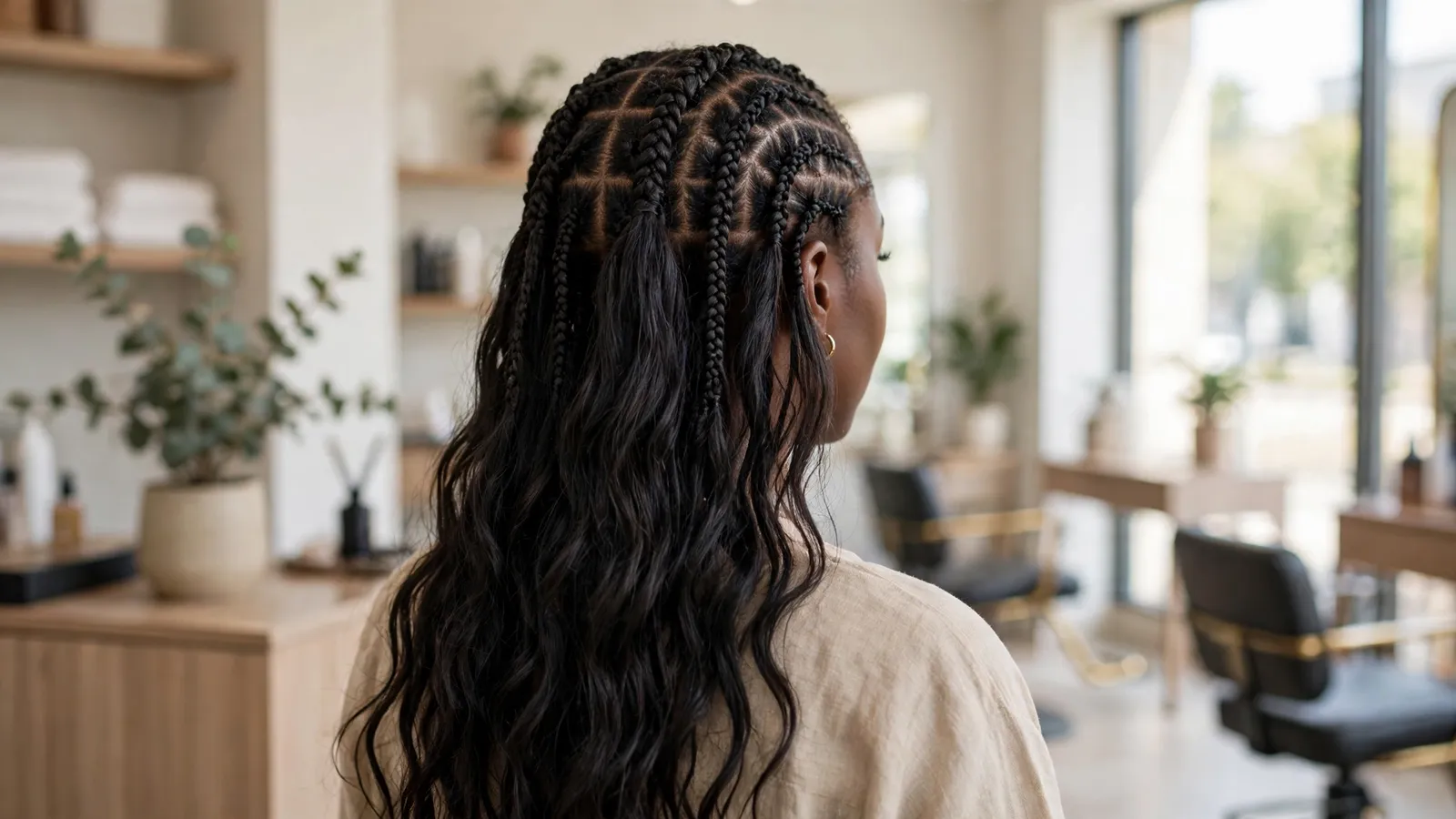
At-a-Glance: Tree Braids vs Other Braid Styles 01
Tree braids are often mixed up with other braid styles. This table shows the real differences.
| Style | Base Method | Loose Hair | Install (Rough) | Lasts | Best For |
|---|---|---|---|---|---|
| Tree braids | Feed-in cornrows | Yes, most of the hair | About 3–6 hours | About 4–8 weeks | Loose-hair look with protection |
| Micro braids | Tiny individual braids | No, braided to the ends | About 8–13 hours | About 6–8 weeks | Fine detail, long wear |
| Crochet braids | Cornrow base + crochet hook | Depends on the hair used | About 2–4 hours | About 4–6 weeks | Fast install, easy change |
| Knotless braids | Individual braids, no knot | No, braided to the ends | About 4–8 hours | About 4–8 weeks | Low tension at the roots |
The key point is simple. In tree braids, the braid stops early and the hair flows free. In the other styles, the braided part is the style itself.
What Are Tree Braids? 02
Tree braids get their name from the way they look. A short braid at the root is the trunk, and the loose extension hair falling from it is the branches. Your own hair is cornrowed close to the scalp, and small pieces of extension hair are fed into each cornrow stitch, then pulled out so they hang free.
There are two bases. The classic version uses cornrows that run back from the hairline. The individual version uses small single braids, each only an inch or two long. Tree braids became popular in the 1990s and early 2000s, and now they are back with the boho protective-style revival. Braided styles have a long history across many cultures, as Britannica notes in its history of dreadlocks.
Tree Braids vs Micro Braids: What Is the Difference? 03
The main difference is the base. Tree braids use a cornrow method: the hair is attached at the edges and the cornrow runs back along the scalp, with most of the extension left loose. Micro braids do not use cornrows. Each tiny braid is attached at one single point and braided down on its own.
That changes everything else. Tree braids usually take roughly 3 to 6 hours against 8 or more for micro braids, and they feel lighter, because the cornrow spreads the weight.
“Invisible braids” is sometimes used for both styles: in tree braids it means the base is hidden under loose hair, while in micro braids it means the braids are so small they look like strands of hair. If you want tiny braids all the way down, see our 28 micro braids styles.
Tree Braids by Length 04
Length is the first choice to make. Short tree braids are light and easy to manage. Long ones give drama and styling freedom, but the loose ends need more detangling.
1. Classic Long Straight Tree Braids
The original tree braid look: long, straight extension hair falling past the shoulders from a hidden cornrow base. It reads as a sleek, full head of straight hair and suits almost every face shape.
Keep the cornrows neat at the front so the part stays clean. A light shine spray keeps the straight finish fresh between washes.
Quick facts: Install: about 4–6 hours · Lasts: about 4–8 weeks · Tension: Low–Medium
Tip: Wrap the lengths in a loose satin scarf at night so the ends do not tangle.
Tree braids being installed, strand by strand. Post: @the_beautyworld1 on Instagram
2. Waist-Length Wavy Tree Braids
Waist-length tree braids give maximum length with soft movement. The waves stop the style looking flat, and the cornrow base keeps it secure even at this length.
This length is heavy, so ask for medium sections rather than small ones. Fewer, slightly larger cornrows carry long hair better than dozens of tiny ones.
Quick facts: Install: about 5–7 hours · Lasts: about 4–6 weeks · Tension: Medium
Tip: Finger-detangle the waves every morning from the ends up.
3. Shoulder-Length Tree Braids
Shoulder-length tree braids are the easy everyday option. They are light, they dry fast after washing, and they never get caught in bag straps or seat belts.
This length suits first-timers and finer hair, because there is less weight pulling on the roots. A side part adds instant volume where a centre part can fall flat.
Quick facts: Install: about 3–4 hours · Lasts: about 4–8 weeks · Tension: Low
Tip: Try a side part for instant volume at this length.
4. Tree Braids Bob
The tree braids bob is a chin- to jaw-length cut with a hidden cornrow base. It looks like a blunt bob from the front, but the braided roots give it grip a normal bob cannot match.
Ask for the ends to be cut blunt after install, not before, so the shape is even. It is the best tree braid length for hot weather and workouts.
Quick facts: Install: about 3–4 hours · Lasts: about 4–6 weeks · Tension: Low
Tip: Tuck one side behind the ear to show the neat cornrow base.
5. Tree Braids with Curly Ends
Tree braids with curly ends are the most popular finish of all. The roots stay smooth and hidden, while the last few inches spring into curls. You get the neatness of braids and the softness of curls in one style.
Set the curls with flexi rods, a curling wand on human hair, or curly extension hair from the start. Keep them light on product so they stay bouncy instead of clumping.
Quick facts: Install: about 4–5 hours · Lasts: about 4–6 weeks · Tension: Low–Medium
Tip: Refresh curls by misting with water and scrunching upward, never brushing them out.
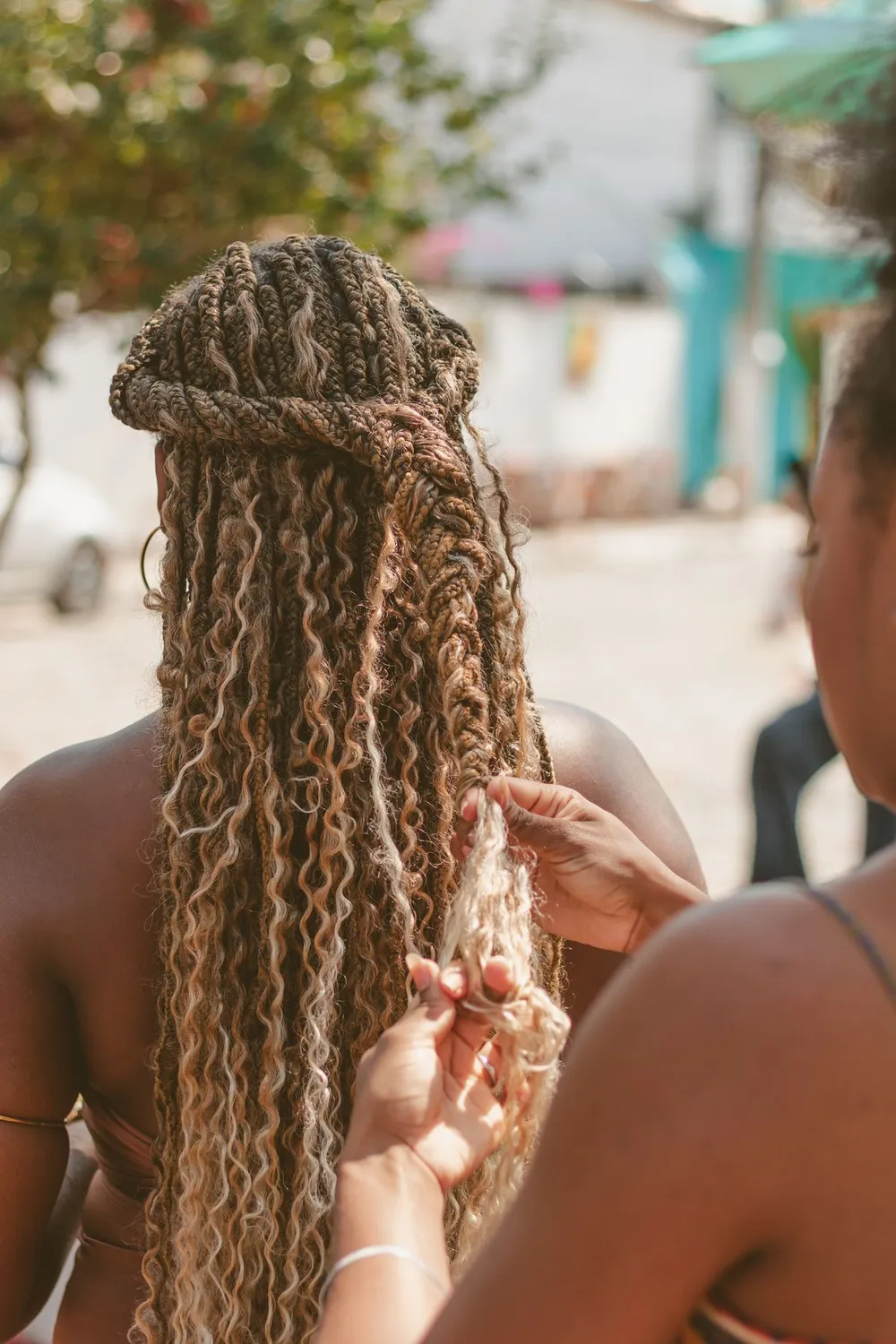
Photo: Adenir Figueiredo Carvalho on Pexels
Tree Braids by Texture 05
The texture of the extension hair decides the whole mood of the style. Straight reads sleek, waves read soft, and curls read full and glamorous. Match the texture to your own hair at the scalp, so the blend looks natural.
6. Body Wave Tree Braids
Body waves are soft, loose waves that give fullness without tight curls. They are the most natural-looking tree braid texture, and they suit work, weddings and everyday wear alike.
Body wave extensions hold their shape well, so you do less daily styling. A wide-tooth comb run through the waves once a day is usually enough.
Quick facts: Install: about 4–5 hours · Lasts: about 4–8 weeks · Tension: Low–Medium
Tip: Let body waves air-dry after washing, and the wave pattern will last longer.
7. Spiral Curl Tree Braids
Spiral curls are tight, defined coils that run the full length of the loose hair. They turn tree braids into a big, glamorous curly mane in a single install.
This is a high-volume style, so it suits anyone who loves drama. Keep the curls separated with your fingers rather than a brush, or they will turn into frizz.
Quick facts: Install: about 4–6 hours · Lasts: about 4–6 weeks · Tension: Medium
Tip: Sleep with the curls piled loosely on top of your head in a pineapple, inside a satin bonnet.
8. Wet and Wavy Tree Braids
Wet and wavy tree braids look sleek and defined when damp, then soften into loose waves as they dry. The wet look gives a polished, glossy finish that photographs beautifully.
Use a small amount of curl cream or mousse on damp hair to bring out the wave. Too much product causes buildup on the cornrows, so keep it light.
Quick facts: Install: about 4–5 hours · Lasts: about 4–6 weeks · Tension: Low–Medium
Tip: Mist the lengths with water in the morning to wake the waves up without a full wash.
9. Kinky Curly Tree Braids
Kinky curly tree braids use tight, textured curls that blend beautifully with coily natural hair. The join between your own hair and the extensions is almost invisible.
This texture is the best match if your goal is a natural, textured look rather than a sleek one. It also hides new growth well, so the style stays neat for longer.
Quick facts: Install: about 4–6 hours · Lasts: about 4–8 weeks · Tension: Low–Medium
Tip: Use a leave-in conditioner on the curls, not heavy oils, so the texture stays soft and defined.
10. Deep Wave Tree Braids
Deep waves sit between body waves and curls: more defined than a wave, looser than a curl. They give rich volume and a soft, romantic finish.
Deep wave hair tangles less than tight curls, which makes it a good middle ground. It also holds up well to gentle heat styling when you use human hair.
Quick facts: Install: about 4–6 hours · Lasts: about 4–6 weeks · Tension: Medium
Tip: Detangle deep waves with your fingers first, then a wide-tooth comb, starting at the ends.
11. Sleek Straight Tree Braids
Sleek straight tree braids are the polished, glossy version of the classic. The lengths fall like silk, and the hidden base keeps the hairline perfectly smooth.
Straight extensions show every tangle, so this finish needs the most daily care. A quick brush-through morning and night keeps it looking salon-fresh.
Quick facts: Install: about 4–5 hours · Lasts: about 4–6 weeks · Tension: Low–Medium
Tip: A silk pillowcase plus a bonnet keeps straight tree braids smooth overnight.
Tree Braids by Part and Pattern 06
The part and the cornrow pattern change the face-framing completely. A centre part is balanced, a side part adds drama, and a visible cornrow pattern turns the base into part of the design.
12. Centre-Part Tree Braids
A centre part splits the loose hair evenly down the middle for a clean, symmetrical look. It is the most classic tree braid part, and it suits oval and heart-shaped faces best.
Keep the part line crisp with a rat-tail comb during install. It also makes two low buns or a half-up style easy.
Quick facts: Install: about 4–5 hours · Lasts: about 4–8 weeks · Tension: Low–Medium
Tip: Add soft curls to the ends for a retro, polished finish.
13. Side-Part Tree Braids
A deep side part sweeps most of the hair to one side, giving instant volume and a glamorous feel. It is the best part for thin hair, because the sweep creates fullness.
The side with less hair shows the cornrow base more, so ask your braider to keep those rows extra neat. Side-swept bangs finish the look.
Quick facts: Install: about 4–5 hours · Lasts: about 4–8 weeks · Tension: Low–Medium
Tip: Flip the part to the other side after a few weeks to refresh the style.
14. Invisible Tree Braids
Invisible tree braids are the most discreet version of the style. The cornrows are small, flat and set close together, so the base all but disappears under the loose hair.
Choose this version when you want people to think the hair is all yours. It takes longer, because the sections are smaller. For a fully braided invisible look, see our 26 invisible locs styles.
Quick facts: Install: about 5–7 hours · Lasts: about 4–6 weeks · Tension: Medium
Tip: Invisible roots show new growth fastest, so plan take-down at six weeks.
15. Lemonade Side-Swept Tree Braids
Lemonade tree braids sweep all the loose hair to one side from a side cornrow pattern, the look Beyoncé made famous. It is bold, elegant and perfect for events.
The shape echoes the side cornrows of Fulani braids, but the loose ends keep it soft. Gold cuffs on the visible cornrows add the finishing touch.
Quick facts: Install: about 4–6 hours · Lasts: about 4–6 weeks · Tension: Medium
Tip: Pin the swept side loosely behind the ear so it holds all evening.
16. Zigzag-Part Tree Braids
A zigzag part replaces the straight part line with a sharp, graphic zigzag. It adds a playful, modern edge to an otherwise classic style.
The zigzag is drawn with a rat-tail comb before braiding starts, so it stays crisp. It works best on straight or wavy tree braids, where the part line is easy to see.
Quick facts: Install: about 4–5 hours · Lasts: about 4–6 weeks · Tension: Low–Medium
Tip: Smooth the part line with a little edge control each morning.
17. Tree Braid Cornrows
In this version the cornrows are the feature, not the secret. Neat cornrows run visibly across the front or sides, then release into loose hair at the back.
It is a good halfway style if you love cornrows but also want loose hair. The visible braiding also hides new growth well.
Quick facts: Install: about 4–5 hours · Lasts: about 4–8 weeks · Tension: Medium
Tip: Add beads or cuffs to the ends of the visible cornrows.
Tree Braids by Colour 07
Tree braids are the easiest way to try a new colour without dyeing your own hair. The colour lives in the extensions, so your natural hair stays untouched underneath. Start subtle if you are unsure.
18. Honey Blonde Highlights
Honey blonde highlights woven through dark tree braids add warmth and light without a full colour change. The highlights catch the light as the loose hair moves.
Choose a honey shade close to your skin tone for the most natural result. Highlights also make the waves and curls look more defined.
Quick facts: Install: about 4–6 hours · Lasts: about 4–6 weeks · Tension: Low–Medium
Tip: Keep highlighted extensions out of chlorine, which can turn blonde tones brassy.
19. Copper and Auburn Tree Braids
Copper and auburn extensions look striking on deeper skin tones and add instant warmth. The red tones glow in sunlight and make the loose hair look rich and full.
Mix copper with a few darker strands so the colour looks deep rather than flat. This shade suits curly and wavy textures especially well.
Quick facts: Install: about 4–6 hours · Lasts: about 4–6 weeks · Tension: Low–Medium
Tip: Rinse copper extensions in cool water to keep the colour bright.
20. Burgundy Tree Braids
Burgundy is a deep wine red that reads classy, not loud. It is one of the most popular coloured tree braid choices, because it suits almost every skin tone.
Burgundy works in every texture, from sleek straight to tight curls. It also grows out gracefully, since the dark roots blend with the wine lengths.
Quick facts: Install: about 4–6 hours · Lasts: about 4–6 weeks · Tension: Low–Medium
Tip: Pair burgundy tree braids with gold jewellery — the warm metal picks up the red tones.
21. Midnight Blue Tree Braids
Midnight blue is a dark blue-black that looks almost black indoors and flashes blue in the light. It is a bold choice that still stays wearable every day.
Blue extensions work best on long, straight or wavy tree braids, where the colour has room to show. Keep the roots dark so the blue reads as a highlight.
Quick facts: Install: about 4–6 hours · Lasts: about 4–6 weeks · Tension: Low–Medium
Tip: Wash blue extensions separately the first time, as dark colours can bleed.
22. Ombre Tree Braids
Ombre tree braids fade from dark roots to lighter ends — black to honey, brown to blonde, or burgundy to copper. The fade gives the loose hair depth and movement.
Ombre is the lowest-maintenance colour choice, because the dark roots match your own hair. It suits long lengths best, where the fade has space to develop.
Quick facts: Install: about 4–6 hours · Lasts: about 4–6 weeks · Tension: Low–Medium
Tip: Ask for a soft, blended fade rather than a hard line.
Tree Braids Updos and Finishes 08
Because most of the hair is loose, tree braids style like your own hair. Ponytails, buns and updos all work — and the cornrow base gives them grip.
23. High Ponytail Tree Braids
A high ponytail gathers all the loose hair up and back, showing off the neat cornrow base at the front. It is the best tree braid updo for workouts, hot days and long events.
Use a snag-free tie and wrap a small strand of hair around the base to hide it. Multi-tone extensions make a ponytail look even fuller.
Quick facts: Install: about 4–5 hours · Lasts: about 4–8 weeks · Tension: Low–Medium
Tip: Do not pull the ponytail too tight — the cornrows already hold the style.
24. Half-Up Bun Tree Braids
A half-up bun twists the top section into a relaxed bun and leaves long curls falling down the back. It is playful, quick to do, and suits spring and summer best.
This is the easiest tree braid updo to do yourself. Gather the top third, twist it loosely, pin it, and let the rest flow free.
Quick facts: Install: about 4–5 hours · Lasts: about 4–8 weeks · Tension: Low
Tip: Leave two loose face-framing strands out of the bun for a softer finish.
Partial tree braids finished into a bun. Post: @hairby_fi on Instagram
25. Curly Tree Braid Updo
A curly updo pins the loose curls up into a full, high shape. It turns tree braids into a formal style for weddings, parties and photos.
Pin the curls loosely so the updo keeps its volume. A few curls left loose around the face keep it soft instead of severe.
Quick facts: Install: about 4–6 hours · Lasts: about 4–6 weeks · Tension: Medium
Tip: Pin into the cornrow base, not the loose hair — it holds far better.
Curly tree braids styled into a bun. Post: @braidsbyami__ on Instagram
26. Tree Braids with Gold Cuffs and Beads
Gold cuffs and beads are the classic tree braid accessories. A few cuffs on the visible cornrows, or beads at the ends of the loose hair, turn a simple install into a finished look.
Less is more here. Three or four cuffs near the hairline make a bigger impact than cuffs scattered everywhere. Wooden beads suit a natural look; gold suits a glamorous one.
Quick facts: Install: about 4–5 hours · Lasts: about 4–8 weeks · Tension: Low
Tip: Remove beads before washing so they do not trap water against the hair.
Hair and Tools You Need 09
Good prep makes the install faster and the result neater. You will need 2 to 3 packs of braiding hair in your chosen texture and length, a rat-tail comb for clean parts, sectioning clips, small elastic bands, and a spray bottle with water and leave-in conditioner.
Choose between synthetic and human hair before you book. Synthetic hair is cheaper and holds curls well, but it cannot take heat and it tangles faster. Human hair costs more, but it can be heat-styled, washed like your own hair, and reused for a second install.
How to Do Tree Braids Step by Step 10
Tree braiding takes practice, so a skilled braider will give the cleanest finish. If you want to understand the process — or try it with a friend helping — here is how it works.
Step 1 — Prepare the hair. Wash, deep condition and detangle your natural hair. Stretch it by blow-drying on low heat or banding it overnight.
Step 2 — Part and section. Use a rat-tail comb to part the hair into neat rows. Clip each row out of the way so you work on one row at a time.
Step 3 — Start the cornrow. Take a small section of natural hair at the front of a row and begin a cornrow, adding a loop of extension hair as you go.
Step 4 — Feed and release. With each stitch, feed in a little more extension hair and pull a little out, so it falls free. Stop adding hair near the end of the row.
Step 5 — Secure the braid. Knot or tie off the cornrow about an inch or two from the scalp, or where your natural hair ends. The loose hair is what you see from here down.
Step 6 — Repeat and finish. Work row by row across the whole head. Trim the ends to your chosen length, shape the style, and finish with a light oil sheen spray.
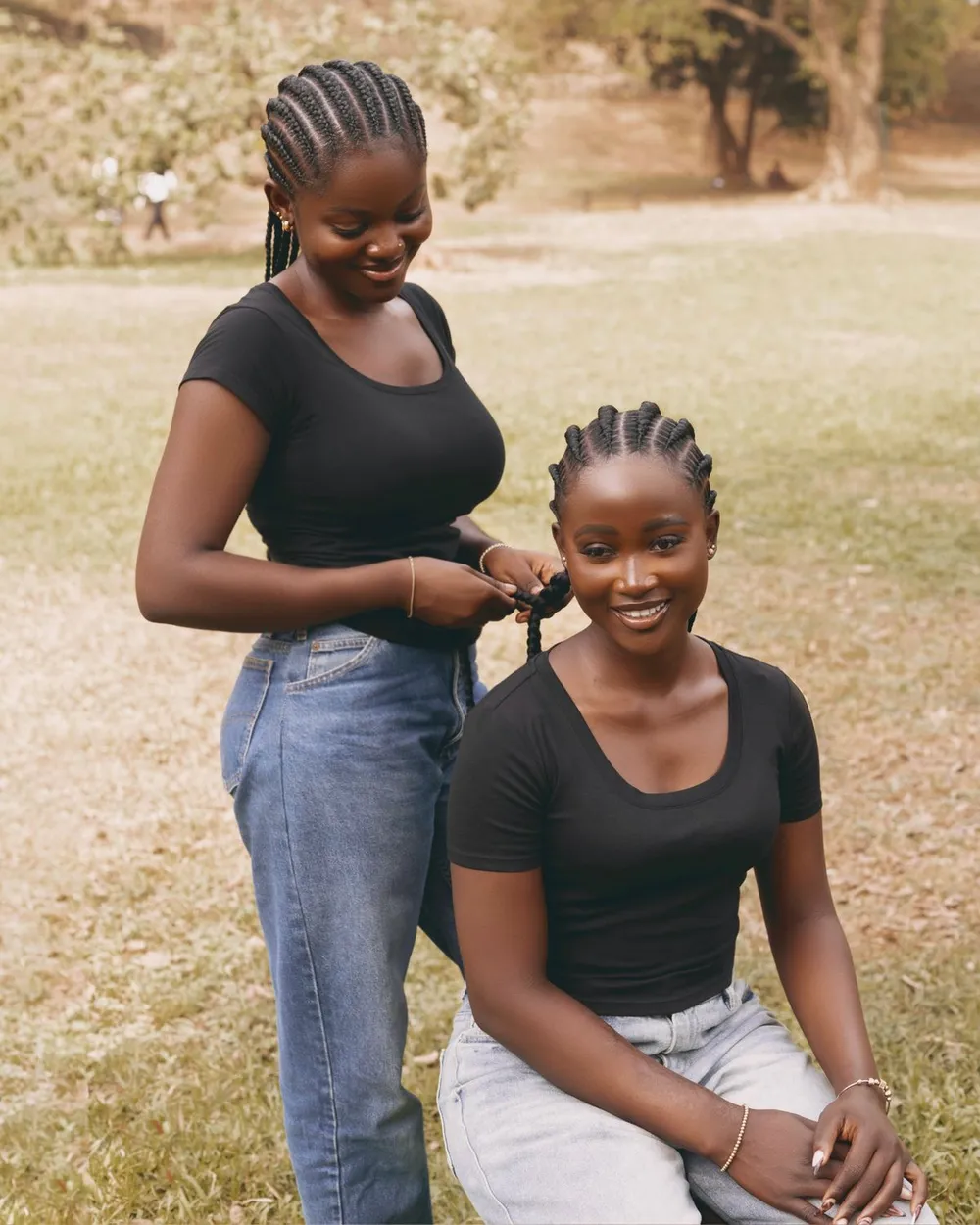
Photo: Matilda Jacob on Pexels
Time, Cost and Lifespan 11
All figures below are rough US ranges, because prices vary by city, stylist and hair type. Always confirm the full quote — including hair, wash and take-down — before you book.
| Item | Rough Range | Notes |
|---|---|---|
| Salon install (classic size) | About $200–$400 | Hair may or may not be included |
| Full appointment with hair | About $250–$500+ | Human hair pushes the price up |
| Small / micro tree braids | About $400–$650+ | Much longer install time |
| DIY (hair only) | About $80–$150 | Plus your own time, about 4–6 hours |
| Install time | About 3–6 hours | Small sizes take 6–12 hours |
| How long they last | About 4–8 weeks | Depends on care and new growth |
Are Tree Braids Right for You? 12
Tree braids suit most people, but they are not for everyone. They are a great choice if your natural hair is about 2 to 3 inches or longer, you want a loose-hair look with protection, and you are happy to detangle the loose ends every day or two.
They are also a good pick for sensitive scalps. The cornrow base spreads weight across the head, and there are no heavy knots pulling at the roots. If your scalp is tender, ask for medium sections and low tension.
Skip tree braids, or wait, if your hair is shorter than about 2 inches, your scalp is sore or damaged, or you will not have time for daily detangling. The loose hair is the whole point of the style, and it tangles fast when ignored. If you want a fully braided style with less daily care instead, our 41 twist hairstyles are a good place to start.
Tree Braids Care Timeline 13
Install day. Check every cornrow for comfort before you leave the chair. If anything pulls or hurts, ask your braider to loosen it on the spot. Sleep in a satin bonnet from the first night.
Week 1. Let the style settle. Detangle the loose hair gently with your fingers or a wide-tooth comb, starting at the ends. Keep the scalp clean with a diluted shampoo, then dry the cornrows fully.
Weeks 2–3. Moisturise the scalp with a light oil two or three times a week. Wash every one to two weeks, and dry the braids fully every time — damp cornrows are where odour and buildup start.
Weeks 4–6. New growth will start to show at the roots. Refresh the edges and the part line, and trim any frizzy ends. The American Academy of Dermatology advises keeping braided styles loose and wearing them for no more than about 6 to 8 weeks.
Take-down. Cut the extension hair above your own hair first, then unbraid gently from the bottom up. Wash and deep condition your natural hair right away, and give it a few days of rest before the next install.
7 Common Mistakes to Avoid 14
1. Braiding too tight. Pain, bumps or headaches mean the cornrows are pulling too hard. Tight braids can damage the hairline over time, so speak up during install.
2. Leaving them in too long. Past 8 weeks, the roots mat and the take-down gets painful. Book the removal before the style starts looking tired.
3. Skipping the bonnet. Cotton pillowcases rub the loose hair all night. A satin bonnet or scarf is the single best thing you can do for this style.
4. Brushing the curls dry. A brush turns defined curls into frizz. Finger-detangle, or use a wide-tooth comb on damp hair only.
5. Heavy oils and butters. Thick products sit on the cornrows and cause buildup. Use light oils on the scalp and leave-in conditioner on the lengths.
6. Washing and leaving the braids damp. Wet cornrows that never dry fully can smell and weaken the hair. Dry the roots with a blow-dryer on low, cool air after every wash.
7. Ripping the braids out. Pulling extensions out instead of cutting them first breaks your own hair. Always cut the extension above your natural hair, then unbraid gently.
Frequently Asked Questions 15
How long do tree braids last?
Tree braids usually last about 4 to 8 weeks with good care. How long they last depends on how fast your hair grows, how well you detangle the loose ends, and whether you protect them at night. Plan the take-down at 6 to 8 weeks at the latest.
How much do tree braids cost?
A salon install roughly costs $200 to $400, and a full appointment with the hair included roughly costs $250 to $500 or more. Small or micro tree braids can reach $600 or more, because they take much longer. DIY costs roughly $80 to $150 for the hair alone.
What is the difference between tree braids and micro braids?
Tree braids use a cornrow base and leave most of the extension hair loose, so the finish looks like loose hair. Micro braids are tiny individual braids attached at a single point and braided all the way down. Tree braids install faster and feel lighter; micro braids give finer detail but take far longer.
How long does your hair have to be for tree braids?
Your natural hair should be about 2 to 3 inches long at minimum. That is enough for the braider to grip and cornrow. Shorter hair can slip out of the braids, so wait until it grows a little longer.
Are tree braids damaging?
Not when they are installed properly. The cornrow base spreads the weight, and there are no heavy knots at the roots. Damage usually comes from braids that are too tight, styles left in too long, or rough take-downs. Keep the tension comfortable and remove them on time.
Can you do tree braids without extensions?
No. The loose hair in tree braids is the extension hair — your own hair is braided into the cornrow base and hidden underneath. Without extensions there is no loose hair to show, so the style cannot exist. You can choose synthetic or human hair.
Can you wash tree braids?
Yes. Wash every one to two weeks with diluted shampoo, focusing on the scalp and cornrows, and rinse well. The important part is drying: use a blow-dryer on low, cool air to dry the cornrows fully, or they can trap moisture and develop buildup.
Do tree braids help hair grow?
Tree braids do not make hair grow faster. They protect the hair you already have by keeping it tucked away from daily heat, brushing and weather, so you keep more of your length. That protection is why many people use them while growing their hair out.
Bottom Line 16
Tree braids give you the best of both worlds: the look of a full head of loose hair and the protection of braids underneath. Pick your length and texture, keep the tension comfortable, protect the loose ends at night, and take them down by week eight. Do that, and this 90s classic will treat your hair well.
If you love the idea but want a fully braided finish instead, try our 30 French curl braids or the 41 twist hairstyles next.
This article is for general informational purposes only. Individual results, hair types, scalp conditions, and situations may vary. For personal hair or scalp concerns, consult a qualified loctician or dermatologist.
