



26 Short Dreads Styles for Men & Women in 2026
-
- November 27, 2026

Short dreads prove one thing fast: you do not need long hair to have locs with real style. Short dreadlocks sit close to the head, frame the face, dry in minutes, and still give you dozens of looks, from a sharp high top to a soft loc bob.
People often treat short dreads as a waiting room, a stage you sit through until your locs grow long. That misses the point. Short locs are a style of their own, with shapes and cuts that long locs simply cannot do. A tapered side, a crisp fade, or a chin-length bob only works at short length.
This guide covers 26 short dreads styles for men and women, plus the cuts, colour ideas, updos, and growing-out tricks that make short length work. Every style below comes with quick facts and one practical tip, so you can pick a look and know what it asks of you.
Dreadlocks have a long history across many cultures, and short dreads carry that same story in a lighter, easier shape. If you are still deciding how to begin, our guide on how to start dreadlocks on short hair walks through the first steps.
Key Takeaways: Short Dreads in One Glance
- Short dreads usually mean locs from about 2 inches on top to chin or shoulder length, and they suit men and women equally.
- Short length gives you more shape, not less: fades, tapers, bobs, pixies, mohawks, and updos all read sharper when locs are short.
- Short locs dry faster, feel lighter, and need less product than long locs, but the roots still need regular care.
- Retwist roughly every 4 to 6 weeks, and keep tension gentle — tight, frequent retwists can thin the hairline over time.
- The golden rule: style short locs with a light hand. If a style pulls, hurts, or needs force to hold, loosen it or pick another one.
- Colour works best as tips or a few face-framing locs at short length, so you can test a shade without a full dye job.
Short Dreads at a Glance 01
Before the styles, here is the quick picture. Short dreads are not one look. They cover starter coils that are still locking, neat short sets that stay short on purpose, and locs in the growing-out stage between short and medium. The table below shows how the main looks compare.
| Short dread look | Length stage | Styling time | Maintenance | Best for |
|---|---|---|---|---|
| High top dreads | Short, faded sides | About 2–5 minutes | Fade every 2–3 weeks | Men, bold clean shape |
| Loc bob | Chin to jaw length | About 5 minutes daily | Retwist every 4–6 weeks | Women, polished everyday look |
| Freeform short dreads | Starter to short mature | Almost none | Separate roots weekly | Low-effort, natural look |
| Short dreads with fade | Short on top | About 5 minutes | Fade every 2–3 weeks | Work, school, gym |
| Half-up short locs | Chin to shoulder | About 5 minutes | Low, restyle daily | Everyday, growing-out stage |
| Coloured short dreads | Any short length | Salon visit | Colour refresh every 8–12 weeks | Personality, events |
What Counts as Short Dreads? 02
Short dreads usually run from about 2 inches of locked hair on top to chin or shoulder length. That range covers three very different stages, and knowing which stage you are in changes which styles will work.
Starter locs are the first stage. The hair is twisted or coiled, but it has not fully locked yet. It may frizz, unravel at the ends, and shrink so much that it looks shorter than it is. Styles at this stage should be gentle and simple, because the locs are still forming.
Short mature locs are the second stage. The locs have locked, hold their shape, and sit neatly. This is the stage most of the styles in this guide are made for. You can part them, pin them, curl the ends, and add accessories without them falling apart.
Then there is staying short on purpose. Some people cut their locs back to a bob or a crop again and again because they like the shape, the light feel, and the fast wash days. Short is not a step on the way to long for everyone. It can be the look itself, and our dreadhead looks guide shows how the same head of hair changes at every stage of the journey.
Short Dreads for Men 03
Short dreads for men are built around the cut as much as the locs. A fade, a taper, or a sharp line-up does half the styling work before you even touch the top. These eight looks are the ones men ask for most, and they work from starter length right through to a short mature set.
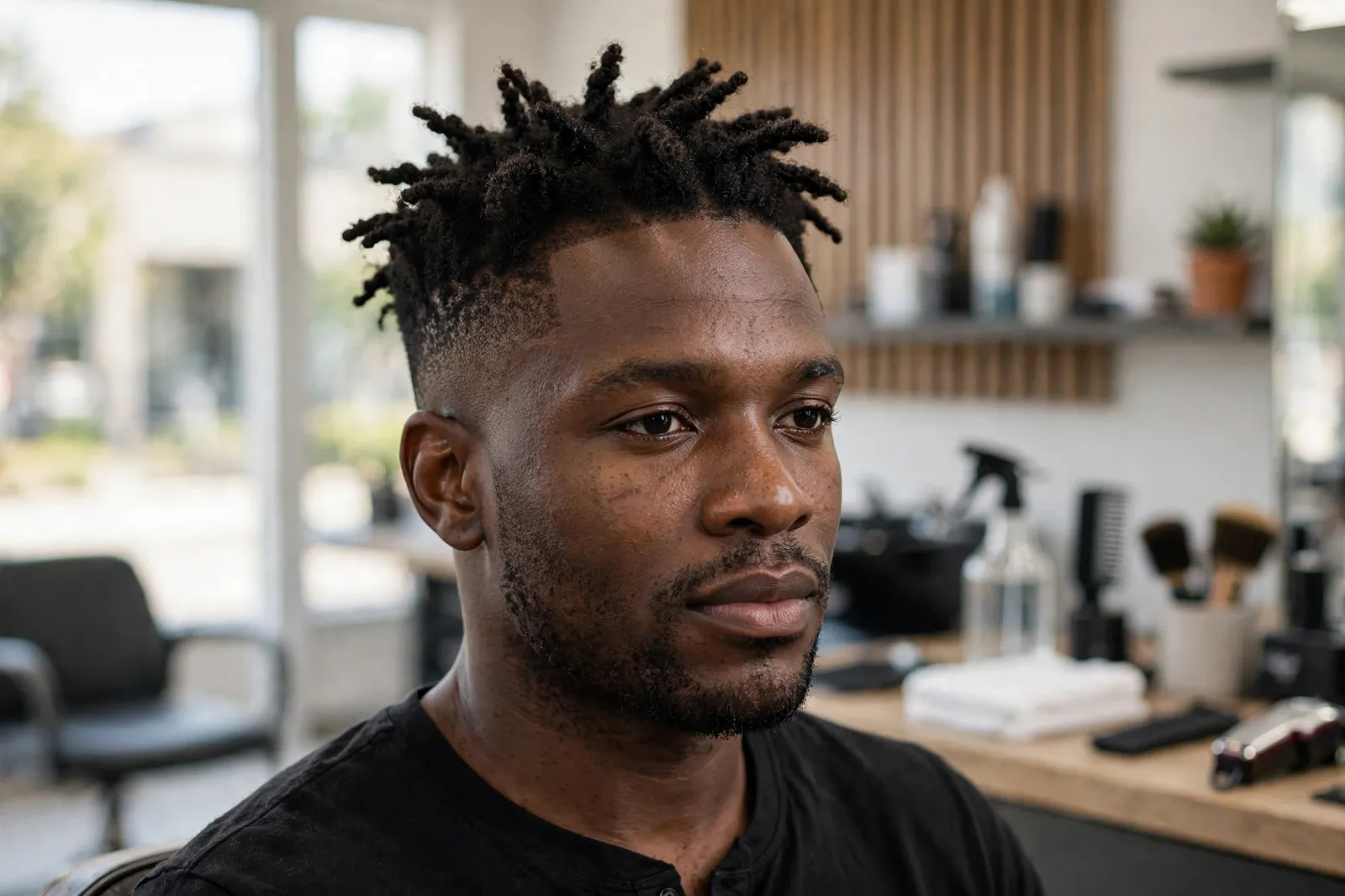
1. High Top Dreads
High top dreads keep the locs piled on the crown while the sides and back are faded short. The height on top makes round and square faces look longer, and the shape reads clean from across the room. It is the most asked-for short dreads style for men, and it suits a first set of locs well.
Quick facts: Styling time: about 2–5 minutes · Lasts: until the next fade · Tension: Low
Tip: Brush or palm-roll the top locs forward once a week so the crown keeps one even shape instead of leaning to one side.
2. Short Dreads with a Mid Fade
A mid fade sits halfway up the sides and blends the locs on top into short hair below. It is less sharp than a skin fade and easier to grow out, so it suits work, school, and formal days as well as weekends.
Quick facts: Styling time: about 5 minutes · Lasts: 2–3 weeks before the fade softens · Tension: Low
Tip: Book the fade every 2 to 3 weeks. A grown-out fade makes the locs look untidy even when they are not.
3. Short Dreads with a Taper Fade
A taper fade shortens the hair gently around the temples and neckline while leaving more length near the top. It is the quietest fade of the three, and it pairs well with short locs that you want to look neat without looking severe.
Quick facts: Styling time: about 5 minutes · Lasts: 2–3 weeks · Tension: Low
Tip: A drop of light oil on the tapered edges each morning stops the skin there from looking dry or flaky.
4. Mohawk Dreads
Mohawk dreads run a strip of locs down the centre of the head, front to back, with the sides faded or shaved. It is bold, sporty, and cool in hot weather, because the sides stay clear of the ears and neck. See our full dreadlock mohawk guide for 12 versions of this look.
Quick facts: Styling time: about 5–10 minutes · Lasts: 1–3 days per set · Tension: Low to Medium
Tip: Pin the sides back flat rather than pulling them tight. The height should come from the centre locs, not from tension at the hairline.
5. Freeform Short Dreads
Freeform short dreads form on their own, with no parting grid and no regular retwist. You wash, moisturise, and let the hair lock in its own pattern. The result is organic and different on every head, which is exactly why people love it. Our freeform locs guide covers the full low-maintenance routine.
Quick facts: Styling time: almost none · Lasts: ongoing · Tension: Low
Tip: Do your root separation on damp hair after a wash, when the locs move apart easily and do not pull.
6. Short Wicks
Wicks are thick, cylinder-shaped locs made by joining several smaller locs together. At short length they stand upright or hang heavy, and they give a strong, graphic shape that needs very few individual locs to manage.
Quick facts: Styling time: about 5 minutes · Lasts: ongoing · Tension: Medium
Tip: Dry wicks fully after every wash. Squeeze out the water, then sit under a dryer or in the sun, because thick locs hold damp inside.
7. Two-Strand Twist Short Locs
Two-strand twists are the classic way to start short dreads. Two sections of hair are wrapped around each other, and over weeks they tighten into locs. The twists look neat from day one, which makes the starter stage much easier to wear.
Quick facts: Styling time: about 1–3 hours to install · Lasts: weeks, with retwists · Tension: Low to Medium
Tip: Leave new twists alone for the first few weeks. Combing or un-twisting them early slows the locking down.
8. Short Dreads with a Line-Up
A line-up is a sharp, straight edge cut along the forehead and temples. Paired with short locs on top, it makes the whole haircut look fresh even when the locs themselves are left loose and natural.
Quick facts: Styling time: about 5 minutes · Lasts: about 2 weeks before the edge softens · Tension: Low
Tip: Do not try to sharpen your own line-up at home with a razor unless you have done it before. One slip takes weeks to grow back.
Short Dreads for Women 04
Short dreads for women frame the face, show off the cheekbones, and move when you turn your head. The bob is the star here, but there are softer and bolder shapes around it too. For the full women’s collection, including updos, buns, and more bob versions, see our 40 loc styles for women, which has a whole section on short loc styles for women.
9. Short Loc Bob
The short loc bob cuts locs to an even chin or jaw length, so they form a neat, rounded shape around the face. It is chic, polished, and easy to wear to work, and it suits almost every face shape.
Quick facts: Styling time: about 5 minutes daily · Lasts: ongoing, with retwists · Tension: Low
Tip: Try the bob length with a curl set first. If you love it curled, the cut will suit you too.
A short loc bob in a warm reddish-brown shade. Post: @fashioncrave on Instagram
10. Curly Loc Bob
The curly loc bob takes the same chin-length shape and sets the ends on small rods, so the tips curl under or spring out. The curls soften the bob, add movement, and make the style feel romantic rather than strict.
Quick facts: Styling time: about 15 minutes plus drying · Lasts: about 5–7 days · Tension: Low
Tip: Use small rods for tight curls and larger ones for a soft wave. Smaller sections give tighter curls.
Eleven ways to style a bob on microlocs. Post: @kendrakenshay on Instagram
11. Loc Pixie Cut
The loc pixie keeps locs very short, with a tapered back and sides and slightly longer locs on top. It shows off the face, cheekbones, and neck, and it is one of the lowest-maintenance short dreads styles there is.
Quick facts: Styling time: about 3 minutes · Lasts: ongoing · Tension: Low
Tip: The pixie grows out fast at the back, so book a taper tidy-up every 2 to 3 weeks to keep the shape.
12. Side-Parted Short Locs
A deep side part is the simplest way to make short locs look styled. Sweep the locs to one side from the part, and you get instant volume, an asymmetrical shape, and a polished finish in about five minutes.
Quick facts: Styling time: about 5 minutes · Lasts: 2–4 days · Tension: Low
Tip: Change the side of your part now and then. Always parting the same way puts steady stress on the same roots.
13. Short Layered Locs
Layered short locs keep the front pieces longer to frame the face while the back stays shorter. The layers stop the style from looking like one heavy block, and they give short locs movement when you walk.
Quick facts: Styling time: about 5–10 minutes · Lasts: until the next trim · Tension: Low
Tip: Layers show up best with a little curl at the ends, so set the front pieces on rods for special days.
14. Short Locs with Face-Framing Pieces
Face-framing pieces are a few shorter locs left loose around the forehead and cheeks while the rest of the hair is pulled back or up. They soften a pulled-back style and suit round and oval faces especially well.
Quick facts: Styling time: about 5 minutes · Lasts: 1–2 days · Tension: Low
Tip: Keep the framing pieces thin. Thick pieces fall flat and hide the face instead of framing it.
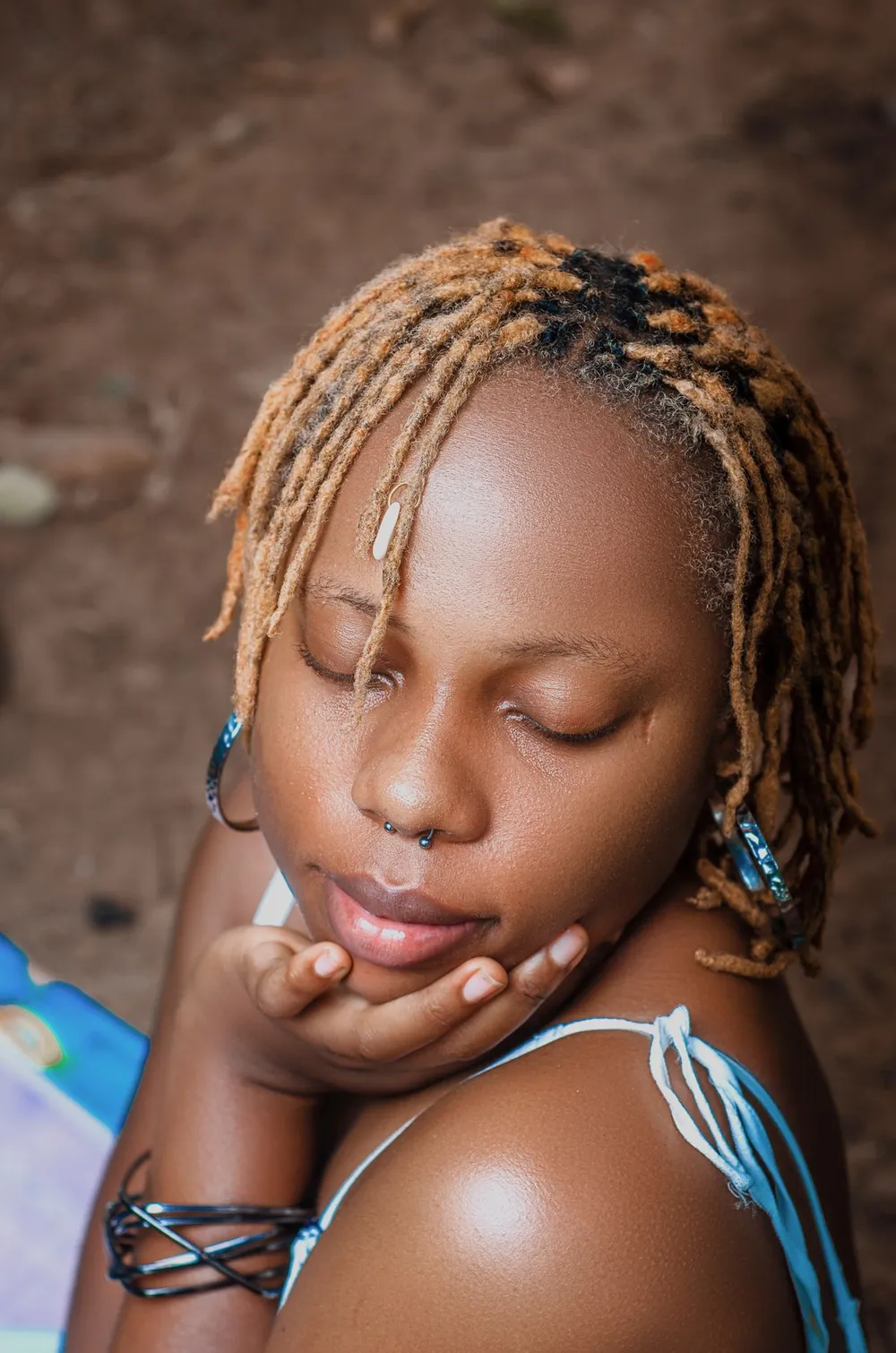
Photo: Evlogia Pictures on Pexels
Colour and Texture on Short Dreads 05
Colour shows up fast on short dreads, because there is less length to spread it over. That makes short locs the perfect place to test a shade. A few coloured tips or a warm tint can change the whole look without a full dye job.
15. Auburn Short Dreads
Auburn is a warm, deep red-brown that catches the light without shouting. On short dreads it looks rich and full, and it glows on warm skin tones. The shade suits both men and women who want colour that still looks natural.
Quick facts: Styling time: salon visit · Lasts: colour refresh every 8–12 weeks · Tension: Low
Tip: Ask for a bond-building treatment with the colour. Lightening can weaken locs, and short locs show damage quickly.
16. Caramel Highlights on Short Dreads
Caramel highlights are warm, golden-brown pieces woven through dark locs. They add dimension without changing the base colour, and they make short locs look fuller and sunlit.
Quick facts: Styling time: salon visit · Lasts: colour refresh every 8–12 weeks · Tension: Low
Tip: Moisturise more often after highlights. Colour and locs together dry out faster than either one alone.
17. Burgundy Tips on Short Dreads
Burgundy tips colour only the ends of the locs, so the roots stay dark and natural. It is the lowest-commitment colour in this guide, and it looks striking on short locs because the coloured ends sit close to the face.
Quick facts: Styling time: salon visit · Lasts: a few weeks before the shade softens · Tension: Low
Tip: Rinse with cool water after colouring. Hot water fades burgundy faster than almost any other shade.
18. Blonde-Tipped Short Locs
Blonde tips lift only the ends of short locs to honey or golden blonde, leaving dark roots behind. The contrast is bold but easy to wear, and it suits short bobs and short textured locs especially well.
Quick facts: Styling time: salon visit · Lasts: colour refresh every 8–12 weeks · Tension: Low
Tip: Keep the blonde to the tips at first. If the lift damages the ends, you can trim them without losing the whole loc.
Blonde locs cut into a short bob. Post: @loccdlikekay on Instagram
19. Two-Tone Short Dreads
Two-tone short dreads pair two shades on one head, often dark roots with a lighter top, or black locs with a coloured section at the front. The split makes short locs look sculpted, because the colour draws the eye to the shape.
Quick facts: Styling time: salon visit · Lasts: colour refresh every 8–12 weeks · Tension: Low
Tip: Start with a small coloured section, like the front locs only. You can always add more colour later.
20. Corkscrew and Curly Short Dreads
Corkscrew short dreads are tight, springy coils that hold their curl from root to tip. They suit coily hair that locks into curls naturally, and they look full and soft even at very short length.
Quick facts: Styling time: about 10–15 minutes · Lasts: a few days per refresh · Tension: Low
Tip: Refresh curls with a light water mist in the morning instead of re-styling from scratch. The shape comes back on its own.
Updos and Accessories at Short Length 06
People assume updos need long hair. Short locs can do updos too, just smaller and softer ones. The trick is to work with the length you have: a mini bun, a small puff, or a few pins will do what a long ponytail does on longer locs.
21. Half-Up Top Knot
The half-up top knot gathers the top section of short locs into a small knot at the crown and leaves the rest hanging loose. It keeps locs off the face while still showing length and texture at the back.
Quick facts: Styling time: about 5 minutes · Lasts: 1–2 days · Tension: Low to Medium
Tip: If the knot is too small to loop, make a tiny puff instead. A puff counts as a top knot at short length.
Five quick loc styles for short dreads, including a messy bun and half-up looks. Post: @nomorejustice_ on Instagram
22. Mini Pineapple Puff
The mini pineapple puff pulls short locs straight up to the crown and ties them in one band, so the ends fan out like a small fountain. It is a one-tie style for hot days, workouts, and mornings when you have five minutes.
Quick facts: Styling time: about 5 minutes · Lasts: 1 day · Tension: Low to Medium
Tip: Use a soft cloth band, not a thin rubber band. Thin bands dig in and snap short locs.
23. Space Buns and Double Puffs
Space buns split short locs down the middle and coil each side into a small bun. Two smaller buns spread the weight out, which helps when locs are too short for one big top knot but long enough to feel heavy hanging loose.
Quick facts: Styling time: about 10 minutes · Lasts: 1–2 days · Tension: Low to Medium
Tip: Place the buns a little lower and tighter if your locs are very short. High buns slide out of short locs.
24. Barrel Twist Updo
A barrel twist updo twists groups of locs together into thick, rope-like barrels and pins them up into a sculpted shape. It looks regal and polished, and it works for weddings, graduations, and formal events even on short locs.
Quick facts: Styling time: about 45 minutes · Lasts: 1–2 weeks · Tension: Medium
Tip: Mist the locs with a light spray before twisting. Dry locs resist the barrel shape and spring back out.
25. Bantu Knots on Short Locs
Bantu knots twist sections of short locs into small coiled knots across the head. The style is bold and sculptural on its own, and when you unravel the knots after a few days, the locs fall into soft, defined curls.
Quick facts: Styling time: about 30 minutes · Lasts: 3–5 days as knots, then curls · Tension: Low to Medium
Tip: Do not pull the knots too tight at the root. Tight knots on short locs cause the same scalp soreness as a tight retwist.
26. Beads, Cuffs and Scarves
Beads, cuffs, and scarves are the fastest way to change short dreads without cutting or colouring anything. A few gold cuffs at the front, wooden beads on the ends, or a scarf wrapped around a puff can turn a plain day’s locs into a finished look.
Quick facts: Styling time: about 10 minutes · Lasts: as long as you like · Tension: Low
Tip: Choose hollow or wooden beads. Heavy metal beads pull short locs down and stress the roots.
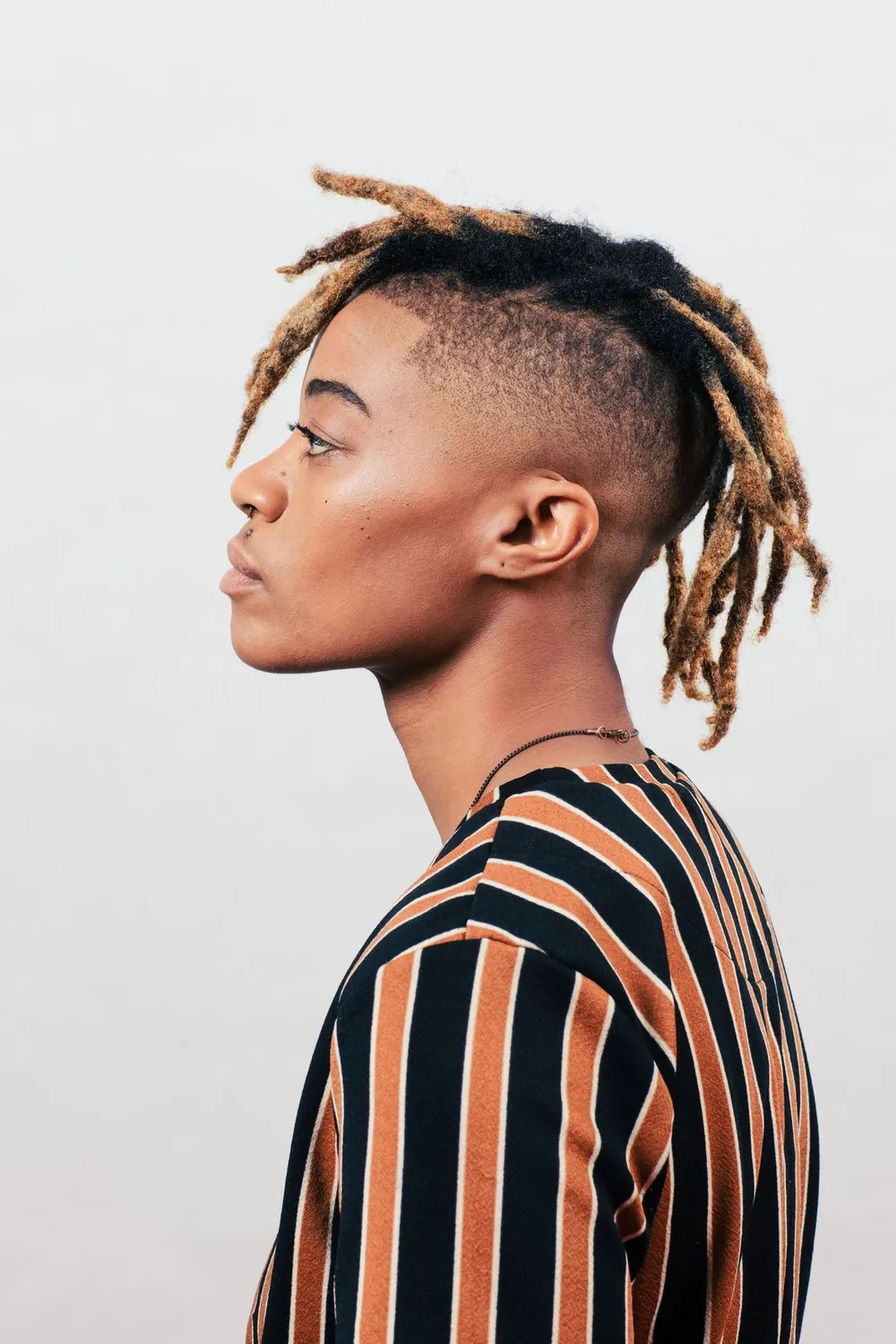
Photo: Reyna Montgomery on Pexels
What You Need to Style Short Dreads 07
You do not need a big kit to style short dreads. A small set of tools and products covers every look in this guide. Keep it simple, and your locs will stay light and clean.
Start with a residue-free shampoo, a light water-based spray, and a light natural oil such as jojoba oil. Add a little loc gel for parts and edges, a tail comb, a few soft cloth hair ties, and strong pins for updos.
Skip heavy waxes and thick butters on short locs. They sit on the surface, attract lint, and build up inside young locs. Our products for dreadlocks guide explains which products suit locs and which ones cause build-up.
| Item | What it does | When you need it |
|---|---|---|
| Residue-free shampoo | Cleans the scalp without leaving build-up in the locs | Every wash day |
| Water spray + light oil | Adds moisture and shine without weight | Every morning |
| Tail comb | Makes clean, straight parts | Side parts, updos |
| Soft cloth ties + pins | Hold buns, puffs, and twists in place | Updos and half-up styles |
| Satin bonnet or scarf | Protects locs from friction overnight | Every night |
| Small perm rods | Curl the ends of short locs | Curly bobs and soft ends |
How to Style Short Dreads Step by Step 08
Most short dreads styles follow the same simple order: moisture first, part on purpose, style gently, then protect the style overnight. Learn this order once, and every look in this guide gets easier.
First, start with lightly damp locs. A fine water mist makes short locs easier to part, twist, and lay down. Dry locs resist you, and styling them dry pulls at the roots.
Next, choose your part before you start. A side part, a middle part, or no part at all — pick one and stick to it for that style. A clear part makes even a simple look seem planned, while no part at all looks fine when the locs fall where they want.
Then style with a light hand. Twist, pin, or tie the locs into place, and stop as soon as they sit well. If a style needs force to hold, it is too tight. Finish with a light mist of water and oil for shine.
Finally, protect the style at night. A satin bonnet, scarf, or durag keeps the locs from frizzing against the pillow and makes the style last an extra day or two. For retwists, palm rolling means rolling each loc between your palms in one direction to smooth it, while interlocking pulls the loc through its own root with a small tool. Interlocking holds longer but stresses the roots more, so ask a loctician to show you first.
Time, Cost and Maintenance 09
Short dreads are cheaper and faster to keep than long locs, but they are not free of upkeep. The two clocks to remember are the fade and the retwist, and they run at different speeds.
A fade needs a barber every 2 to 3 weeks, or the sharp edge softens and the whole cut looks grown out. A retwist usually comes every 4 to 6 weeks, when new growth at the roots starts to look loose. Plan both visits, and the style stays fresh without much daily work.
Daily styling takes about 5 minutes for most looks in this guide. Washing takes longer, so wash every 1 to 2 weeks with a residue-free shampoo, and let the locs dry fully before you sleep or tie them up. Costs vary a lot by city and by loctician, so ask for a price before you book. A retwist, a fade, and a colour service are three separate prices, and a short set usually costs less than a long one because there is less hair to work through.
Are Short Dreads Right for You? 10
Short dreads suit you if you want a bold look without a long daily routine. They dry fast, feel light in hot weather, and work well for sports, work, and school. They also suit every face shape, because the shape comes from the cut: height on top lengthens a round face, while a side part softens a square one.
They may not suit you if you want long, heavy locs right away, or if you dislike regular barber and loctician visits. Short dreads look best when the fade is fresh and the roots are neat, so the upkeep is steady even if each visit is short.
Short Dreads Care Timeline 11
Short dreads change fast in the first year, and the care changes with them. This timeline gives you the shape of that first year, so you know what is normal and what needs a loctician.
In the first 6 weeks, the locs are fresh and fragile. Wash gently, keep styles simple, and do not pull at the roots. A little frizz is normal, and the locs may look shorter than your hair was, because shrinkage pulls them up.
From about 6 weeks to 6 months, the locs start to bud and tighten. Retwist roughly every 4 to 6 weeks, separate the roots weekly, and try the easy styles in this guide, like side parts, half-up knots, and puffs. This is the awkward stage for many people, and it passes.
From 6 to 12 months, the locs mature and hold their shape. You can try bolder looks, like barrel twists, Bantu knots, and colour, because the locs are strong enough to handle them. Keep washing every 1 to 2 weeks and moisturising daily. For the full routine behind this timeline, see our dreadlock care guide.
7 Common Mistakes with Short Dreads 12
1. Retwisting too often. Retwisting every week feels tidy, but it thins the roots over time. Stick to roughly every 4 to 6 weeks, and let the roots rest between visits.
2. Pulling styles too tight. Tight ponytails, buns, and braids stress the hairline. The American Academy of Dermatology notes that tight hairstyles can lead to hair loss, so if a style hurts, loosen it.
3. Washing starter locs without protection. New twists unravel in the wash. Wear a mesh cap over the locs while you shampoo, and massage the scalp through it.
4. Using heavy products. Thick waxes and butters build up inside young locs and attract lint. Use light, water-based products and rinse them out fully.
5. Sleeping without protection. Cotton pillows rub short locs into frizz overnight. A satin bonnet, scarf, or durag keeps the style neat for an extra day.
6. Colouring too soon. Bleaching fresh starter locs can weaken them before they have locked. Wait until the locs are mature, and colour the tips first.
7. Cutting the awkward stage short. The frizzy, uneven months are normal, and cutting the locs off in frustration wastes months of growth. Try a headband, a scarf, or a half-up style until the locs settle.
Frequently Asked Questions 13
Can you style short locs?
Yes. Side parts, half-up knots, puffs, space buns, Bantu knots, barrel twists, and bobs all work at short length, and most take about 5 to 10 minutes with no fresh retwist needed.
How long does hair need to be to start dreads?
It depends on texture. Coily hair can often start at about 2 to 3 inches, while straighter hair needs more length to hold a twist. Your loctician can judge in person. Our starting guide for short hair covers the methods.
How often should I retwist short locs?
Roughly every 4 to 6 weeks. Starter locs may need care more often at first, while mature locs can go longer. Retwisting more often can thin the roots, so ask your loctician what suits your hair.
How long do short dreads take to grow and mature?
Locs grow at the same rate as loose hair, but shrinkage hides early length, so they can look shorter before they look longer. Most sets take several months to lock firmly, and a year or more to feel fully mature.
Can I get a bob or a pixie with short locs?
Yes. A loc bob cuts locs to chin or jaw length, and a loc pixie keeps them very short with a tapered back and sides. Both stay neat with regular retwists.
Do short dreads work for men and women?
Yes. Men often pair short locs with a fade, a taper, or a high top, while women often choose a bob, a pixie, or a half-up style, but any of these looks works on anyone.
How do I stop short starter locs from unravelling when I wash them?
Wear a soft mesh cap over your head, shampoo through it with gentle scalp massage, and rinse with lukewarm water. The cap holds the twists in place while the scalp still gets clean.
Can I colour short dreads?
Yes, but start small. Colouring only the tips is safest, because you can trim the colour off. Wait until the locs are mature before bleaching, use a colour-safe shampoo, and moisturise more often.
Bottom Line 14
Short dreads are not a compromise. They are a full style of their own, with sharp cuts, soft bobs, bold colour, and updos that work at every stage from starter coils to short mature locs. Pick one look from this guide, keep the retwist gentle, and let the shape do the work.
If you are still growing your locs out, enjoy the short stage instead of rushing past it. The styles that only work at short length — the high top, the pixie, the chin-length bob — will not be there once the locs grow long. For more ideas as your locs grow, our invisible locs styles and micro locs guide show what comes next.
This article is for general informational purposes only. Individual results, hair types, scalp conditions, and situations may vary. For personal hair or scalp concerns, consult a qualified loctician or dermatologist.
