



Dreadlock Care: The Complete Routine Guide for Healthier Locs
-
- October 29, 2026

The short answer to how to take care of dreadlocks is simpler than most guides make it sound. Cleanse your scalp on a steady rhythm. Add light moisture without buildup. Maintain your roots on schedule. Protect your locs at night. That is the whole routine, and everything else is detail built on top of it.
This article is a hub, not a repeat of what we have already covered in depth. It gives you the complete dreadlock care framework and schedule in one place. When you need depth, it points you to our detailed posts on washing, shampoo, detox, frizz, dandruff, mold, and swim care.
Here is the roadmap: the four-word framework first, then your routine broken into daily, weekly, monthly, and now-and-then rhythms, then what most articles miss, two decision tables, a 7-day starter plan, a usable checklist, and answers to the most common questions.
Quick Decision: Your Routine in One Glance
- Wash every 7 to 14 days with a residue-free shampoo, and dry fully every single time.
- Moisturize lightly 2 to 3 times a week, with water-based products, not heavy oils or wax.
- Maintain roots every 4 to 6 weeks with a retwist, or on your size’s interlocking schedule.
- Protect at night with a satin bonnet, scarf, or satin pillowcase.
- Separate your roots with your fingers once a week so locs do not merge.
If you only remember five things from this guide, remember these five.

Your Dreadlock Care Framework: Cleanse, Moisture, Rhythm, Protect 01
Every care decision you will ever make fits into four words. Cleanse means keeping your scalp and locs free of buildup. Moisture means keeping hair flexible so it does not snap. Rhythm means doing both on a schedule your hair can trust. Protect means reducing friction, lint, and damage between care days. If a product or habit does not serve one of these four, it probably does not belong in your routine.
Think of it like a garden. Your scalp is the soil and your locs are the branches. Most people obsess over the branches and ignore the soil. But itchy, flaky, or clogged soil grows weak branches no matter how much you polish them. When something goes wrong with your locs, check the scalp first. Nine times out of ten, the answer is there.
Here is the part most guides skip: rhythm beats intensity. A gentle routine you follow every week will outperform a perfect routine you do once a month. Dreadlocks form through slow, steady matting over time. Your care should match that pace. Small, regular actions compound. Occasional heroic efforts do not.
One more honest note before we go further. You will see exact schedules online stated like laws: wash on this day, retwist on that day, never deviate. Treat those as starting points, not commandments. Your scalp type, loc size, stage, and lifestyle move the numbers. This guide gives you ranges and the logic behind them, so you can tune the routine to your own head.
Your Care Routine in Four Rhythms 02
Forget the 20-step routines. Your whole dreadlock care schedule lives in four rhythms. Daily is about protection. Weekly is about cleanliness. Monthly is about maintenance. Now-and-then is about resets. Learn these four and you will never wonder “what should I be doing?” again.
Daily: 5 Minutes of Protection
Daily care is the smallest rhythm and the easiest to skip, which is exactly why it matters. In the morning, give your locs a gentle shake and check for any two locs starting to stick together at the roots. Pull them apart softly with your fingers. That is it. No products, no tools, no ceremony.
At night, protect your locs before sleep. Wrap them in a satin bonnet or scarf, or sleep on a satin pillowcase. Cotton pillowcases create friction all night long, and friction means frizz, lint, and flattened locs by morning. If your locs are long, gather them loosely first so they are not trapped under your weight. Two minutes at night saves you thirty minutes of fixing in the morning.
The daily rule is simple: touch less, protect more. Constantly twisting, pulling, and restyling your locs throughout the day weakens the roots over time. Let them rest. They are doing their work even when you are not touching them.
Weekly: 20 to 30 Minutes of Cleanliness
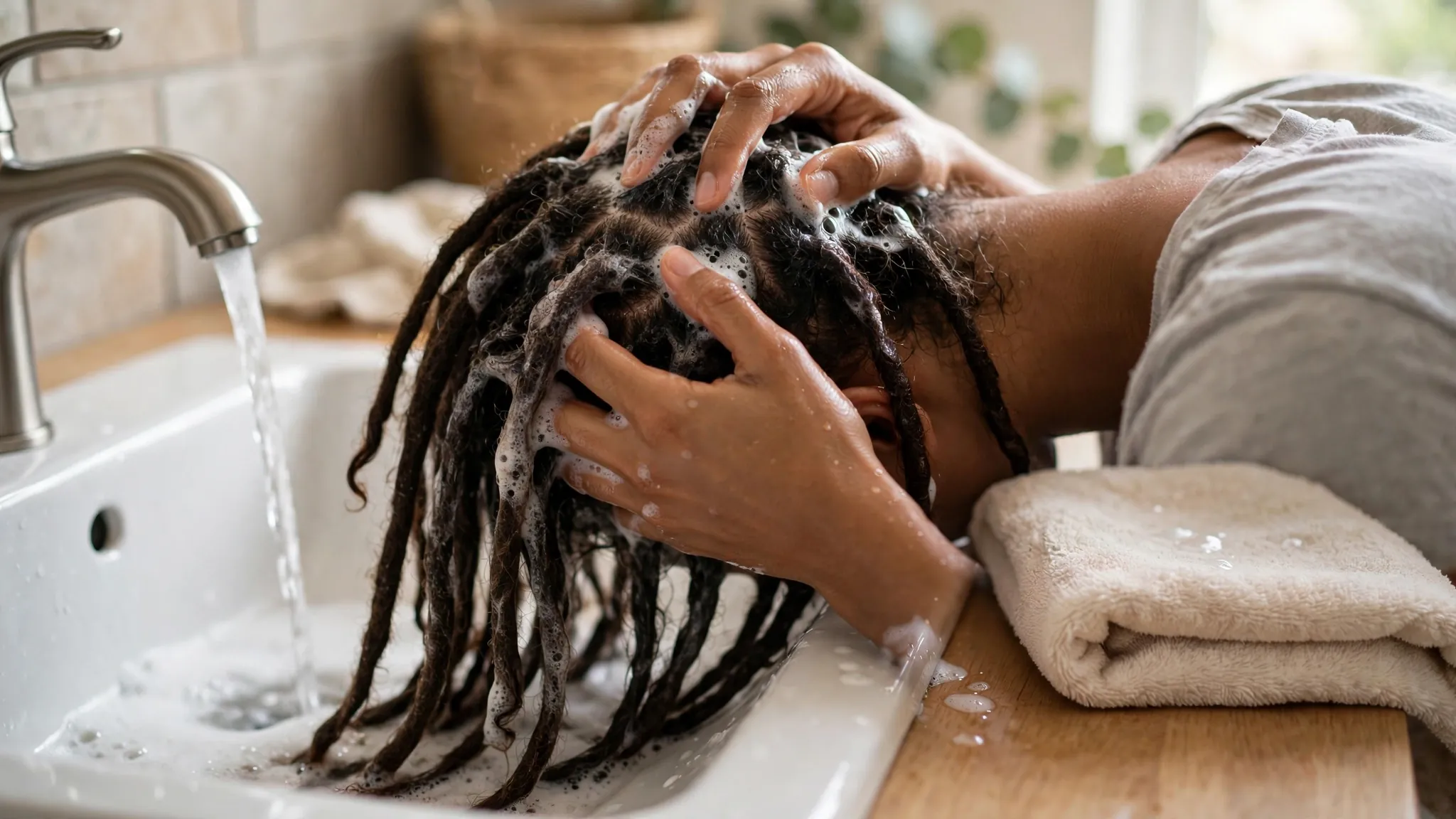
Your weekly rhythm centers on wash day. Most people with established locs wash every 7 to 14 days with a residue-free shampoo. If you sweat heavily, exercise daily, or work in a dusty place, lean toward the shorter end. If your scalp is dry and your lifestyle is calm, the longer end is fine.
Very new locs are sometimes washed every 3 to 4 weeks at first, because frequent wetting can disturb forming knots. Your stage moves the number.
We do not re-teach wash technique here on purpose. Our detailed guide How to Wash Your Dreadlocks at Home covers the full method step by step, and How to Clean Dreadlocks at Home covers the deeper clean. The weekly rhythm is about when, not how. Pick a wash day, keep it, and let the detailed guide handle the technique.
After washing comes light moisture, 2 to 3 times per week. A water-based mist or a light spray keeps locs flexible. Heavy oils, butters, and waxes are the enemy of this rhythm because they coat the hair and trap buildup inside the loc where shampoo cannot reach it easily. For choosing the right products, see our Products for Dreadlocks guide, which covers categories without pushing any brand.
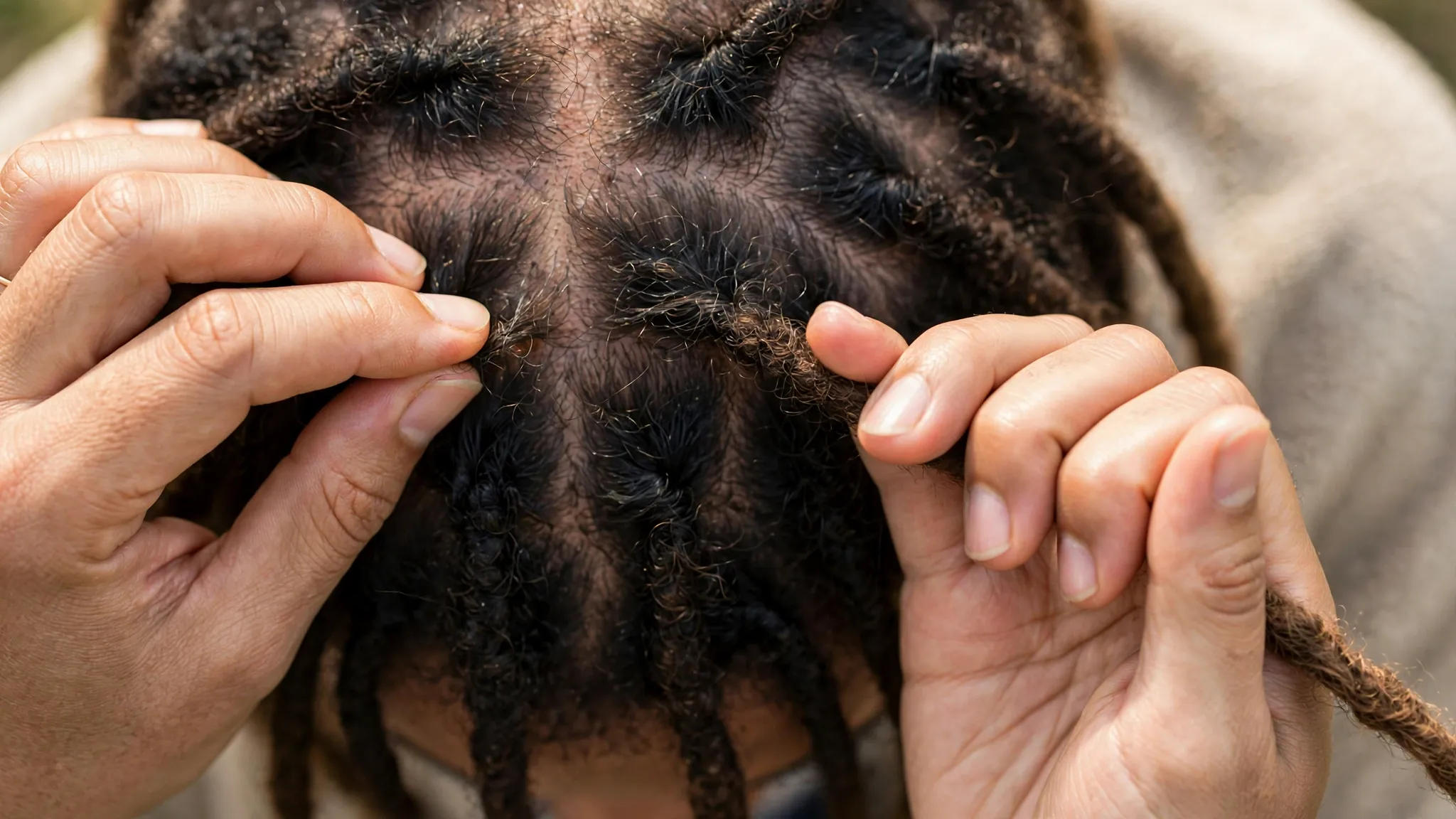
Once a week, also do a root separation check. Run your fingers along your scalp and gently pull apart any locs that are trying to merge at the base. This takes about two minutes and prevents the matted-together clumps that are painful to fix later. Small locs need this more often than large ones, because thin roots combine faster.
Monthly: About an Hour of Maintenance
The monthly rhythm is root maintenance. Most people retwist every 4 to 6 weeks. That range is the most common guidance across locticians and care guides. Some sources stretch it to 6 to 8 weeks.
If you interlock instead of retwisting, the rhythm is different: small locs like microlocs are usually retightened about every 6 weeks, while larger locs can go 2 to 3 months. Your loc size sets this clock, and our Micro Locs guide explains the small-loc schedule in detail.
Monthly is also inspection time. Look at your scalp for redness, heavy flaking, or sore spots. Look at your locs for thinning at the roots, which is an early warning sign of too much tension. Check the ends for excessive fraying.
Catching these early is the difference between a small adjustment and a big repair. If you are unsure what healthy stages look like, our Stages of Locs Journey guide shows what is normal at each phase.
Now and Then: Seasonal Resets
Some care does not fit a weekly or monthly clock. A deep cleanse or detox every few months clears the slow buildup that regular washing leaves behind, especially if you use any styling products. Signs you are due: locs feel tacky or coated after washing, look dull, or carry a faint odor even when clean. Our Detox Dreads guide covers the full process when the time comes.
Seasonal changes count too. Winter dryness may call for slightly more moisture. Summer sweat and swimming may call for more frequent washing. And once or twice a year, consider a professional check with a loctician, the way you would service anything you want to last. A trained eye catches root stress and buildup patterns you cannot see on your own head.
What Most Care Articles Miss 03
Almost every care article teaches washing in loving detail and then says “dry your hair” in half a sentence. That is backwards. Drying matters more than washing. A loc can look dry on the outside while its center is still damp, especially a thick one.
That trapped dampness is where musty smell and mildew begin, not in the wash itself. The wash everyone teaches; the drying nobody emphasizes. We put drying in its own section below for exactly this reason.
The second thing most articles miss is lint. Locs are lint magnets. Towels, cotton pillowcases, wool hats, and fuzzy sweaters all shed fibers that work their way into the loc and stay there. Over months, trapped lint becomes part of the loc’s core and dulls its look from the inside. The fix is boring and effective: microfiber towels instead of terry cloth, satin at night, and a quick visual check when you wash.
The third miss is over-touching. Many people damage their locs not by neglect but by love. Constant twisting, tight daily styles, and re-doing the roots every week create tension that thins the hairline and weakens the base of each loc. Locs are not fragile, but they are not invincible either. The healthiest locs usually belong to people who do a little, regularly, and then leave their hair alone.
The Scalp Is the Soil: Care Starts There 04
Your scalp is skin, and it wants the same simple things as skin anywhere else: clean, calm, and free from constant pulling. Most scalp trouble under locs does not come from a lack of oil. It comes from buildup, from styles that pull too tight, or from a scalp that is never really checked because the locs cover it up.
Check your scalp in daylight once a week. Part the locs gently and look for redness, bumps, heavy flakes, soreness, or thinning at the edges. Flakes alone are often just dryness. But flakes with pain, swelling, sores, or hair loss are a signal to see a loctician or dermatologist, not to add another bottle of oil. Our dandruff and dreads guide separates the normal from the not-normal in detail.
Use oil lightly, on the scalp only, and only when the scalp actually feels dry, not on a fixed daily schedule. A few drops warmed between your palms and massaged in with your fingertips is enough for most people. Heavy oil poured over the locs travels down and coats them from the outside in, which is exactly the buildup this routine is trying to prevent.
And take the tension warning seriously. Tight styles that pull can damage hair follicles over time, and hair lost at the edges does not always grow back. A retwist should feel secure, never painful. Soreness, bumps, or headaches after styling are not “growing pains.” They are your scalp asking for less tension.
Washing: Frequency, Not Technique 05
This is the hub section on washing, so here is the honest summary: when matters more than the perfect method, and the method lives in our dedicated guides. Wash with a residue-free shampoo, focus on the scalp, let the lather run through the locs, and rinse until the water runs fully clear. That is the technique in one paragraph.
The frequency question is where people get stuck, and guides disagree in a useful way. The common guidance for established locs is every 7 to 14 days. Active people who sweat daily often wash weekly. Calmer lifestyles can stretch toward two weeks or a little more.
Very new locs sometimes start at every 3 to 4 weeks, because frequent soaking can disturb forming knots. Treat all of these as a range to test on your own head, not as law.
One myth dies here: dirty hair does not lock faster. Clean hair actually mats better, because buildup coats the fibers and stops them from gripping each other. If your locs feel slippery or tacky after washing, that is coating, not cleanliness. A thorough rinse usually fixes it better than a second round of shampoo.
For the full method, read our washing dreadlocks at home guide. For choosing what to wash with, see our dreadlock shampoo guide. And when buildup runs deeper than a normal wash can fix, our clean dreadlocks guide covers the deeper clean. This hub will not repeat those guides; it keeps your schedule on track.
Wash in the morning when you can. A morning wash gives locs the whole day to dry. A late-night wash almost guarantees damp locs at bedtime. If you must wash at night, finish drying before bed rather than covering damp locs and hoping for the best.
Drying: The Step That Stops Mold 06
Drying is half of washing. Treat it that way and most smell and mildew problems never start. Squeeze water out section by section, from roots toward the ends. Then wrap the locs in a microfiber towel, which pulls water out without shedding lint into them the way terry cloth does.
After the towel, let air move. Separate the locs so air can reach the roots instead of tying them into a tight wet bundle. Air drying in a ventilated room works. A fan helps. A dryer on a low or cool setting finishes the job faster. Keep going until the inside of a loc feels dry when you squeeze it, not just the surface.
Here is the trade-off most people never hear: washing more often is fine, but only if drying keeps up. A runner who washes twice a week and dries fully every time has healthier locs than someone who washes monthly but sleeps on damp hair. Frequency is not the risk. Dampness is.
Never sleep with wet locs and never cover damp locs with a tight bonnet. If locs still feel cool and damp inside hours after washing, they are not ready. Our moldy dreads guide explains the warning signs and what to do if you ever catch that musty smell early, which is when it is easiest to fix.
Moisture Without Buildup 07
Moisture keeps locs flexible so they bend instead of snapping. The mistake is thinking moisture comes from heavy products. It does not. Water moisturizes; oil seals. A light water-based mist hydrates. A heavy butter just sits on top and traps everything underneath it, including the dirt you are trying to wash out.
The safe rhythm is a light mist 2 to 3 times per week, right after washing and on dry days in between. Rose water sprays and light leave-in mists made for locs are popular for a reason: they add water without coating. Our rose water for locs guide covers benefits, use, and simple DIY mixes if you want the full picture.
Now the myth check: more oil does not mean more moisture. Drowning dry locs in oil is like varnishing dry wood and calling it watered. If your locs feel dry, add water first, then a tiny amount of light oil to seal it in. If they still feel dry after that, the problem is usually buildup blocking absorption, not a lack of product.
Keep wax, heavy butters, and thick creams out of the routine entirely. They do not wash out of locs cleanly, and over months they build a waxy core that dulls the loc and slows locking. Our Products for Dreadlocks guide sorts every product category into help or harm, so check it before adding anything new to your shelf.
Retwisting vs Interlocking: Pick Your Trade-Off 08
Retwisting means twisting the new growth at the root to keep each loc neat, usually with a light gel. Interlocking, also called latching, means pulling the end of the loc through its own root with a small tool. Retightening is the general word for tightening new growth, whatever method you use. Palm rolling, rolling the loc between your palms, is the gentlest touch-up of all.
Here is the trade-off nobody puts in one place. Retwisting is gentler on the roots and gives a soft, classic look, but it unravels faster, so most people repeat it every 4 to 6 weeks. Interlocking holds much longer, which is why small locs like microlocs and Sisterlocks use it.
But done too tightly or too often, interlocking can thin the roots over time. There is no universally better method. There is only the method that fits your loc size and your tolerance for maintenance.
The schedules, as ranges: traditional locs are commonly retwisted every 4 to 6 weeks, with some guides stretching to 6 to 8. Small locs are usually retightened about every 4 to 6 weeks because thin roots combine faster. Interlocked larger locs can often wait 2 to 3 months. Your loctician should set your interval for your head, not for a chart.
Two practical notes. First, you can wash without retwisting every time. Just separate the roots with your fingers afterward so they do not merge. Skipping a retwist is fine.
Skipping root separation for months is how locs fuse into painful mats. Second, if you use gel for retwists, use a light one made for locs and use less than you think. Our loc gel guide covers what to look for and the mistakes to avoid.
If your locs are small, read our Micro Locs guide for the retightening rhythm in detail. If you are still deciding which loc type suits you, our Types of Locs guide compares the maintenance each type asks for.
Night Protection: Small Habit, Big Difference 09
You spend roughly a third of your life asleep, and your locs spend it pressed against a pillow. That is eight hours of friction every night, which is why night protection punches far above its weight. A satin bonnet, a satin scarf, or a satin pillowcase lets locs glide instead of grind. Cotton grabs; satin slips.
The method is simple. Gather long locs loosely, never in a tight bun that pulls the hairline all night. Cover with satin, or switch the pillowcase if bonnets bother you. In the morning, shake gently and go. People who protect at night report visibly less frizz and lint within a week or two, which makes sense: you just removed eight hours of daily damage.
This is also where lint defense happens. Most lint enters locs at night from cotton bedding and in the morning from terry towels. Satin at night plus a microfiber towel after washing closes the two biggest doors lint walks through.
Swim, Sweat, and Active Days 10
An active life and healthy locs are not enemies, but sweat, pool water, and seawater each ask for a response. Sweat is the everyday one. If you train hard most days, washing weekly instead of every two weeks is a reasonable adjustment. A quick water rinse between wash days also helps, as long as you dry fully afterward.
Swimming needs a plan before you get in the water. Chlorine dries hair and salt water leaves residue, and both sit inside locs longer than in loose hair. A swim cap keeps most of it out, and a clean-water rinse before swimming means the loc absorbs clean water first instead of pool water. After swimming, rinse again as soon as you can and dry fully.
Our swim cap for dreads guide covers caps, pre-swim prep, and the after-swim routine in full. The hub-level rule is short: water in is fine, water left sitting is not. Every swim ends with drying, the same as every wash.
Frizz: When To Fix It and When To Leave It 11
Frizz worries more loc wearers than almost anything else, and most of it is normal. New locs frizz because loose hairs have not matted in yet. That frizz is not damage; it is raw material still joining the loc. Fighting it aggressively in the early months can actually slow the locking you are trying to help.
The calm response is palm rolling: roll the loc gently between your palms to smooth the surface and encourage loose hairs inward. Do it on dry or slightly damp hair, never yanking. A little frizz after palm rolling is fine. Perfection is not the goal; progress is.
Fix frizz when it signals a real problem: sudden heavy frizz on mature locs can mean dryness or buildup, and a halo of broken hairs can mean too much tension or rough handling. Leave it alone when it is just new growth doing its slow work. Our smooth frizz dreads guide covers the natural methods in detail for the times fixing is the right call.
Buildup and Detox: Read the Signs Early 12
Buildup is the slow, quiet problem in dreadlock care. It does not arrive in a day. It layers in over months from heavy products, incomplete rinsing, hard water, and lint, until one day the locs feel coated, look dull, and stop absorbing moisture properly. The earlier you read the signs, the easier the fix.
Learn the four early warnings. Tacky or slippery feel after washing means coating, not cleanliness. White or grey residue deep in the loc means product that never rinsed out. Dull color that does not brighten after washing means a film is sitting on the surface. Faint odor on clean hair means something is trapped inside. One sign is a nudge; two or more is a message.
The response has two levels. First, simplify: cut heavy products, rinse longer, and give it two or three wash cycles. If the signs persist, that is when a detox or deep cleanse earns its place, usually every few months at most, not weekly. Our Detox Dreads guide walks through the full process step by step when you reach that point.
Prevention beats detox every time. Residue-free shampoo, light products, full rinses, and complete drying keep buildup from ever getting a foothold. A detox is a reset button, not a routine. If you find yourself detoxing constantly, the daily product choices are the real problem.
Your Care in Two Tables 13
The first table is the whole routine at a glance. Tape it to your mirror if that helps. The second table tunes the routine to your situation, because an oily scalp with starter locs and a dry scalp with mature locs should not run identical schedules.
Table 1: Care At A Glance
| When | Do This | Time Needed |
|---|---|---|
| Daily | Morning root check, night satin protection | 5 minutes |
| Weekly | Wash every 7 to 14 days, dry fully, separate roots | 20 to 30 minutes |
| 2 to 3 times a week | Light water-based moisture mist | 2 minutes |
| Monthly | Retwist every 4 to 6 weeks or interlock on schedule, full inspection | About an hour |
| Now and then | Detox if buildup signs appear, seasonal adjustments, yearly loctician check | As needed |
Table 2: Which Routine Fits You
| Your Situation | Wash Rhythm | Moisture | Root Maintenance |
|---|---|---|---|
| Oily scalp | Every 7 to 10 days | Light, 1 to 2 times a week | Standard 4 to 6 week retwist |
| Dry scalp | Every 10 to 14 days | Light mist 2 to 3 times a week, tiny oil on scalp only | Standard 4 to 6 week retwist |
| New or starter locs | Every 2 to 4 weeks at first, per your loctician | Very light, avoid disturbing knots | Gentle palm rolling, minimal retwisting |
| Small locs (micro, Sisterlocks) | Every 7 to 14 days | Light, 2 times a week | Retighten about every 4 to 6 weeks, separate roots often |
| Medium to large mature locs | Every 7 to 14 days | Light, 2 to 3 times a week | Retwist 4 to 6 weeks, or interlock every 2 to 3 months |
| Very active lifestyle | Weekly, rinse between if needed | Light after each wash | Standard schedule, watch for dryness |
Questions To Ask Before You Build Your Routine 14
Before you lock in a schedule, answer five questions honestly. What is my scalp like, oily, dry, or balanced? What size are my locs, and what method maintains them? What stage am I in, starter, budding, or mature? How active is my life, desk, gym, outdoors, pool?
And how much time will I really give this each week? Your answers place you in Table 2 above. A routine that fits your real life beats a perfect routine you abandon.
One more question people forget to ask: what am I already using that might be working against me? If your shelf holds wax, heavy butter, or thick cream, no schedule will outrun them. Simplifying products is often the single biggest upgrade a routine can get, and it costs nothing.
- Residue-free products only. If it coats, it stays. Light shampoo, light moisture, nothing waxy.
- Dry fully every time. Squeeze, towel, airflow, then check the inside of a loc before bed.
- Never skip night protection. Satin bonnet, scarf, or pillowcase, every night, no exceptions.
- Separate roots weekly. Two minutes with your fingers prevents hours of un-matting later.
- Wash on rhythm, not on panic. A steady schedule beats emergency fixes every time.
Your 7-Day Starter Action Plan 15
Reading about a routine is not the same as running one. This plan turns the guide into action in seven days, one small step at a time. No shopping spree required.
- Day 1: Know your starting point. Answer the five questions from the previous section. Write down your scalp type, loc size, stage, activity level, and realistic weekly time. This is your baseline.
- Day 2: Pick your wash day. Choose a morning with drying time after it, and put it on your calendar as a repeating event. A wash day that exists on paper happens in real life.
- Day 3: Audit your shelf. Pull out every hair product you own. Set aside anything waxy, heavy, or butter-thick. Keep one residue-free shampoo and one light moisture mist. Simpler wins.
- Day 4: Fix your nights. Get a satin bonnet, scarf, or pillowcase in place tonight. This is the cheapest upgrade in all of dreadlock care.
- Day 5: Do a root separation pass. Sit in good light, run your fingers along your scalp, and gently separate any locs starting to merge. Note any sore or flaky spots for your weekly scalp check.
- Day 6: Check for lint and buildup. Look at your locs in daylight. Pick out visible lint by hand. Squeeze a loc after your next wash and check whether it feels coated. That tells you if your products are working for you or against you.
- Day 7: Book your maintenance. Put your next retwist or retightening on the calendar at the right interval from Table 2, or book your loctician. A scheduled appointment is a kept routine.
After day 7, you are not “done.” You are running. Repeat the weekly rhythm, keep the monthly maintenance, and revisit the tables whenever your season, activity, or stage changes.
The Usable Checklist 16
Print this or screenshot it. Run through it once a week until it becomes automatic.
- ☐ Roots separated with fingers, no merging pairs left
- ☐ Scalp checked in daylight: no new redness, bumps, or sore spots
- ☐ Wash done on schedule with residue-free shampoo, rinsed fully clear
- ☐ Locs dried completely, inside checked by squeezing
- ☐ Light moisture applied 2 to 3 times, no heavy products used
- ☐ Night protection in place: satin bonnet, scarf, or pillowcase
- ☐ Lint check done, visible fibers picked out by hand
- ☐ No tight styles worn all week without a break
- ☐ Next retwist or retightening date on the calendar
- ☐ Buildup signs reviewed: no tacky feel, dull film, or trapped odor
If you check all ten, your routine is working. If the same box stays unchecked week after week, that is the one to fix first. Routines fail at the weakest habit, not the hardest one.
Dreadlock Care Questions, Answered 17
How often should I wash my dreadlocks?
Most people with established locs wash every 7 to 14 days. Active lifestyles lean weekly; calmer ones can stretch further. Very new locs sometimes start at every 3 to 4 weeks so forming knots are not disturbed. Pick your range from Table 2 above, keep it steady, and always dry fully. Our washing guide covers the method in full.
Can I wash my locs without retwisting?
Yes. Washing and retwisting are separate jobs. Many people wash on schedule and retwist only every 4 to 6 weeks. The one thing you should not skip after washing is separating the roots with your fingers, because wet roots merge faster. Clean, separated, un-retwisted locs are perfectly healthy.
Do dreadlocks need conditioner?
Heavy conditioner is one of the fastest ways to build up residue inside locs, because it does not rinse out of a matted core cleanly. Light, water-based moisture is the safer choice. If a product feels coating rather than hydrating, it is working against you. See our products guide for the full help-or-harm breakdown.
Why do my locs smell even after washing?
Smell on clean hair almost always means trapped dampness or buildup, not dirt. The usual culprits are incomplete drying, covering damp locs at night, or product layers a normal wash cannot reach. Fix drying first, simplify products second, and consider a detox if the smell persists. Our moldy dreads guide explains the warning signs to watch for.
How do I stop lint from building up in my locs?
Close the two biggest doors: switch to satin at night and microfiber towels after washing. Pick out visible lint by hand during your weekly check rather than letting it work deeper. Avoid sticky lint rollers on locs, which can pull and break surface hairs. Prevention is the whole strategy here; deep lint is very hard to remove later.
Is frizz normal in new locs?
Yes, completely. New locs frizz because loose hairs have not matted in yet, and that frizz is raw material, not damage. Gentle palm rolling helps without disturbing progress. Sudden heavy frizz on mature locs is different and can signal dryness or buildup. Our frizz guide covers the natural fixes for when action is warranted.
Can I use regular shampoo on dreadlocks?
Regular shampoos often leave conditioning agents and silicones behind, which coat loc fibers and slow locking. A residue-free shampoo rinses clean and keeps the fibers able to grip each other. It is one of the smallest changes with the biggest payoff. Our dreadlock shampoo guide explains what to look for.
When should I see a loctician or dermatologist?
See a professional when home care is not resolving the issue. That includes persistent scalp pain, swelling, sores, spreading redness, hair loss at the edges, thinning roots that keep worsening, or any smell that survives proper washing, drying, and a detox. Early professional eyes save locs; late ones perform rescues.
Bottom Line 18
Dreadlock care is not a product collection. It is a rhythm: cleanse on schedule, moisturize lightly, maintain the roots without overtightening, dry fully every time, and protect at night. Do those five things steadily and your locs will do what locs do, which is grow stronger with time.
Use this hub as your home base. When any section needs depth, follow the links to our detailed guides on washing, shampoo, detox, frizz, dandruff, mold, swim care, and products. If you are just starting out, our dreadlocks journey guide walks through the beginning, and our faux locs guide covers the temporary route with its own care notes. Start the 7-day plan this week. Your future locs will thank you.
This article is for general informational purposes only. Individual results, hair types, scalp conditions, and situations may vary. For personal hair or scalp concerns, consult a qualified loctician or dermatologist.
