


Types of Locs: A Complete Guide to Choosing Your Perfect Loc Type
-
- October 27, 2026


Types of locs differ more in upkeep than in looks, and that simple fact changes how you should choose. Most guides show you photos and ask which style you like best, then stop there, but the photo is the easy part. The hard part is the calendar that comes after it, the washing routine, the retightening visits, and the way your scalp feels on a normal week.
This guide gives you a clear overview of the main types, without repeating a full guide for any one type. You will learn how each type starts, how it is kept neat, what it costs in time and care, who it suits, and who should wait. By the end, you should be able to shortlist one or two types for a consultation, not just pick a photo.
Here is the plan for this guide. First, a quick decision table helps you narrow the field in one minute. Next, a simple framework shows you how to judge any type by size, method, and rhythm. Then each main type gets a short, honest overview, followed by a comparison table, a timeline, maintenance choices, common mistakes, and questions to ask before you book.
Quick Decision: Which Type Fits Your Life? 01
Use this table as a starting filter, not as a final answer. Your hair, scalp, budget, and weekly routine will narrow it further, and a loctician who sees your hair in person can confirm what fits.
| If this is true for you | Start with this type | Think twice if |
|---|---|---|
| You want a classic, flexible loc you can style many ways | Traditional locs | You cannot keep regular retwist visits |
| You want the least handling and a natural result | Freeform locs | You want exact, even sections |
| You want very small, neat, versatile locs | Sisterlocks, Brotherlocks, or micro locs | Your budget or time for retightening is tight |
| You want to try the look without a long commitment | Faux locs | You want your own hair to lock for good |
If two types still look equal after this table, choose by rhythm, not by photo. Ask yourself which maintenance calendar you can actually keep for a year, because that calendar will decide how your locs look far more than the first photo will.
A Simple Framework: Size, Method, And Rhythm 02
Every type in this guide can be judged with three questions, and those questions work better than a long list of photos. First, how big is each loc, and how heavy will the full head feel? Second, how is it started and kept neat? Third, how often does it need care, and what happens if you miss a visit?
Size matters more than style names. Small locs give you more styling freedom and a fuller look, but they also mean more sections to care for. Large locs feel bold and simple, but they are heavier, slower to dry, and harder to split later if you change your mind.
Method is the tool, not the type. Palm rolling means rolling each loc between your palms to keep it round and neat. Interlocking, also called latching, means passing the end of a loc through its own root with a small tool to hold new growth in place. Retightening is the general word for tightening new growth at the root, whatever tool is used.
Rhythm is the real commitment. A type that needs care every four weeks is a different life choice from one that can wait eight weeks. Travel, gym sessions, swimming, and work hours all change which rhythm is realistic, so be honest about your normal week before you book.
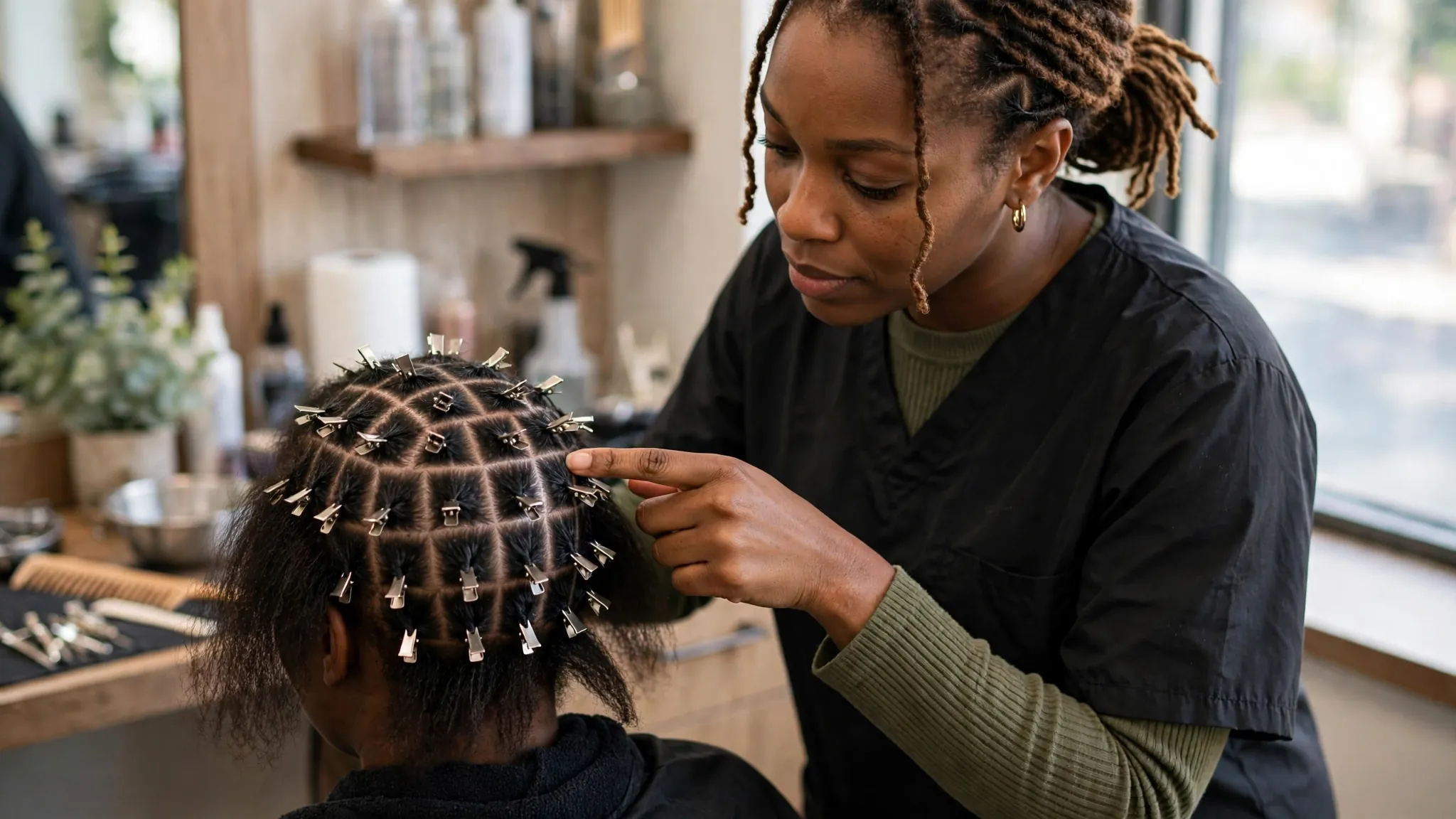
The grid is the parting pattern drawn on your scalp at the start, and it deserves more attention than most people give it. A grid is easy to draw and hard to undo, especially for very small locs, so a grid you cannot live with will follow you for years. Ask to see the grid on your own head, in a mirror, before the first loc is finished.
What Counts As A Type, And What Does Not 03
People often mix up three different ideas, and that mix-up causes bad choices. A type is the finished loc system, such as traditional, freeform, or Sisterlocks. A starter method is how locs begin, such as two-strand twists, coils, or braids. Size is how thick each loc is, from very small to very large.
One starter method can lead to more than one type, and one type can start in more than one way. Two-strand twists, for example, often grow into traditional locs, but they are not a separate type on their own. Keeping these ideas apart helps you ask better questions at a consultation.
Temporary styles are also not the same as permanent locs, even when they look similar in photos. Faux locs wrap hair around your own hair and are removed later, while real locs are your own hair matted and locked over time. This guide covers both, but it keeps that line clear throughout.
The word dreadlocks itself covers many cultures and histories, and many people now prefer the shorter word locs. For choosing a type, the history matters less than the practical question: do you want a style you can remove in weeks, or a loc you plan to keep for years?
Traditional Locs: The Classic, Flexible Choice 04
Traditional locs are the most familiar type, with medium sections that are neat enough for work and flexible enough for many styles. They are often started with two-strand twists, coils, or braids, then kept neat with palm rolling or retwisting as new growth appears at the roots.
They suit people who want a classic look without the very high upkeep of tiny locs. You can wear them loose, tied up, or styled, and you can usually find a loctician who works with them, which matters when you move or travel. Their size also makes them easier to wash and dry than very small locs.
The trade-off is steady care, not no care. Roots will grow fuzzy between visits, and skipping retwists for too long can lead to locs joining together or thinning at weak points. Traditional locs also take time to mature, so the first months will look softer and less defined than the photos you may have saved.
Choose traditional locs if: you want flexibility, a classic look, and a maintenance rhythm you can keep every four to eight weeks, depending on your hair and loctician. Skip them for now if: you want almost no salon visits, or you want the very smallest, most versatile sections.
Freeform And Semi-Freeform Locs: The Natural Path 05
Freeform locs form with the least handling, as hair is washed and left to mat and lock on its own, with little or no parting, twisting, or retwisting. The result is natural, varied in size and shape, and different on every head, which is the point for many people who choose this path.
Semi-freeform locs sit between freeform and traditional locs, with some parting or light care at the start, then less handling as the locs form. They give you a little more order than full freeform, while still keeping the natural, less manicured feel that many people want.
The trade-off is control, or rather the lack of it. You cannot pick exact sections, even thickness, or a neat grid in advance, and locs may join together if they are not separated from time to time. That unpredictability is a feature for some people and a deal-breaker for others, so be honest about which group you are in.
Choose freeform locs if: you value a natural journey, low salon costs, and freedom from a strict schedule. Skip them for now if: you need a neat, even, work-ready look from the start, or you would be unhappy with uneven sizes.
Sisterlocks And Brotherlocks: Small, Neat, And Systematic 06
Sisterlocks are very small, uniform locs made with a precise grid and an interlocking tool, and they are installed by trained consultants. Brotherlocks use a similar interlocking system, with slightly larger sections, and are often chosen by men who want a neat, structured result without the very smallest size.
Both systems suit people who want maximum styling freedom from small locs, a neat grid, and locs that hold their shape well between visits. Because the sections are small and even, you can wear many styles that larger locs cannot copy, from sleek buns to loose, full looks.
The trade-offs are time, cost, and access, and sources vary widely on all three, so get your own quote. Some cost guides put Sisterlocks installation far above traditional locs, while others give lower ranges, and the total depends on hair length, density, and location. Retightening also takes longer, because there are simply more locs to work through.
Grid permanence matters most here, because a Sisterlocks or Brotherlocks grid is precise and hard to change later. A grid that feels too tight, too small, or wrong for your hairline will not fix itself with time, so a consultation and a sample look on your own head matter more here than for any other type.
For the full system guides, see our Sisterlocks guide and our Brotherlocks guide, and compare them with our Microlocs vs Sisterlocks comparison before you decide between small systems.
Choose these systems if: you want small, neat, versatile locs and you can keep retightening visits and costs for years. Skip them for now if: your budget is tight, you cannot find a trained consultant near you, or you want a low-maintenance start.
Micro Locs: Small, Versatile, And High-Care 07
Micro locs are small locs that sit between traditional locs and Sisterlocks in size, and they are often started with twists or interlocking. They give you a fuller, more flexible look than larger locs, and they can be styled in ways that look close to loose hair.
They suit people who want versatility without joining a trademarked system, and who are happy to care for many small sections. Our full micro locs guide covers size choices, grid planning, and retightening in detail, so this overview will not repeat that full guide here.
The trade-off is the same as for other small locs: more sections mean longer retightening sessions, more careful washing, and more attention to lint and scalp comfort. Small locs also show mistakes early, such as sections that are too small for your hair, so size must be chosen for your hair, not just from a photo.
Choose micro locs if: you want small, flexible locs and you can keep a steady retightening rhythm. Skip them for now if: you want the lowest possible upkeep, or you have a scalp that is already sore, thin, or easily irritated.
Interlocked Locs: Firm Roots, Longer Gaps Between Visits 08
Interlocked locs are maintained, and sometimes started, by passing each loc through its own root with a tool, which holds new growth firmly in place. This method is used for many sizes, from traditional locs to micro locs, and it is the core method behind Sisterlocks and Brotherlocks as well.
Interlocking suits people who wash often, swim, work out, or have hair that slips out of twists easily. Because the root is held mechanically, it is less likely to unravel after washing than a palm-rolled root, and visits can often be spaced further apart, though exact intervals vary by hair and loctician.
The trade-off is tension, and this is where the myth check matters. Interlocking is not automatically safer just because it holds longer, because too much tension, or interlocking too often, can thin the hair at the roots over time. A firm root should feel secure, not painful, and soreness, bumps, or thinning at the hairline are early warning signs, not normal growing pains.
Choose interlocked locs if: you need roots that hold through washing and activity, and you have a skilled loctician who checks tension. Skip them for now if: your scalp is tender, your hair is already thinning at the edges, or you prefer the softest possible maintenance.
Two-Strand Twist, Coil, And Braid Starters 09
Two-strand twists, comb coils, and braid starters are ways to begin locs, not finished types on their own. Two-strand twists twist two sections of hair together, coils roll small sections into tight spirals, and braid starters plait sections that later lock into locs. All three can grow into traditional locs over time.
These starters suit beginners because they are widely available, often less costly than a trademarked system, and easier to understand at a first consultation. They also let you see how your hair behaves as it locks, before you commit to a very small or very large final size.
The trade-off is the starter phase itself, which can look messy, fuzzy, or uneven for months. Twists can unravel with washing, coils can loosen on softer hair, and braids can leave a pattern at the start that takes time to soften. Patience in this phase matters more than any product.
For starter ideas in more detail, see our starter loc styles guide, and remember that a starter method is a beginning, not a promise about the final size or shape.
Choose a twist, coil, or braid start if: you want a common, accessible beginning and you can live with a soft starter phase. Skip it for now if: you need a neat, finished look from day one, or you cannot keep roots from unraveling between visits.
Faux Locs, Extensions, And Other Temporary Options 10
Faux locs are temporary locs made by wrapping or crocheting hair around your own hair, and they are removed after weeks, not kept for years. They suit people who want to test a loc look, protect their own hair for a short time, or change styles without locking their own hair.
Extensions and wigs offer a similar trial, with added length or volume, and they can help you see how a size or length looks on you before you commit. Our dreadlock extensions guide and our Soft Locs vs Faux Locs comparison explain those options in more detail.
The trade-off is that temporary does not mean risk-free, because tight installs, heavy extensions, or leaving them in too long can still stress your scalp and edges. A temporary style is best used as a test, with a clear removal date, not as a way to hide scalp pain or thinning underneath.
Use this test wisely: wear faux locs for a few weeks, notice the weight, the washing routine, and how your scalp feels, then decide if a permanent type is worth it. That trial can save you years of regret, and it costs far less than starting and then removing real locs.
Choose temporary locs if: you want a trial, a short-term style, or a break for your own hair. Skip them for now if: you want locs that grow with your own hair, or your scalp is already damaged or sore.
The Decision Table: Every Main Type Side By Side 11
This table compares the main types on the points that actually change your daily life. Costs and times vary widely by location, hair, and loctician, so treat every range here as a guide for questions, not as a fixed price for your head.
| Type | How it starts | Upkeep rhythm | Best for |
|---|---|---|---|
| Traditional locs | Twists, coils, or braids | Retwist every 4 to 8 weeks, varies | Classic, flexible styling |
| Freeform locs | Washed and left to lock | Least handling, separate as needed | Natural, low-salon journey |
| Sisterlocks / Brotherlocks | Grid + interlocking tool, trained consultant | Retightening every 4 to 8 weeks, varies | Small, neat, versatile locs |
| Micro locs | Twists or interlocking, small sections | Retightening every 4 to 8 weeks, varies | Small, full, flexible locs |
| Interlocked locs | Tool passed through the root | Often 6 to 8 weeks, varies | Washing, sport, slipping roots |
| Faux locs | Wrapped or crocheted extensions | Removed after weeks, not years | Trial or short-term style |
Notice what this table does not do: it does not rank types from best to worst, because no such ranking fits every head. A type that is perfect for one person can be a poor fit for another, simply because their scalp, hair density, budget, and weekly routine are different.
Costs follow the same rule, and sources disagree in a useful way. One cost guide puts traditional locs, micro locs, and Sisterlocks in very different ranges, while salon price lists give yet other ranges, and both can be right for their own city and hair type. That is why a consultation quote for your own head matters more than any number in a table.
Your Timeline: What Changes, And When 12
Locs do not arrive finished, and the timeline below is true for most permanent types, even though the exact months vary. Knowing the stages in advance helps you avoid panic in the early months, when locs often look least like the photos you saved.
Day 1: A Neat Start, Not A Finished Look
On day one, your locs will look neat, sectioned, and a little stiff, because they have just been twisted, coiled, or interlocked. That neatness is a starting point, not the final texture, and it will soften as you wash, sleep, and live with them.
Take photos on day one, from the front, sides, and back, in daylight. Those photos help you and your loctician see real change later, instead of relying on memory, which often makes early locs seem worse than they were.
First Weeks: Frizz, Softness, And Learning
In the first weeks, frizz, loose hairs, and soft roots are normal, and they do not mean you chose the wrong type. Your scalp is adjusting, your hair is learning to hold its new shape, and your washing routine is still new, so some unraveling is common, especially for twists and coils.
This is the time to learn your scalp, not to add heavy products to hide frizz. Light washing, full drying, and gentle handling will help more than thick creams, which can build up inside young locs and make them feel heavy.
First Months: Budding And Settling
Over the first months, locs often go through a bumpy, fuzzy stage as hair mats and thickens, and sections may look uneven for a while. This stage can feel awkward, and it is the stage where many people give up too early, even though their locs were on a normal path.
Keep your retightening visits, even if the change seems slow, because missed visits in this stage can let locs join together or thin at weak roots. If a loc keeps unraveling, tell your loctician early, rather than waiting until it needs a bigger fix.
After Settling: Mature Locs And Easier Choices
After settling, which can take many months and varies by type and hair, locs feel firmer, hold styles better, and need less guesswork. You will know your washing rhythm, your retightening interval, and which styles suit your size and weight, because you have lived with them.
Mature locs are not maintenance-free, but they are more forgiving than starter locs. The work shifts from forming locs to keeping roots healthy, watching for thinning, and choosing styles that do not pull your edges too hard.
Maintenance: Palm Rolling, Interlocking, And Washing 13
Maintenance is where types truly differ in daily life, so choose a method you can live with, not just a method that sounds neat. Palm rolling is gentle and quick, interlocking is firm and longer-lasting, and both can work well when tension is checked and visits are kept.
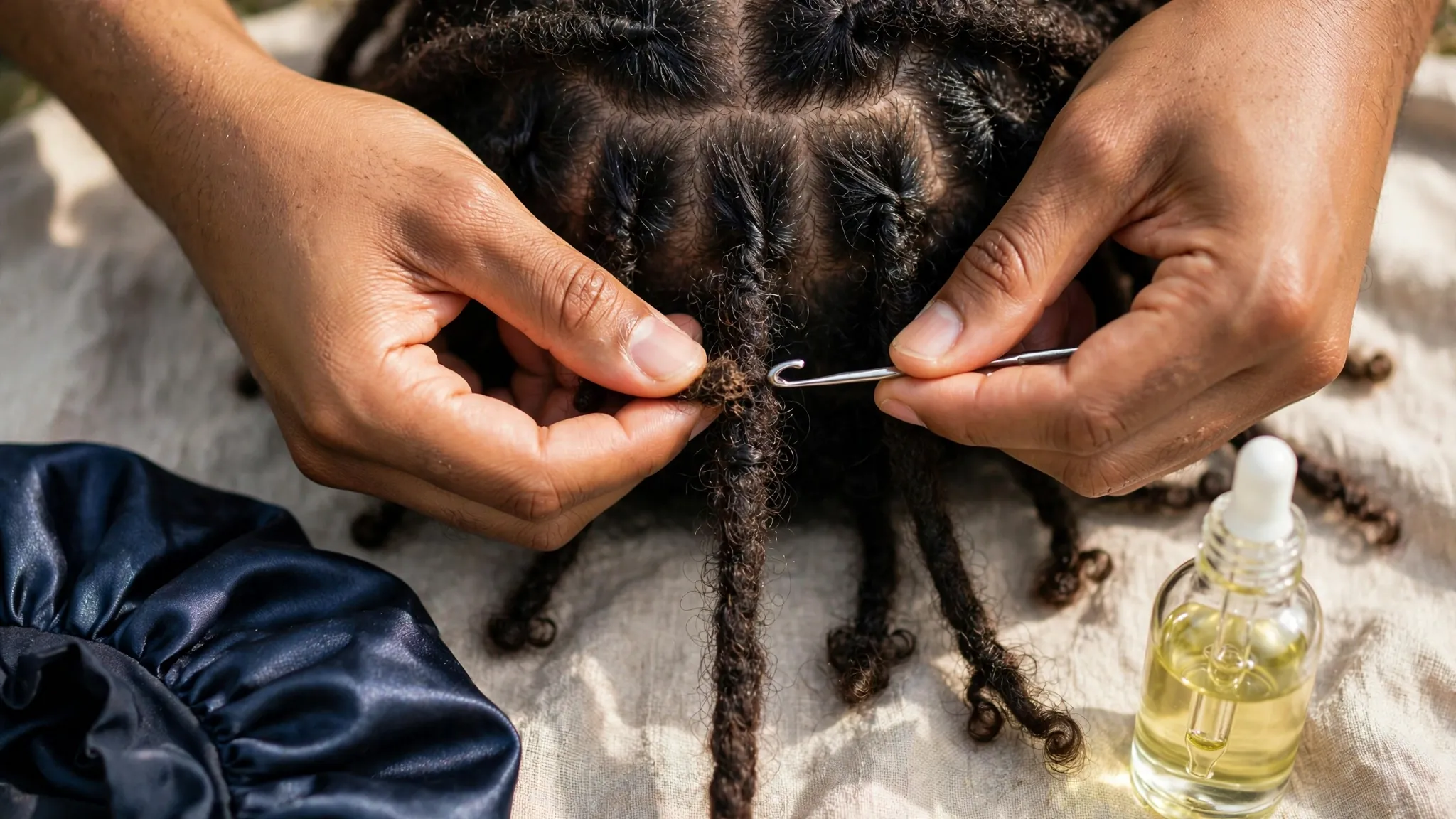
Palm rolling suits people who want a soft, round loc and a quick session, and who do not mind roots getting fuzzy between visits. Interlocking suits people who wash often, sweat a lot, or have roots that slip easily, and who want longer gaps between visits.
Switching methods later is possible, but it can change the shape of your locs, because interlocked roots tend to be slimmer than palm-rolled roots. If you switch, expect a period where roots and ends look different, and ask your loctician whether that change fits your long-term plan.
Washing matters for every type, and the rule is simple: wash your scalp first, let water and diluted shampoo run through the locs, and dry them fully before you cover them. Locs that stay damp can smell, feel heavy, and develop problems that are hard to fix later.
For a step-by-step washing routine, see our washing dreadlocks at home guide, and for size choices, see our dreadlock size chart. Both help you judge a type by real care, not just by a photo.
Mistakes That Make A Good Type Feel Wrong 14
Choosing by photo alone. A photo shows size and style, but it does not show the retightening calendar, the washing time, or the weight on your neck. A type that looks perfect in a photo can feel wrong in a normal week.
Choosing the smallest size by default. Smaller locs are versatile, but they also mean more sections, longer sessions, and higher costs. If your hair is fine, or your scalp is sensitive, a slightly larger size may last better and feel kinder.
Ignoring tension. Pain, bumps, headaches, or thinning at the hairline are warning signs, not a normal part of getting locs. If a style hurts, it is too tight, whatever type it is, and it should be loosened or changed.
Adding heavy products to hide frizz. Thick butters, waxes, and heavy creams can build up inside locs, attract lint, and make them feel heavy and dull. Light products, used sparingly, usually work better, especially for small locs.
Leaving locs alone for too long. Even low-maintenance types need checks, because locs can join together, thin at weak points, or hide scalp problems underneath. A short check visit is cheaper than a big repair later.
Who Should Skip Which Type, For Now 15
Skipping a type for now is not the same as never choosing it, and it is often the smartest decision. Hair and scalp health change over time, and a type that is wrong today may be right later, after damage heals or a routine becomes steadier.
Skip very small locs for now if your hair is breaking, your scalp is sore or flaky, or you cannot afford regular retightening. Small sections put more work on each root, and they show problems faster than larger locs.
Skip freeform locs for now if you need a neat, even look for work or a special event soon, because freeform locs will not give you that control. Skip permanent locs altogether for now if you are unsure, and test the look with faux locs first instead.
Skip any type that requires a loctician you cannot reach regularly, because a type is only as good as its upkeep. If the nearest trained consultant is far away, a more common type with local care may serve you better in real life.
Questions To Ask Before You Book 16
Take these questions to your consultation, and write down the answers for your own head, not just in general. A good loctician will welcome them, because they show you are choosing carefully, not just following a trend.
1. What size and grid do you suggest for my hair density, hairline, and scalp, and can I see that grid on my own head first?
2. How long will installation take, how often will I need retightening, and what will each visit cost for my hair?
3. How should I wash and dry this type, and what products should I avoid in the first months?
4. What are the early warning signs for this type, and when should I come back sooner than planned?
5. Can I combine or split these locs later if I change my mind, and what would that cost in time and hair health?
6. If I travel, move, or cannot reach you for a while, who else can maintain this type safely?
LOC CHECK
- Size and grid seen on your own hair, not just in a photo
- Maintenance rhythm you can actually keep for a year
- Washing and drying routine that fits your normal week
- Scalp comfort checked, with no pain, bumps, or thinning ignored
Frequently Asked Questions About Types Of Locs 17
What are the main types of locs?
The main types are traditional locs, freeform and semi-freeform locs, Sisterlocks and Brotherlocks, micro locs, interlocked locs, and temporary faux locs. Starter methods such as two-strand twists, coils, and braids are ways to begin locs, not separate finished types on their own.
Which type of locs is easiest to maintain?
Freeform locs need the least handling, but they also give you the least control over size and shape. For a neat result with manageable care, traditional locs are often easier than very small locs, because they have fewer sections to retighten at each visit.
What is the difference between Sisterlocks and micro locs?
Both are small, versatile locs, but Sisterlocks use a precise, trademarked grid and interlocking system installed by trained consultants. Micro locs are also small, but they are not tied to one system, and they can be started with twists or interlocking by a wider range of locticians.
Can I change from one type of locs to another later?
Sometimes, but not always easily. Small locs can sometimes be combined into larger locs, while splitting large locs into smaller ones is harder and can weaken them. A temporary style is the safest way to test a look before you commit to a permanent change.
How long do locs take to fully mature?
Maturing time varies by type, hair, and care, and guides give different ranges, often from many months to two years for traditional locs. The starter phase, budding stage, and settling stage are normal parts of that journey, not signs that you chose the wrong type.
Are faux locs a real type of locs?
Faux locs look like locs, but they are a temporary style made with wrapped or crocheted hair, not your own hair locked over time. They are useful as a trial or short-term style, but they should not be confused with permanent locs in a decision about long-term care.
Do locs damage your hair or scalp?
Locs themselves do not have to damage hair, but tight installs, heavy extensions, missed care, and ignored tension can thin hair at the roots and edges. Pain, bumps, and thinning are warning signs, and a loctician or dermatologist should check them early rather than later.
How do I choose between palm rolling and interlocking?
Choose palm rolling if you want a soft, round loc and a quick session, and choose interlocking if you wash often, sweat a lot, or have roots that slip easily. Neither method is better for everyone, and tension matters more than the method name alone.
Bottom Line: Choose By Rhythm, Not Just By Looks 18
The best type of locs for you is not the one with the best photo, but the one whose size, method, and rhythm fit your hair, scalp, budget, and normal week. A type you can wash, dry, and retighten without pain or panic will look better in a year than a type you loved on day one but could not maintain.
Your next step is simple: shortlist one or two types from this guide, book a consultation, and ask the six questions above with your own hair in front of the loctician. If the grid, rhythm, and cost all fit, you have found your type, and if they do not, a temporary trial is still a smarter choice than a permanent regret.
This article is for general informational purposes only. Individual results, hair types, scalp conditions, and situations may vary. For personal hair or scalp concerns, consult a qualified loctician or dermatologist.
