



How to Start Dreadlocks on Short Hair: The Full Beginner’s Guide
-
- November 3, 2026

Yes, you can start dreadlocks on short hair. The honest answer to how to start a dreadlock for short hair is that length is rarely the real obstacle. Method is. Pick the starting method that fits your current length and texture, and short hair locks just as surely as long hair does.
This guide is length-focused and written for all hair types, from straight to tightly coiled. You will get the Length / Method / Texture framework first, then minimum starting lengths for each method, a decision table, what most guides miss, a realistic starter timeline, a first-week action plan, a usable checklist, and answers to the questions short-haired starters ask most.
One boundary, stated up front: this guide covers starting decisions only. Full install techniques live in our dreadlocks journey guide, and wash-day and routine detail live in our dreadlock care hub. Here we decide how to start on short hair. We do not re-teach the techniques themselves.
Quick Decision: Start Now or Grow First?
- Start now if your hair reaches the minimum length for at least one method in the table below. Most people can start sooner than they think.
- Grow first only if your hair is shorter than about an inch all over and you want coil-based methods. Even then, a twist sponge can start the journey today.
- See a loctician first if your hair is very fine, chemically treated, or breaking. Short hair plus fragile hair is the one combination where professional eyes pay for themselves.
- Expect unraveling. Short starter locs loosen more than long ones. That is normal, not failure, and the method table tells you which methods resist it best.
If your hair meets one method’s minimum, waiting only delays the locs you want.
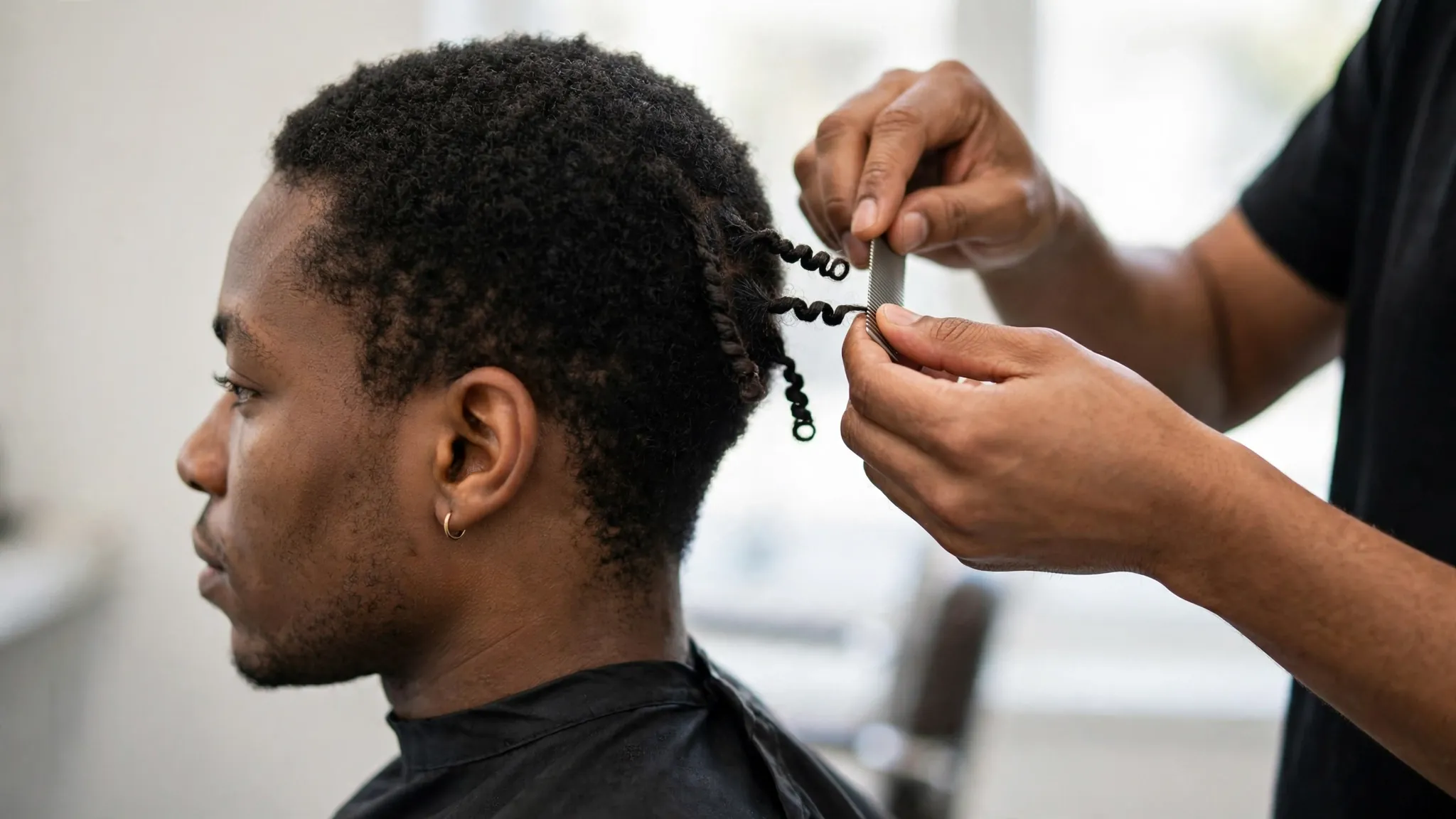
The Length / Method / Texture Framework 01
Every good starting decision runs through three words in this order. Length sets which methods are even possible. Method is chosen from the ones your length allows. Texture tunes the method to your hair, because the same method behaves differently on straight hair than on tightly coiled hair. Get the order right and the rest of this guide becomes simple.
Most people do it backwards. They pick a method they saw online, then discover their hair is too short for it, then either wait months or start badly. Length first, method second, texture third. Measure your hair honestly, match it to the table in the next section, and only then adjust for texture.
Texture is the tuning dial, not the gatekeeper. Tightly coiled hair grips itself and locks faster, so it tolerates shorter lengths and looser methods. Straighter hair slips more, so it usually needs a bit more length or a method that mechanically holds, like interlocking. Neither texture is better for locs. They just ask for different settings on the same machine.
Here is the framework in one sentence you can reuse forever: my length allows these methods, my texture picks the winner. Everything below is that sentence, worked out in detail.
How Short Is Too Short? Minimum Length by Method 02
There is no single magic number, because each method grips the hair differently. The numbers below are the rough minimums locticians work with in practice. Treat them as starting points for your own head, not as laws. Hair density, curl tightness, and the loctician’s skill all move the numbers a little.
Twist sponge works from about an inch of hair, which makes it the earliest possible start. It suits tightly coiled textures best and creates small, uniform starter coils quickly. Its limit is that it needs that coil-friendly texture to hold.
Comb coils generally need about 2 to 3 inches. They are the classic short-hair starter for coily textures, giving neat, defined coils that mature into locs. Our Afro Dreads guide notes that comb coils work best for short afro hair, and that holds across this whole length band.
Two-strand twists usually need about 3 to 4 inches. The two strands hold each other, so this method resists unraveling better than coils on many textures, and it works across a wider texture range than sponge or coil methods.
Interlocking, also called latching, needs roughly 3 or more inches, enough length to pull the loc through its own root. It is the most unravel-resistant option here, which is why people with straighter or silkier hair often choose it for short starts. Our Micro Locs guide covers interlocking-based starting in detail for small locs.

Method / Length / Texture at a glance
| Method | Works from about | Best textures | Why it suits short hair |
|---|---|---|---|
| Twist sponge | ~1 inch | Tightly coiled | Earliest possible start; fast, uniform coils |
| Comb coils | ~2 to 3 inches | Coily, curly | Neat definition that matures into locs |
| Two-strand twists | ~3 to 4 inches | All textures | Strands hold each other; resists unraveling |
| Interlocking | ~3+ inches | All textures, incl. straighter hair | Most unravel-resistant; no daily upkeep needed |
| Backcombing | ~4+ inches | Straighter, wavy | Creates instant texture where coils cannot form |
Read the table with the framework. Find your length row first, then let texture pick the winner within the rows your length allows. If two methods both fit, the tie-breaker is unraveling tolerance: interlocking and two-strand twists hold better on slippery hair, while coils and sponge are quicker and neater on coily hair.
One honest caveat: a skilled loctician can sometimes start a method slightly below these minimums, and a first-timer at home may need slightly above them. The numbers are the middle of the road, where most people succeed.
What Most Short-Hair Guides Miss 03
The first miss is the advice to “just grow it out first.” For most textures this is unnecessary waiting. If your hair meets a method’s minimum, the method is designed for exactly your length. Growing longer first only makes sense if you want a specific method your current length cannot hold. Time spent growing is time your locs could have spent maturing.
The second miss is unraveling. Short starter locs loosen more than long ones, especially at the first few washes. Most guides treat unraveling as a mistake. It is not. It is physics: short hairs have less to grip. Expect some coils or twists to loosen, plan to re-twist or re-coil the escapees, and choose an unravel-resistant method from the table if it bothers you. Panic helps nothing; a maintenance plan helps everything.
The third miss is the scalp showing through. With short starter locs, more scalp is visible between the parts than most beginners expect. This is normal and temporary. It does not mean the locs are too thin or the parts too wide. As the locs mature and thicken, coverage improves. Do not shrink your parts to hide scalp; tight, tiny parts on short hair create tension problems that outlast the cosmetic worry.
The fourth miss is product weight. Heavy waxes, thick butters, and sticky gels are worse on short starter locs than on mature ones, because there is less hair to absorb them and they coat the fibers that need to grip each other. Dreadlocks form through slow matting over time, and coating blocks exactly that process. Light products or none at all beat heavy ones at this stage. Our products guide sorts every category into help or harm before you buy anything.
The fifth miss is shrinkage hiding your progress. Coily hair can shrink to half its stretched length or less, so month-three locs may look shorter than day-one twists. Beginners read this as “my locs are not growing.” They are growing; they are also condensing, which is the whole point. Take a stretched-length photo on day one and compare against that, not against your memory of wash day.
Your Short Starter Timeline: What Actually Happens 04
Short starter locs follow the same journey as any locs, just with the early stages more visible. Knowing the timeline keeps you from mistaking normal phases for problems. Here is what to expect, and what is a genuine warning sign at each stage.

Day 1: Fresh and Neat
Install day looks the best it will look for a while, and that is fine. Coils are defined, twists are crisp, parts are clean. Your scalp may feel tender if the method involved pulling, but it should not hurt. Take photos from several angles now. These become your baseline for measuring real progress later.
The day-one rule is simple: leave them alone. No restyling, no “fixing” a coil that looks slightly uneven, no tight hats pressing everything flat. Let the install settle.
Week 1 to 2: The First Loosening
Sleep, hats, and the first wash loosen things. Some coils puff up, a twist or two may unravel at the ends, and the neat grid softens. This is the stage where most beginners panic and where the panic is least justified. Re-coil or re-twist the escapees, keep washing gentle, and keep going.
Wash timing matters more on short starters. Many locticians suggest waiting about 2 to 3 weeks before the first wash for coil and twist starters, so the pattern sets. When you do wash, use a stocking cap or gentle handling to reduce unraveling, and dry fully. Our washing guide covers the gentle technique in full.
Month 1 to 3: Frizz and Budding
Frizz arrives and stays for a while. Loose hairs escape the pattern, ends puff, and the locs look messier than day one. This frizz is raw material, not damage: those loose hairs are what will mat into the loc. Gentle palm rolling helps without disturbing progress. Our frizz guide separates the normal from the fixable.
Budding usually starts in this window: small firm lumps form inside the loc as matting begins. Buds can look like uneven swelling, and beginners sometimes think something is wrong. They are the first visible proof that locking is working.
Warning sign at this stage: locs merging at the roots into flat mats. Separate the roots gently with your fingers every week or two. Two minutes of separation now prevents painful un-matting later.
Month 3 to 6: Condensing
The locs start to firm up and condense, which means they get denser and often look slightly shorter as shrinkage and matting pull them in. This is the stage where the stretched-length photo from day one pays off: compare properly and you will see real growth hiding inside the shrinkage.
By month six, most short starters have recognizable young locs. They are not mature, but they hold their shape through washing, the buds have firmed into the body of the loc, and the routine feels automatic. From here, the journey continues exactly like any other set of locs, and our stages of locs guide maps the road ahead.
What NOT to Do on Short Starter Locs 05
Short starters are forgiving, but a few mistakes cost months. Each rule below is short because the reasoning behind it is already covered above.
- Do not start with heavy wax or thick butter. They coat the fibers and slow the matting your locs need. Light or product-free beats heavy at this stage.
- Do not re-twist every week. Constant re-twisting on short roots creates tension that thins the hairline. Let the roots rest between maintenance sessions.
- Do not make parts tiny to hide scalp. Visible scalp between short starters is normal. Overly small sections on short hair mean fragile locs and sore roots.
- Do not wash like mature locs in week one. Give coil and twist starters a couple of weeks to set before the first real wash, then keep it gentle.
- Do not compare your month two to someone’s year two. Short starters look unfinished for months. That is the process, not a verdict on your hair.
- Do not use tight styles to “neaten” new locs. Pulling short starters into tight ponytails or braids stresses the roots exactly when they are weakest. Tight hairstyles can damage follicles over time, and new locs deserve the gentlest handling.
- Do not skip root separation. Short locs merge at the base faster than long ones because the roots sit close together. A quick finger-separation every week or two is non-negotiable.
Your First-Two-Weeks Action Plan 06
Starting is a sequence, not a single appointment. Run these steps in order and the common beginner mistakes mostly disappear on their own.
- Measure honestly. Stretch a few sections and measure the real length. Match it to the method table above using the Length / Method / Texture framework. Write down your chosen method before booking anything.
- Decide: loctician or DIY. Book a loctician if your hair is fine, chemically treated, or under two inches. DIY suits coily textures at comfortable lengths with a patient helper. Either way, decide before wash day.
- Clarify wash before install. Start with clean, product-free hair so nothing coats the fibers. Skip heavy conditioners in this wash; residue now slows locking later.
- Install and photograph. Get the starter set done, then take day-one photos from the front, sides, back, and one stretched-length close-up. Future you will be grateful.
- Protect the first nights. A satin bonnet, scarf, or pillowcase from night one reduces the friction that unravels fresh starters. Cotton pillowcases are the quiet enemy of week-one coils.
- Hands off for two weeks. No restyling, no daily re-twisting, no “checking” by pulling. Let the pattern set. Re-coil only the pieces that fully escape.
- Plan the first wash. Around week two or three, do a gentle first wash with diluted residue-free shampoo, minimal manipulation, and complete drying. Then settle into the rhythm our care hub describes.
After week two, you are maintaining, not starting. The checklist below keeps the maintenance honest.
The Short Start Checklist 07
- ☐ Length measured stretched and matched to one method in the table
- ☐ Method chosen by length first, then tuned for texture
- ☐ Loctician booked if hair is fine, treated, or very short
- ☐ Clarifying wash done, no heavy products before install
- ☐ Day-one photos taken, including one stretched-length shot
- ☐ Satin night protection in place from the first night
- ☐ First wash planned for week two or three, gentle method ready
- ☐ Roots separated with fingers every one to two weeks
- ☐ No weekly re-twisting, no tight styles on new roots
- ☐ Frizz and budding expected, not treated as emergencies
Run through this list once a week for the first two months. If every box stays checked, your starters are on track. The box you keep skipping is the one that will cost you later, so fix that one first.
Starting Locs on Short Hair: Questions, Answered 08
Can I start dreadlocks with 2 inches of hair?
Yes, with the right method. About 2 inches suits comb coils on coily textures and is close for a twist sponge start. Check your stretched length against the method table above rather than guessing. If you are at 2 inches of coily hair, you are not “too short.” You are at the starting line for coils.
What is the best method for how to start dreadlocks with short hair?
There is no universal best, only the best fit for your length and texture. Tightly coiled short hair usually starts cleanest with a twist sponge or comb coils. All textures at 3 to 4 inches do well with two-strand twists. Straighter or silkier short hair holds best with interlocking. Run your own length and texture through the framework and the table decides for you.
Will my short starter locs unravel?
Some will, and that is normal. Short hairs have less to grip, so the first washes loosen coils and twist ends. Re-coil or re-twist the escapees and keep going. If unraveling really bothers you, interlocking is the most unravel-resistant method in the table. Unraveling is maintenance, not failure.
How often should I wash short starter locs?
Less at first, then normally. Give coil and twist starters about 2 to 3 weeks before the first wash so the pattern sets. After that, wash on a gentle rhythm and dry fully every time. Short locs dry faster than long ones, which is one genuine advantage of starting short. Our washing guide covers the gentle technique.
Can I start locs on relaxed or color-treated hair?
You can, but this is the one case where professional guidance earns its keep. Chemically treated hair is more fragile, and short treated hair leaves little margin for error. A loctician can judge whether your hair will hold a starter method or needs strengthening first. Be honest about your hair history at the consultation.
Why do my starter locs look shorter than when I started?
Shrinkage plus condensing. Coily hair springs back to a fraction of its stretched length, and as locs begin matting they pull inward and densify. Your hair is growing and your locs are forming at the same time. Compare against your day-one stretched photo, not your memory, and the progress becomes obvious.
How long before short starter locs look like real locs?
Most short starters read as young locs around month four to six: they hold their shape through washing, buds have firmed in, and the style looks intentional rather than transitional. Full maturity takes much longer, a year or more, but the “are those locs?” phase usually ends well before that.
Should I start locs myself or go to a loctician?
DIY works when your hair is coily, at a comfortable length for your method, and you have patience plus a helper for the back. Book a loctician when hair is very short, fine, chemically treated, or straight, or when you want interlocking done correctly. A good first install sets the trajectory for the whole journey, so this is the step where professional help pays the most.
Bottom Line 09
Short hair is not a waiting room for dreadlocks. It is a starting line. Measure your stretched length, match it to one method in the table, tune for your texture, and start. Expect some unraveling, expect frizz, expect shrinkage, and expect all three to resolve into locs if you keep the routine steady.
Your one step this week: measure, pick your method, and either book the loctician or set your install day. If you are still choosing between loc types overall, our Types of Locs guide compares the maintenance each type asks for. Once your starters are in, our dreadlock care hub takes over the routine. The locs you want in a year start with the decision you make this week.
This article is for general informational purposes only. Individual results, hair types, scalp conditions, and situations may vary. For personal hair or scalp concerns, consult a qualified loctician or dermatologist.
