


Braid Hairstyles: Complete Guide to Braid Styles for Every Hair
-
- November 16, 2026

The short answer to braid hairstyles is that a braid is any style made by weaving three or more strands of hair in a repeated pattern — and the family is far bigger than most people think. A braid can hug the scalp like a french braid, hang in square sections like box braids, or circle the head like a crown. Some last a day. Some last two months. This guide maps the whole family in one place.
This article is a hub, not a repeat of what we have already covered in depth. It gives you the complete map of braid hairstyles on this site, with a short summary of each style, how long it lasts, and who it suits. When you need depth, it points you to our detailed guides on box braids, knotless braids, Fulani braids, french braids, dutch braids, and more.
Here is the roadmap: what braid hairstyles actually are, every style on this site at a glance, the three braids to learn first, each style family in short, braids for men, braids on locs, how long each style lasts, how to choose, what most articles miss, care basics, a 7-day plan, and answers to the questions people ask before their first braid.
Quick Decision: Braid Hairstyles in One Glance
- Learn first. The plain three-strand plait, then the french braid, then the dutch braid. Those three teach every other braid.
- Longest wear. Box braids, knotless braids, and goddess braids — typically 4 to 8 weeks with care.
- Daily style. French braids, dutch braids, and bubble braids — a day, sometimes two or three.
- Softest look. Boho braids and french braids — blended, loose, romantic.
- Boldest look. Fulani braids and stitch braids — sharp patterns that stand out.
If you only remember five things from this guide, remember these five.
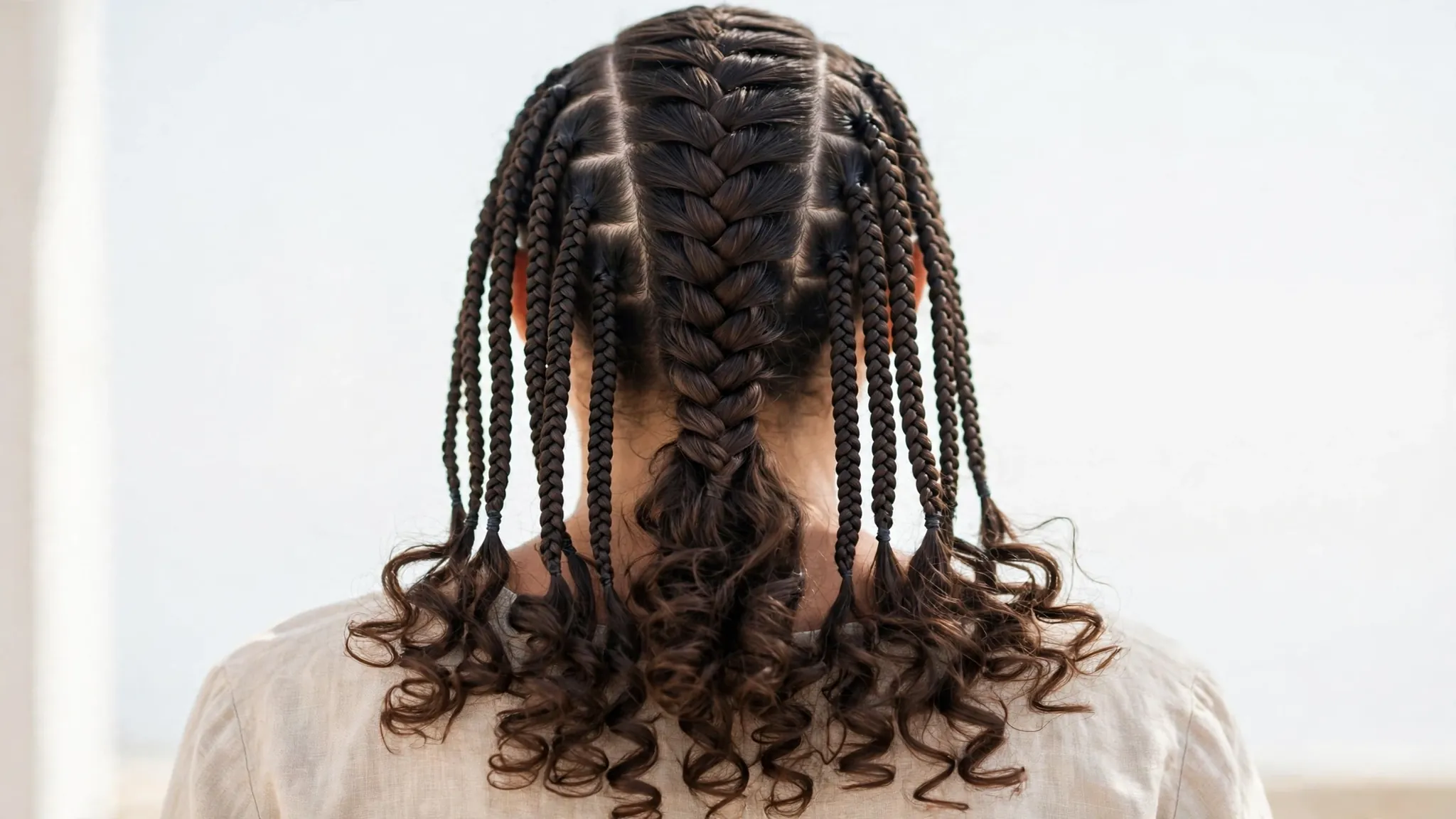
What Are Braid Hairstyles? 01
A braid is hair woven in a repeated crossing pattern. The classic version uses three strands: the outer strands cross over the middle, one at a time, all the way down. Everything else in this guide is a variation on that one move — hair added as you go, strands crossed under instead of over, sections parted into shapes, or extensions braided in for length.
Braids are not locs, and the difference matters. A braid is a temporary style you can undo in minutes or hours. Dreadlocks are formed when hair mats and locks together over months, and they are meant to stay. If you are choosing between the two, our Dreads vs Braids guide compares them side by side — time, cost, maintenance, and commitment.
Braids also carry deep cultural history. For centuries, African communities used braid patterns to show identity, age, status, and tribe. Modern braid hairstyles keep that craft alive while adding new shapes, colours, and finishes. Knowing that history does not change how you braid — but it changes how you respect the style.
One more honest note before the map. No single braid suits everyone, and no single article should pretend otherwise. This hub helps you match a style to your hair, your time, and your occasion — then sends you to the guide that teaches that style properly.
Every Braid Style on This Site at a Glance 02
This is the whole map in one table. Find your style, check how long it lasts and how hard it is, then follow the link to the full guide. Wear times are typical ranges — your hair, your braider, and your care move the numbers.
Table 1: Braid Hairstyles at a Glance
| Style | Best for | Typical wear | Difficulty |
|---|---|---|---|
| French braid | Everyday, work, weddings | 1 to 3 days | Easy to learn |
| Dutch braid | Statement looks, photos | 1 to 3 days | Medium |
| Box braids | Protective style, length | 4 to 8 weeks | Salon / skilled DIY |
| Jumbo box braids | Bold, fast install | 4 to 6 weeks | Salon / skilled DIY |
| Knotless braids | Gentle roots, natural look | 4 to 6 weeks | Salon |
| Fulani braids | Cultural style, beads, pattern | 2 to 4 weeks | Salon |
| Goddess braids | Thick, regal, long wear | 4 to 6 weeks | Salon |
| Boho braids | Soft, romantic, curly ends | 4 to 6 weeks | Salon |
| Stitch braids | Sharp, clean cornrow lines | 2 to 4 weeks | Salon |
| Cornrows | Neat scalp braids, men and women | 2 to 4 weeks | Salon / skilled DIY |
| Bubble braids | Fun, quick, no braiding skill | 1 day | Easiest |
| Peekaboo braids | Hidden colour, playful detail | Depends on base style | Salon |
| Jayda Wayda braids | Knotless with a signature finish | 4 to 6 weeks | Salon |
| Plaits on locs | Braiding existing dreadlocks | 2 to 6 weeks | Medium |
The Three Braids to Learn First: Plait, French, Dutch 03
Every braid in the table above grows out of three moves. Learn them in order and the rest of the family opens up. First, the plain three-strand plait: split the hair into three strands, cross the outer strands over the middle, repeat. No hair is added, nothing is anchored to the head. It is the braid everything else descends from.
Second, the french braid. It starts like a plait, then picks up a small section of loose hair into each strand before it crosses over the middle. Because hair is added as you go, the braid lies flat against the head and gathers everything in. Our French Braid guide teaches the full overhand rhythm, the styles that grow out of it, and the mistakes that make a braid slide off the head.
Third, the dutch braid. It uses the french braid’s add-as-you-go logic, but each strand crosses under the middle instead of over it. That one reversal makes the braid sit raised and bold instead of flat and soft. Our Dutch Braid guide teaches the reversal in full, with the same step-by-step structure as the french guide.
If you can french braid, you can dutch braid — you only have to reverse one habit. And if you can do both, you can read every other braid in this guide, because you already understand the two directions a braid can go.
Box Braids and Jumbo Box Braids 04
Box braids are the classic protective style. The hair is parted into a grid of square sections, and each section is braided from the root — almost always with extension hair braided in for added length and fullness. They last weeks, protect the natural hair underneath, and can be styled into buns, ponytails, and updos without unbraiding.
Jumbo box braids use the same technique with much larger sections, so the install is faster and the look is bolder. Fewer braids means less time in the chair, but each braid carries more weight, so the roots feel it sooner. Our Jumbo Box Braids guide covers the styles, including jumbo french curl braids and jumbo knotless braids, while our Box Braids guide teaches the step-by-step method for the standard size.
Choose box braids when you want the longest wear with the most styling freedom. Choose jumbo when you want the look faster and bolder, and you are comfortable with a slightly shorter wear time.
Knotless Braids 05
Knotless braids fix the one complaint people have about box braids: the tight knot at the root. Instead of starting with a knot of extension hair, the braider starts with your natural hair and feeds the extension in gradually. The result is a flatter root, less tension on the hairline, and a more natural fall from the scalp.
They take longer to install than box braids, because the feed-in technique is slower, but most wearers say the comfort is worth it — especially if your edges are fragile or you have had headaches from tight braids before. Our Knotless Braids guide covers 25 styles, from curly ends and boho knotless to jumbo, ombre, and beaded versions, with the benefits of each.
If your scalp is tender, knotless is the protective style to ask for first. If you want the fastest install and do not mind the knot, standard box braids will do the same job for less time in the chair.
Fulani Braids 06
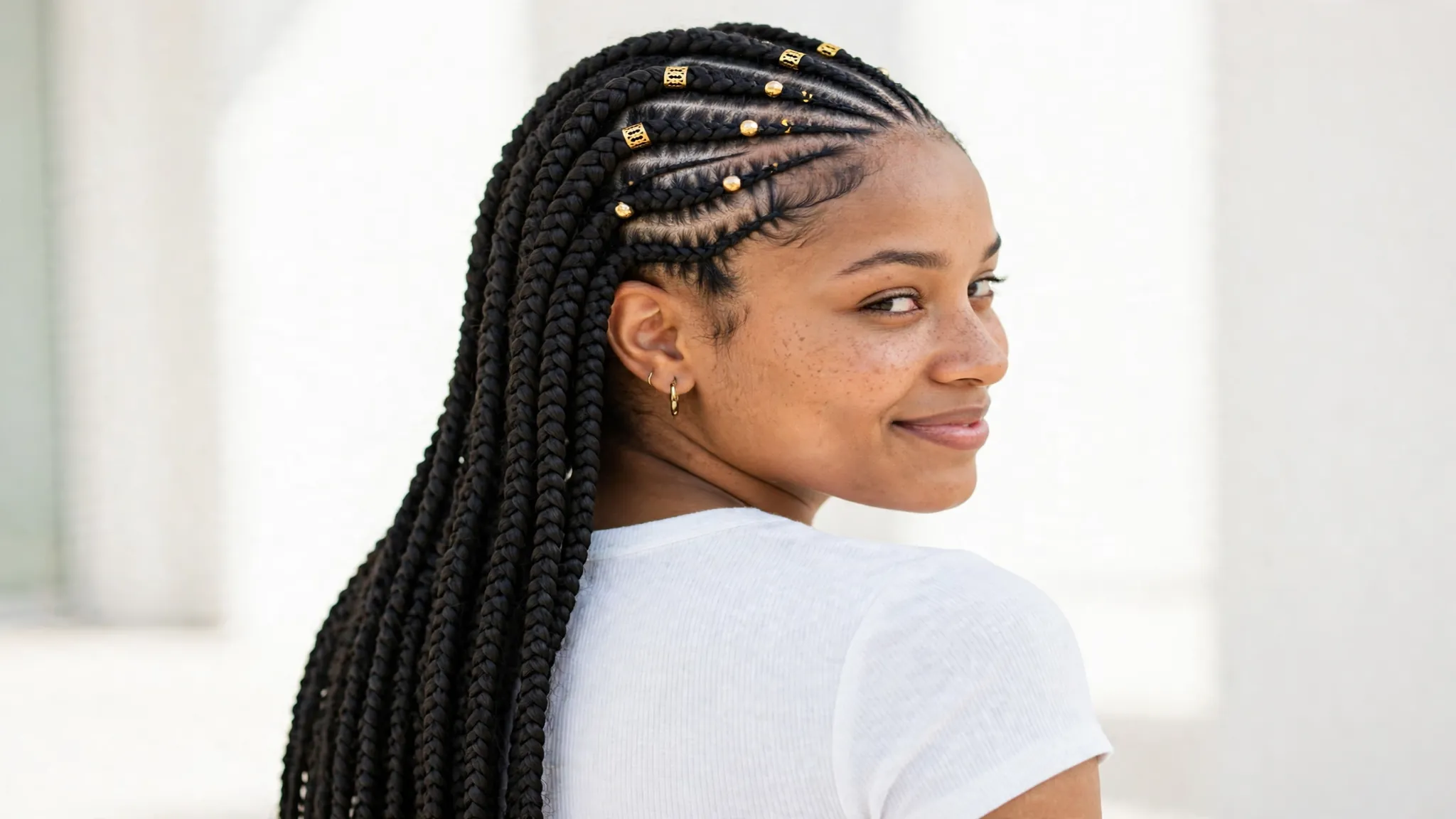
Fulani braids are one of the most recognizable protective hairstyles, known for clean braid patterns, decorative beads, and strong cultural roots. The style usually combines neat cornrows at the front with longer braids flowing toward the back, often finished with beads or curls. It traces back to the Fulani people of West Africa, where braid patterns carried social and cultural meaning.
Modern versions mix the classic pattern with curls, knotless techniques, and accessories — boho Fulani, flip-over Fulani, and Fulani with curls are all current variations. Our Fulani Braids guide covers the styles, meaning, technique, and care, and our 15 Fulani Braids Styles post shows fifteen trending versions to try, including styles for kids and for men.
Choose Fulani braids when you want a style with visible pattern and heritage, not just length. The front cornrows are the signature — they are what make a Fulani braid read as Fulani from across the room.
Boho and Goddess Braids 07
Boho braids are the relaxed branch of the family. They blend box braids or knotless braids with curly pieces of hair left loose along the lengths, giving a carefree, romantic look. The technique is simple — feed curly or wavy hair in at one point or several — but the effect is unmistakable: softness where other braids are sharp.
Goddess braids go the other way: thick, raised, regal braids that sit close to the scalp and make a statement on their own. They are slower to install and heavier to wear, but they last, and they photograph beautifully. Our Boho Braid guide covers the face-framing up-do and the boho family, while our Goddess Braids guide covers twelve styles, types, care, and cost.
Pick boho when you want softness and movement. Pick goddess when you want presence and structure. Both are protective styles, and both last weeks with the right care.
Stitch Braids and Cornrows 08
Cornrows are braids worked close to the scalp in straight or curved rows, and they are the foundation of half the styles in this guide. Fulani braids start with cornrows. Stitch braids are cornrows taken to their sharpest form: the braider uses a precise feed-in technique to create clean, raised lines that look stitched onto the scalp.
Stitch braids take longer than ordinary cornrows, because every line must be even, but the result is the neatest scalp braid there is. Our Stitch Braids guide covers the styles, care, and expert tips for 2025, and our Cornrow Braids for Men guide shows the wider family of cornrow styles, history included.
Choose ordinary cornrows for a fast, neat, everyday scalp braid. Choose stitch braids when the lines themselves are the point — for photos, events, or a style where precision is the whole look.
Bubble, Peekaboo, and Jayda Wayda Braids 09
Not every braid in this family is actually braided. Bubble braids are made by tying elastics down a ponytail at even intervals and puffing the sections between them into bubbles. No braiding skill is needed, the style takes minutes, and it lasts a day. Our Bubble Braids guide covers thirteen versions with a tutorial and care tips.
Peekaboo braids hide colour underneath the top layer of braids, so the colour shows only when the hair moves. They are a detail added to a base style — box braids, knotless, or cornrows — rather than a style on their own. Our Peekaboo Braids post shows six ways to wear them.
Jayda Wayda braids are knotless braids with a signature finish, named after the influencer who made them famous. The install, styling, and maintenance follow the knotless method, with the distinctive parting and finish that define the look. Our Jayda Wayda Braids guide covers installation, styling, and maintenance, including how to wear them with dreadlocks.
Braids for Men 10
Braids are not a women’s style, and they never were. Cornrows, box braids, french braids, and plaits on locs are all worn by men, and the double french is one of the most popular men’s braided styles. The technique is identical — only the finish and the length change.
For men, the most common starting points are cornrows and the double french braid: both hold well, both suit short to medium hair, and both look intentional rather than decorative. Fulani braids for men are also growing in popularity, as covered in our Fulani styles post. Our Cornrow Braids for Men guide covers the styles and history, and our Male Dreadlocks Hairstyles guide covers the loc side of men’s styles.
One practical note for men with short hair: a braid needs enough length to cross over at least four or five times, or it will not hold. Below that length, a french accent at the hairline or a short cornrow row is the honest starting point.
Braids on Locs: Plaits Dreads 11
Yes, you can braid dreadlocks — and the result is neat, because the flat braid blends into already-textured hair. The technique is the same three-strand rhythm, but the “strands” are groups of locs instead of loose hair. Our Plaits Dreads guide covers plaiting locs in full: styles, care, and the step-by-step for braiding dreadlocks.
The key difference to remember: a braid on loose hair adds hair as it goes, while a braid on locs groups existing locs, and nothing new is added. That makes the loc version faster and lighter, but the braid size is set by your loc size. Small locs give fine, detailed braids; thick locs give bold, chunky ones. Plaits on locs typically last 2 to 6 weeks.
If you are choosing between loc styles overall, our Types of Locs guide compares the maintenance each type asks for. For the bigger picture of braids versus locs, read our Dreads vs Braids comparison.
How Long Each Braid Lasts — and What Affects It 12
Wear time is the question every reader asks, and the honest answer has three parts: the style, the install, and the care. A well-installed braid cared for properly always outlasts a rushed install left to itself. The table below is the short version; the detail lives in each style’s own guide.
Table 2: How Long Braids Last
| Wear time | Styles | What shortens it |
|---|---|---|
| 1 day | Bubble braids | Sleeping on it, humidity |
| 1 to 3 days | French braid, dutch braid, plain plait | Touching it, no night protection |
| 2 to 4 weeks | Fulani braids, stitch braids, cornrows | Heavy products, rough washing |
| 2 to 6 weeks | Plaits on locs | New growth, frizz at the roots |
| 4 to 6 weeks | Knotless, goddess, boho, jumbo box, Jayda Wayda | Frizz, buildup, loose edges |
| 4 to 8 weeks | Box braids | Itching, buildup, heavy roots |
Three things extend every braid’s life. First, night protection: a satin bonnet or scarf keeps the style neat and stops frizz before it starts. Second, light products: heavy oils and butters coat braids and trap buildup, which is the main reason protective styles are taken down early. Third, hands off: every touch loosens a crossing and invites frizz.
And one limit to respect: a protective style stops protecting when it stays in too long. Past eight weeks, new growth tangles at the roots, buildup accumulates, and taking the style down becomes a repair job instead of a refresh. When a braid starts to itch constantly or the roots feel matted, it is time to take it down, not to push another week.
How to Choose Your Braid Style 13
Choose by four things, in this order: your hair, your time, your occasion, and your tolerance for maintenance. Hair first, because a style that fights your texture will never look right. Time second, because a style you cannot maintain will be taken down early. Occasion third, because a wedding and a gym session ask for different braids. Maintenance last, because it decides whether the style survives the week.

Table 3: Choose by Your Situation
| Your situation | Best braid | Why |
|---|---|---|
| First braid ever | Plain plait, then french braid | Teaches the rhythm; everything else builds on it |
| Short hair | Side french, crown braid, short cornrows | Needs only four or five crossings to hold |
| Fine or slippery hair | French braid, knotless braids | Small sections grip better; texture spray helps |
| Thick hair | Box braids, goddess braids | Volume carries the style; arms tire, so book a braider |
| Tender scalp or fragile edges | Knotless braids, loose french braid | No knot at the root; gentler tension |
| Sport or active days | Double french, cornrows | Holds tight, keeps hair out of the face |
| Wedding or formal event | French crown, goddess braids | Structured, photogenic, worth a salon visit |
| Longest wear, least daily work | Box braids, knotless braids | Weeks of wear, style in minutes each morning |
| Already have locs | Plaits on locs | Groups existing locs; no new hair added |
What Most Articles Miss 14
The first miss: the first three crossings decide the whole braid. If the first crossings are uneven — one strand thicker, one pulled tighter — the braid will lean for its entire length, and no amount of careful work later fully straightens it. Spend an extra minute on the first three crossings, whether you are french braiding your own hair or checking a braider’s first rows.
The second miss: the back of the head. You braid by feel where you cannot see, and the braid drifts toward your dominant hand without you noticing. Check in a mirror every few crossings, or prop your phone camera behind you. A braid that drifts is the single most common reason a first braid looks “wrong” in photos.
The third miss: tension is not strength. A braid holds because the crossings are even and the added sections are small, not because it is pulled hard. A tight braid hurts, stresses the edges, and loosens faster at the hairline. Firm, even tension through the middle and gentler tension at the hairline is the combination that lasts — for scalp braids and protective styles alike.
Myth check — what most articles get wrong:
Myth one: braids are only for long hair. You need enough length for four or five crossings, not waist-length hair. Side braids, crown braids, short cornrows, and short double braids all work on medium and even shorter hair. The braid gets shorter and the style gets smaller — the technique stays exactly the same.
Myth two: protective styles need no care. “Protective” means the style protects your ends from daily handling — it does not mean the hair inside needs nothing. Braids still need a clean scalp, light moisture, and night protection. A protective style neglected for eight weeks comes down in worse shape than hair worn loose and cared for.
Myth three: a braid is just a braid. A french braid hugs the head, a dutch braid stands out from it, a box braid protects for weeks, and a bubble braid is not braided at all. The name on the style decides the technique, the wear time, and the care — so choosing by the name alone, without knowing what it means, is how most braid disappointments start.
Braid Care Basics 15
This is the hub-level summary, not the full routine. Braids need three things: a clean scalp, light moisture, and protection at night. Wash with a residue-free shampoo, focusing on the scalp and letting the lather run through the braids. Rinse until the water runs fully clear. Then dry completely — damp braids left under a bonnet are how smell and mildew begin.
Moisturize lightly, 2 to 3 times a week, with a water-based mist. Heavy oils and butters coat braids and trap buildup inside, which is the main reason protective styles are taken down early. If your scalp feels dry, a few drops of light oil on the scalp only — not poured over the braids — is enough.
At night, a satin bonnet or scarf is the single best investment for braid care. Cotton pillowcases pull moisture from the hair and rough up the braid’s surface; satin lets the braid slide. For the full routine behind braid and loc care, our dreadlock care hub carries the same principles — clean scalp, light moisture, gentle handling — and our Products for Dreadlocks guide sorts every product category into help or harm.
Questions to Ask Before You Braid 16
Before you book a braider or pick up the comb, answer five questions honestly. What is my hair like — thick, fine, curly, short, or long? How long do I want this to last — a day, or two months? How much time will I give it — ten minutes a morning, or a salon afternoon? What is my scalp like — calm, tender, or fragile at the edges? And what is the occasion — everyday, sport, work, or a wedding?
Your answers place you in Table 3 above. A style that fits your real life beats a perfect style you abandon after three days. And one more question people forget to ask: can I take this down myself? A style you cannot remove gently is a style that will cost you hair at takedown. Ask your braider how takedown works before the install, not after eight weeks.
- Style matched to your situation — checked against Table 3, not picked by the photo alone.
- First three crossings even — strands matched in size, tension firm but comfortable.
- Edges protected — no pain at the hairline, no bumps, no headaches after styling.
- Wear time understood — you know when this style comes down, before it goes in.
- Night protection ready — satin bonnet or scarf before the braid goes to bed.
Your 7-Day Braid Plan 17
Learning braids is a week of short practice, not a single long session. Run these steps in order and the crossing rhythm becomes automatic — then pick your protective style with confidence.
- Day 1: Learn the plait. Practise the three-strand crossing on a rope or ribbon first. Say “over” on every crossing until your hands stop hesitating.
- Day 2: Braid someone else. A friend, a child, anyone patient. Seeing the braid from the front teaches your hands the pattern faster than braiding your own head blind.
- Day 3: Your first french braid. Braid your own hair slowly, checking the back in a mirror every few crossings. Undo the first three crossings twice if they lean.
- Day 4: Try the dutch braid. Reverse one habit — cross under instead of over — and compare the two finishes side by side in photos.
- Day 5: Try a bubble braid. Tie elastics down a ponytail and puff the sections. Five minutes, no skill needed, and it teaches you how a braid changes a silhouette.
- Day 6: Pick your protective style. Use Table 3 to choose one long-wear style, then read its full guide on this site and book your braider.
- Day 7: Photograph and judge. Take photos from the front, sides, and back of your best braid so far. Fix the one thing that bothers you most, and you have your braid.
After day 7, you are maintaining a skill, not learning one. The checklist in the previous section keeps every braid honest, and the guides linked in Table 1 carry the depth from here.
Braid Hairstyles: Questions, Answered 18
What is the easiest braid hairstyle to learn?
The plain three-strand plait. Split the hair into three strands and cross the outer strands over the middle, one at a time. Once that feels automatic, the french braid uses the same motion with hair added as you go. Most people learn the plait in one session and the french braid in two or three.
What is the difference between a french braid and a dutch braid?
Only the crossing direction. A french braid crosses strands over the middle, so the braid sits flat and blends into the hair. A dutch braid crosses strands under the middle, so the braid sits raised and stands out. Same three strands, same rhythm — opposite direction, different finish.
Which braid hairstyle lasts the longest?
Box braids, typically 4 to 8 weeks with proper care. Knotless braids, goddess braids, boho braids, and jumbo box braids usually last 4 to 6 weeks. Daily braids like french and dutch braids last 1 to 3 days. Past eight weeks, any protective style should come down — new growth tangles at the roots and buildup accumulates.
Are braids a protective style?
Many are. Box braids, knotless braids, cornrows, and Fulani braids protect the ends from daily handling and keep the hair tucked away for weeks. But “protective” does not mean “needs no care” — braids still need a clean scalp, light moisture, and night protection, or they come down in worse shape than hair worn loose and cared for.
Can men wear braid hairstyles?
Yes. Cornrows, box braids, french braids, and plaits on locs are all worn by men, and the double french is one of the most popular men’s braided styles. The technique is identical — only the finish and the length change. See the Braids for Men section above and our Cornrow Braids for Men guide.
Do braids work on short hair?
Yes, as long as the hair is long enough for four or five crossings. Side braids, crown braids, short cornrows, and short double braids all work on medium and shorter hair. The braid will be smaller and shorter, but the technique and the look stay the same.
Can you braid dreadlocks?
Yes. A braid on locs groups existing locs with the same three-strand rhythm, and the flat braid looks neat on textured hair. Our Plaits Dreads guide covers plaiting locs in full — styles, care, and the step-by-step for braiding dreadlocks.
How do I choose the right braid hairstyle?
Choose by your hair, your time, your occasion, and your tolerance for maintenance — in that order. Table 3 above matches nine common situations to the right braid. If you are still unsure, start with the french braid: it teaches the rhythm, lasts a day or two, and tells you quickly whether braids suit your hair.
Bottom Line 19
Braid hairstyles are one family with many rooms. Learn the plait, then the french braid, then the dutch braid — those three open every door. Pick a protective style by your situation in Table 3, not by the photo alone. And remember that the braid is only half the job: clean scalp, light moisture, and satin at night are what make any braid last.
Use this hub as your home base. When any style needs depth, follow the links in Table 1 to our detailed guides on box braids, knotless braids, Fulani braids, french braids, dutch braids, and the rest. Dreadlocks and braids both reward patience, and a braid chosen well rewards it with a finish no loose hair can give. Start the 7-day plan this week — the braid you want next month starts with the rhythm you learn today.
This article is for general informational purposes only. Individual results, hair types, scalp conditions, and situations may vary. For personal hair or scalp concerns, consult a qualified loctician or dermatologist.
