


Butterfly Locs Explained: The Complete Loopy Loc Style Guide
-
- November 4, 2026

The short answer to butterfly locs is that they are faux locs with one signature difference: curly loops left peeking out along the length of each loc. Those loops — the “butterfly wings” — give the style a distressed, loopy, boho finish that no other faux loc style has. If you love texture and volume but hate the stiff, uniform look of classic faux locs, this is the style made for you.
This guide is the dedicated walkthrough our Faux Locs pillar deliberately skips. That pillar covers the faux-loc family — crochet basics, choosing length and hair, general care and removal. This one assumes you already know the family and walks you through the butterfly member only: how the loops are made, the install in detail, loop-specific care, styling the curly ends, and who suits the look.
Here is the roadmap: what butterfly locs actually are, the loop signature, how they compare to the faux family, preparation, the install walkthrough, what most articles miss, wear time, loop care, styling, who they suit, the DIY trade-off, a myth check, a start checklist, a 14-day action plan, and answers to the questions people ask before booking.
Quick Decision: Butterfly Locs in One Glance
- The look. Butterfly locs are faux locs with curly loops left out along the length. Distressed by design, not by accident.
- The feel. Lighter-looking than they are — the loops add volume, and volume always adds some weight. Plan for it.
- The time. Weeks, not months. A commonly reported range is 4 to 8 weeks, and the loops set the limit.
- The verdict. If you want a neat, uniform finish, read our Faux Locs pillar instead. This style is for texture lovers.
If the loops are the reason you are here, this guide is yours.
What Butterfly Locs Actually Are 01
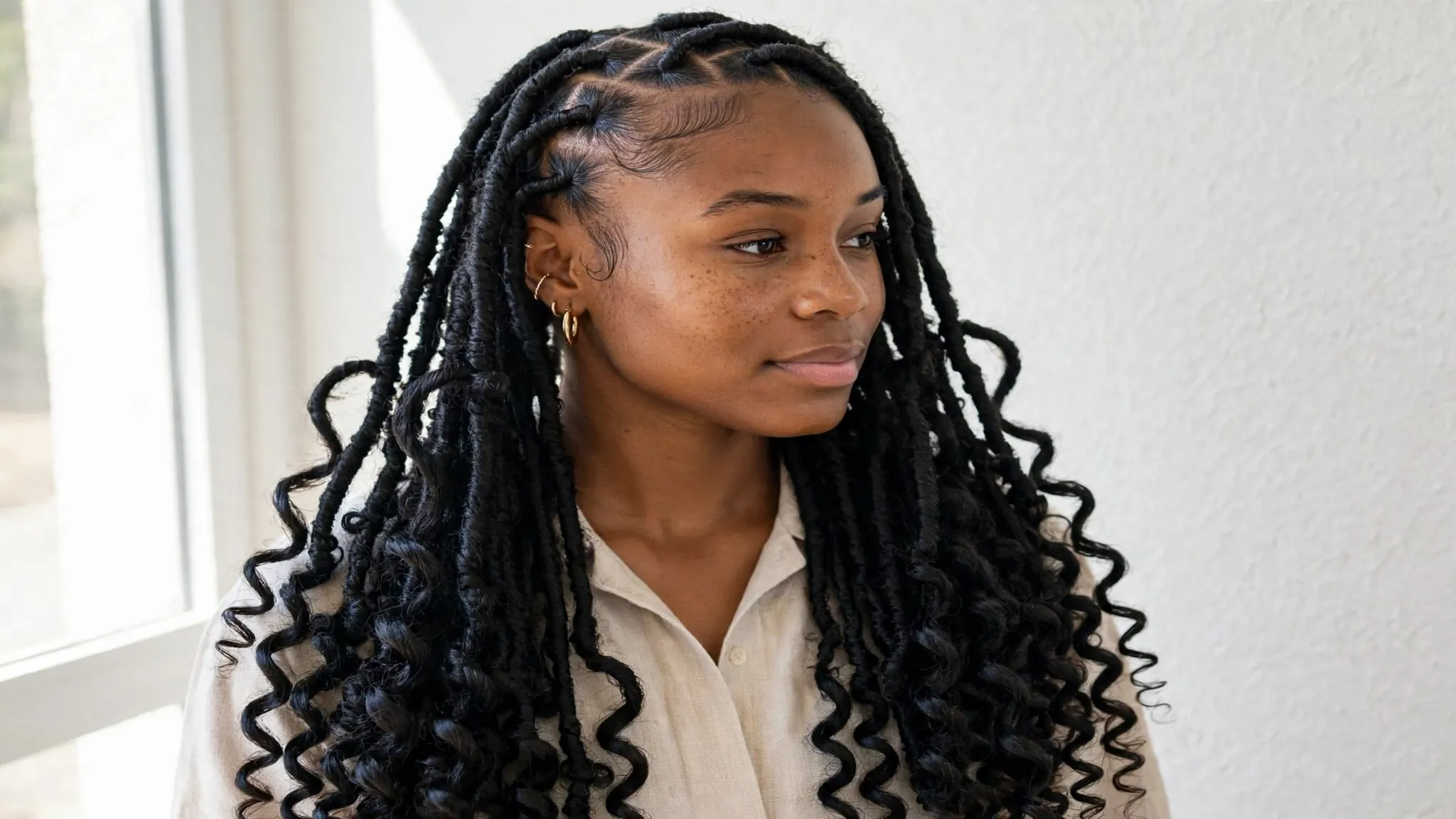
Butterfly locs are a type of faux loc. Your own hair is braided or cornrowed first — the base — and then wavy wrapping hair is wrapped around each braid to form the loc — the wrap. The butterfly part is the step everyone skips in other styles: the wrap is left loose in places, so curly loops stick out along the loc — the loops. Three jobs, in that order: base, wrap, loops.
They belong to the faux-loc family, so the big rules of faux locs still apply — gentle tension, a removal date, and full drying after washing. For all of that family knowledge, read our Faux Locs pillar, which covers crochet, lengths, hair types, and removal in full. This guide never repeats that material. It only covers what is different about the butterfly version.
The Butterfly Signature: Those Curly Loops 02
The loops are not decoration added at the end. They are the wrapping hair itself — the same wavy hair used to wrap the braid — allowed to curl outward instead of lying flat. That is the whole technique: a looser wrap with wavier hair, and the “mistakes” become the style. Pull the wrap tight and smooth, and you get soft locs. Leave it loose and loopy, and you get butterfly locs.
That is also why butterfly locs photograph the way they do: every head looks slightly different, because no two wraps leave the same loops. The style is sometimes confused with goddess locs, which also have curly ends — the difference is that goddess locs keep the loops at the ends, while butterfly locs wear them all along the loc.
Choosing between finishes? Our Soft Locs vs Butterfly Locs comparison lays out the five main differences — read it for the verdicts, since this guide does not repeat them.
Butterfly Locs vs the Faux Family 03
One table, then the full detail stays in the comparison posts. Butterfly locs sit between soft locs and classic faux locs: looser than soft, more textured than classic. The table below is a family map, not a verdict — for the verdicts, read our Soft Locs vs Butterfly Locs and Soft Locs vs Faux Locs comparisons.
Table 1: The Faux Family at a Glance
| Feature | Butterfly locs | Soft locs | Classic faux locs |
|---|---|---|---|
| Finish | Loopy, distressed, loops along the length | Neat, smooth, uniform | Neat, smooth, uniform |
| Wrap | Loose wrap with wavy hair | Neat wrap | Neat wrap or crochet |
| Volume | High — loops add body | Medium | Medium to high |
| Overall feel | Boho, textured, lived-in | Soft, silky, neat | Structured, polished |
| Learn more in | This guide | Comparison posts | Faux Locs pillar |
If you want real, permanent locs instead of any faux style, that is a different journey entirely — our Micro Locs guide and Types of Locs explain what the permanent options ask of you.
Before You Book: What to Prepare 04
Start with hair health, not a date. Hair that is breaking or severely dry will not hold up under weeks of added weight and wrapping. Spend two to four weeks before the appointment on gentle handling: no tight styles, light moisture, and a clarifying wash a day or two before install so the hair is clean and product-free.
Length decides more than the look. Butterfly locs read best at medium to long lengths, because the loops need length to show. Short butterfly locs exist, but the loops have less room to develop and the style can read as just messy. Discuss length against your face and shoulders with your stylist before any hair is bought.
On hair packs, a commonly quoted range is 6 to 8 packs of wavy wrapping hair for a full head, depending on length and fullness. Treat that as a starting range to discuss with your stylist, not a rule — more hair means more volume, but also more weight, and butterfly locs already carry extra body from the loops.
Ask the stylist the questions that matter: how many butterfly installs have you done, how do you keep the loops from pulling out, what wrap tension do you use on my texture, and when should I come back for loop touch-ups. A stylist who has only done neat faux locs may wrap butterfly locs too tightly and erase the very effect you are paying for.
Install Day Walkthrough: The Butterfly Method 05
A butterfly install runs in two sessions: the base, then the wrap with loops. Knowing the flow helps you judge the work as it happens and speak up at the right moment.
The Base
The base is your own hair braided into small individual braids or cornrows — the same base our Faux Locs pillar explains in full, so this guide does not repeat those steps. What matters for the butterfly version: the base must be firm but never painful, and the braid size sets the loc size. Check evenness now, because the loops later will not hide a crooked base.
The Wrap + Loops
This is the butterfly step. Wavy wrapping hair is wrapped around each braid — but loosely, and with the curl left free in places instead of pulled flat. The stylist works down the braid, letting loops spring out as they go. The loops are not random; a good stylist spaces them so the loc looks full from every angle.
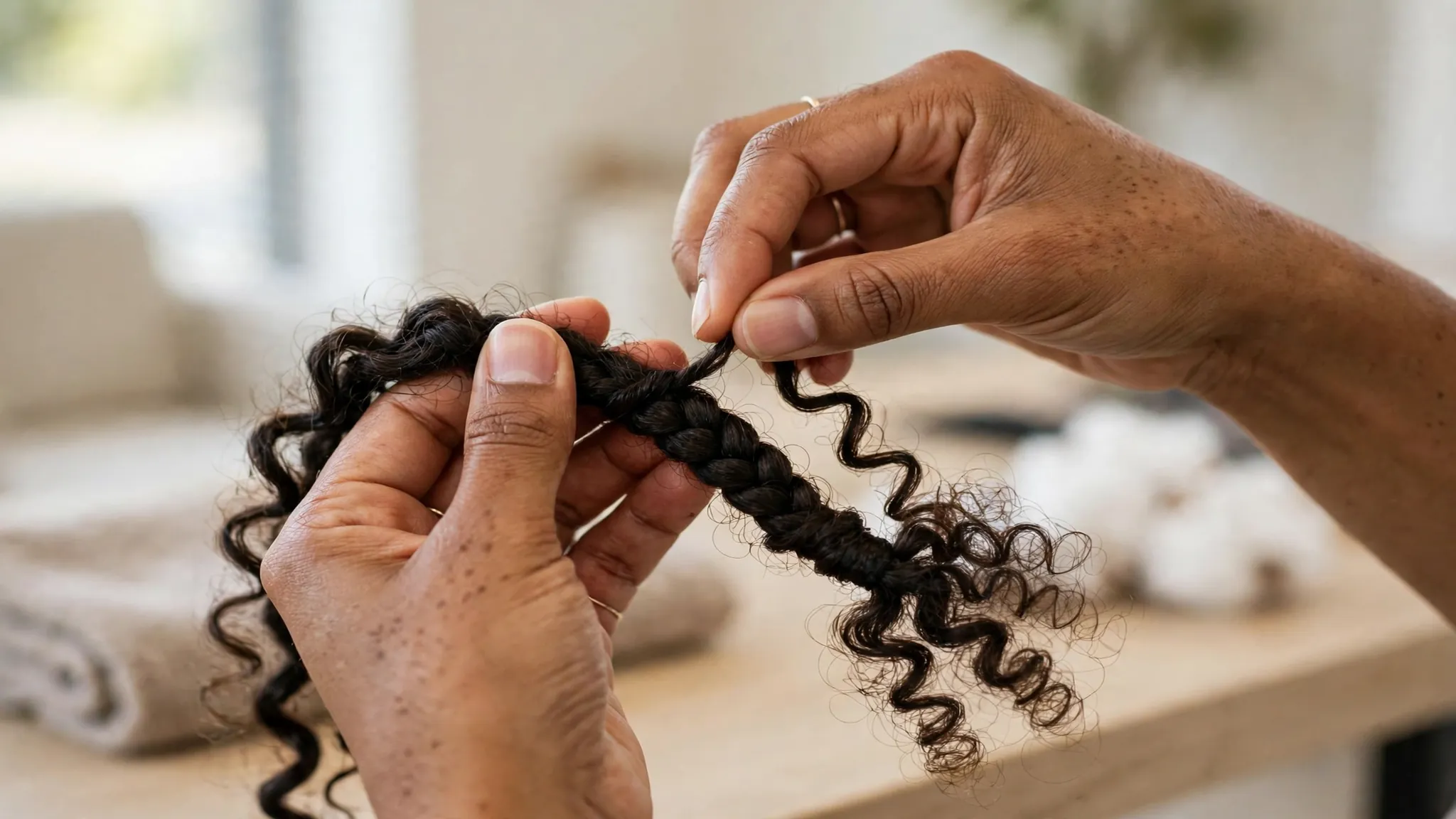
If the wrap starts looking neat and smooth, say so. Neatness is the enemy of this style, and a wrap that is too tight at the root pulls on the braid underneath — a hidden tension that hurts later. Speak during the wrap, not after: a loop re-wrapped now costs a minute, an aching edge later costs a week.
What Most Articles Miss 06
The first miss: the loops are the wear point. Roots rarely fail in butterfly locs — the loops do. They catch on clothes, scarves, and pillowcases, and constant catching pulls them out or mats them into the wrap. Night protection matters more for the loops than for anything else in this style.
The second miss: butterfly locs are heavier than they look. The loops read as light and airy in photos, but every loop is extra hair, and extra hair is extra weight on your neck and edges. If your edges are fragile, choose a shorter length or fewer packs rather than discovering the weight in week two.
The third miss: products behave differently on loops. Heavy creams and oils that sit fine on smooth faux locs will coat the loops, weigh them down, and turn the airy look stringy. Light, water-based moisture on the loops and nothing heavy is the rule most guides never state.
How Long Butterfly Locs Last 07
Here is the honest answer, and it is not one number. Published ranges vary — the comparison on this site reports up to six weeks, other guides describe four to eight weeks — and that variation is itself useful information. The loops set the real limit: the style is done when the loops start looking tired, not when the calendar says so.
Table 2: Butterfly Locs Wear-Time Schedule
| When | What you see | Your job |
|---|---|---|
| Weeks 1–2 | Loops springy, install fresh | Protect at night, hands off, light moisture only |
| Weeks 3–4 | Some loops loosen, new growth at roots | Gentle root checks, refresh curls, keep washing gentle |
| Weeks 5–6 | Loops flatten or tangle, roots start matting | Decide: touch-up appointment or removal |
| Weeks 7–8 | Style looks worn even after refreshing | Take them out — do not push past the loops’ life |
Take them out sooner if the scalp itches constantly, the loops keep catching and pulling, or any braid feels tight. The removal itself follows the same gentle process as any faux loc — our Faux Locs pillar covers removal step by step, so this guide does not repeat it.
Caring for the Loops 08
Loop care is simpler than most guides make it sound. Protect them at night, touch them as little as possible, wash gently, and dry fully. Everything else is detail on top of those four.
Night protection is non-negotiable: a satin bonnet or scarf from night one. Cotton pillowcases grab loops, and one rough night can undo a week’s worth of spring. In the morning, shake the locs gently rather than combing the loops back into shape — loops reset better with a shake and a light mist of water than with fingers.
Wash gently and less often than you think you need. Our washing dreadlocks at home guide covers the technique, and for product choices that will not coat the loops, our products guide sorts every category into help or harm. When the loops flatten beyond refreshing, that is the style telling you its time is up.
Styling the Curly Ends 09
Everyday Styles
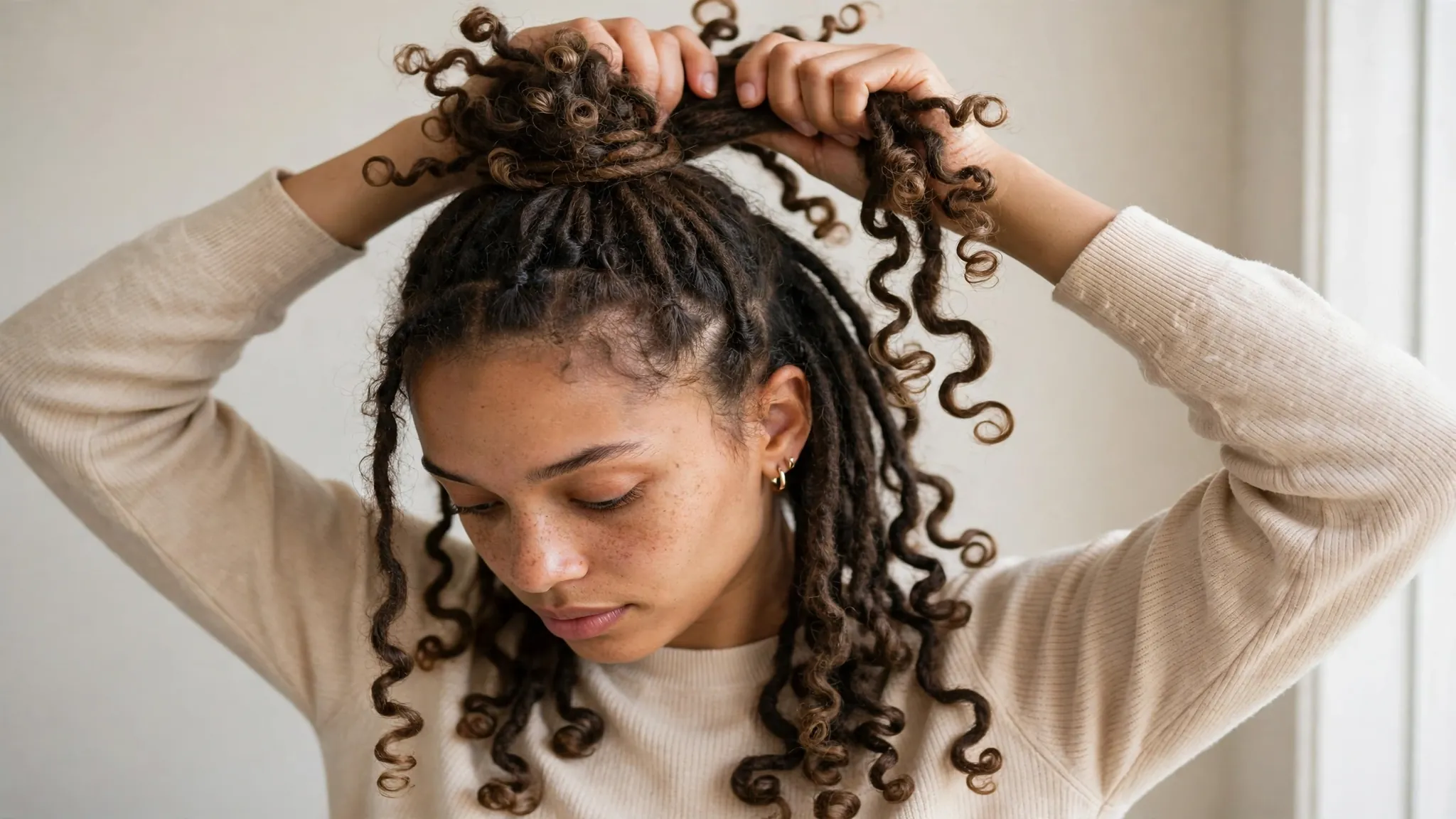
Butterfly locs style best when the loops stay free. Worn down is the kindest option — no pulling, no flattening. A loose half-up, a low ponytail tied softly, or a loose bun all work, as long as nothing is pulled tight. Tight styles squash the loops flat, and flat loops are the fastest way to lose the butterfly effect.
Styling Without Killing the Loops
Rotate styles and give the loops rest days. Avoid tying in exactly the same place every day, skip tight headbands, and choose light accessories — small cuffs and beads that sit on the locs, not elastic bands that grip the loops. If an accessory leaves a dent or a sore spot, it is too tight, however good it looks.
The loops are the accessory on most days. Refresh them with a light water mist and a gentle scrunch rather than re-curling with heat — many synthetic wrapping hairs do not take heat well, so test one loop, not the whole head, before any hot tool comes near them.
Who Butterfly Locs Suit 10
Butterfly locs suit texture lovers: people who want volume, movement, and a boho finish, and who are comfortable with a style that looks “undone” on purpose. They work best on medium to long lengths, where the loops have room to show, and for anyone who wants a protective style with personality rather than a uniform look.
Skip them — for now — if you need a neat, corporate-polished finish every day, if your hair is breaking or your scalp is irritated, or if you cannot commit to night protection. The loops punish neglect faster than any smooth style. A neat faux loc from our Faux Locs pillar is the kinder choice in those cases.
DIY or Salon: The Honest Trade-Off 11
A salon install costs money and takes hours in someone else’s chair. A DIY install costs little and happens on your schedule. The real trade is not money versus savings. It is loop quality versus convenience — and loop quality wins installs.
The wrap is where DIY installs most often fail. Wrapping loosely enough to leave loops, while keeping the loc secure, is a feel that takes practice — too loose and the loc falls apart, too tight and you have made soft locs by accident. The base is the other hard part: braiding the back of your own head evenly, by feel, in mirrors.
The honest middle path is a professional base and first rows, then maintaining the loops yourself. That split buys you a solid foundation and a learning curve you can actually climb. Whatever you choose, judge the work by the loops in photos from every angle, not by the front in the mirror.
Myth Check: What People Get Wrong About Butterfly Locs 12
Myth one: butterfly locs look unfinished or damaged. The distressed look is the design, not a flaw — the style was created to look loopy and lived-in. Judging butterfly locs by neatness is like judging curls by straightness. If the “mess” bothers you, the style is wrong for you, not wrong itself.
Myth two: the loops mean cheap hair or bad work. Loops come from the wrapping technique — loose wrap plus wavy hair — not from the price of the packs. A skilled stylist makes clean loops on purpose; unskilled wrapping makes a tangled mess. The difference is visible: deliberate loops are spaced and springy, accidental ones are matted.
Myth three: you cannot wash butterfly locs. You can wash gently and much sooner than legend says. What matters is technique, not abstinence — gentle handling, minimal manipulation of the loops, and complete drying protect the style far better than avoiding water.
Questions to Ask Before Install Day 13
Walk into the appointment with answers, not just excitement. Do you want loops along the whole loc or just at the ends? Can you commit to night protection for the full wear time? Is your hair healthy enough for weeks of added weight right now? If any answer is no, waiting a month beats fixing a bad install.
And one question for the stylist that reveals everything: show me a butterfly install you did, photographed at week four, not day one. Day-one photos show camera skill. Week-four photos show whether their loops survive real life.
- Loop placement agreed — loops along the length or just at the ends, confirmed before the wrap starts.
- Wrap tension checked — snug but movable, no ache, no bumps along the base.
- Length and pack count set — discussed against my face, shoulders, and edges, not copied from a video.
- Removal date written down — in weeks, before the loops wear out.
- Night protection bought — satin bonnet or scarf ready before install day, not after.
Your 14-Day Start Action Plan 14
Butterfly locs are a sequence, not a single appointment. Run these steps in order and the common beginner mistakes mostly disappear on their own.
- Days 1–2: Check hair health. Look honestly at breakage, dryness, and scalp condition. If the hair is fragile, spend a few weeks on gentle care first. A delayed install beats a damaged one.
- Day 3: Book the consultation. Bring butterfly photos you like and one you dislike, your daily routine, and your real calendar. Ask the four questions from the preparation section.
- Days 4–5: Choose the loops. Decide with the stylist: loops along the whole loc or just at the ends, and the length the loops need to show. Confirm the hair choice before grid planning starts.
- Day 6: Prep for install day. Buy a satin bonnet or scarf if you do not own one. Pack water, a snack, and something to listen to. Plan a clarifying wash for the day before.
- Day 7: Install day. Judge the loops from every angle before the full head is done. Tension-check every braid as it is wrapped. Speak up the moment anything hurts.
- Days 8–10: Hands off. Night protection from the first night. No restyling, no tight hats. First gentle loop refresh with water mist and a shake.
- Days 11–14: First gentle wash and the plan. Wash gently at your stylist’s timing and dry fully. Decide whether the loops need a touch-up or a removal date.
After day 14, you are maintaining loops, not starting them. The checklist in the previous section keeps the maintenance honest, and our Faux Locs pillar carries the general faux-loc knowledge from here.
Butterfly Locs: Questions, Answered 15
What are butterfly locs?
Butterfly locs — sometimes written as butterfly locks — are a type of faux loc with curly loops left peeking out along the length of each loc. The loops come from loosely wrapping wavy hair around a braided base, which gives the style its signature distressed, boho finish. They are temporary, worn for weeks, then removed.
How are butterfly locs different from soft locs?
The loops are the difference. Soft locs use a neat, smooth wrap for a silky, uniform finish; butterfly locs use a loose wrap with wavy hair so curly loops stick out along the loc. Our Soft Locs vs Butterfly Locs comparison covers the five main differences in full.
How long do butterfly locs last?
Published ranges vary, commonly described as 4 to 8 weeks. The loops set the real limit — when they flatten or tangle beyond refreshing, the style is done even if the roots still look neat. Keep the wear time in weeks, not months, and set a removal date before install day.
Can you wash butterfly locs?
Yes, gently. Technique matters more than waiting: gentle handling, minimal manipulation of the loops, and complete drying protect the style far better than avoiding water. Wash less often than you would loose hair, and never go to bed with damp locs.
Do butterfly locs damage your hair?
Damage comes from too much tension and wearing them too long, not from the style itself. A gentle base, loops wrapped without pulling, and removal on schedule keep your own hair safe. If a braid aches or the scalp itches constantly, take them out early — that is protection working.
Can I get butterfly locs with short hair?
It is possible, but the loops need length to show — on short hair the style can read as simply messy rather than loopy and boho. Medium to long lengths give the loops room to develop and are the lengths most stylists recommend for this look.
How do I keep the loops curly?
Night protection is the biggest factor: a satin bonnet or scarf every night. In the morning, shake the locs gently and mist lightly with water rather than combing or re-curling with heat — many synthetic wrapping hairs do not take heat well, so test one loop before any hot tool comes near the style.
Are butterfly locs the same as goddess locs?
Not quite. Both use curly texture, but goddess locs keep the curls at the ends of the locs, while butterfly locs wear the loops all along the loc. That full-length loop placement is what gives butterfly locs their extra volume and their signature distressed look.
Bottom Line 16
Butterfly locs are three jobs: a gentle base, a loose wrap, and loops you protect. Do those three and the style carries itself for weeks. Fight the loops — pull them straight, skip the bonnet, push past their life — and they will tell on you.
Use our Faux Locs pillar for the family knowledge, our Soft Locs vs Butterfly Locs comparison for the verdicts, and this guide for the loops. Dreadlocks in all their forms reward patience, and butterfly locs reward it with texture no other style gives. Book the consultation this week — the loops you want next month start with the wrap you approve this week.
This article is for general informational purposes only. Individual results, hair types, scalp conditions, and situations may vary. For personal hair or scalp concerns, consult a qualified loctician or dermatologist.
